I was digging through my fridge last Tuesday, looking for literally anything to throw together for breakfast, when my hand brushed against a jar I’d almost forgotten about. My sourdough starter. Sitting there quietly, bubbling away, looking at me like it knew something I didn’t. And honestly? I felt a little guilty. I’d been feeding this thing for weeks, and what had I done with it? A few loaves of bread, sure. But there was so much discard piling up in the back of my mind, and I knew there had to be a better way to use it than just tossing it down the drain.
That’s when it hit me—pancakes. Not just any pancakes, but fluffy overnight sourdough starter pancakes. The kind that soak up butter and syrup like they were made for each other. I’d seen recipes floating around, but I’d always been too scared to try. What if they turned out dense? What if they tasted too sour? But let me tell you, the first time I mixed that starter into my batter and let it sit overnight, I woke up to something magical. The tang was subtle, the texture was light, and my kitchen smelled like a bakery that had been up since dawn.
You know that feeling when you stumble onto something so good you can’t believe you waited so long to try it? That’s these pancakes. They’re not fussy, they don’t require a ton of ingredients, and they come together in about 15 minutes once the overnight rest is done. I’ve been making them every weekend since, and I’m honestly a little mad at myself for not figuring this out sooner. Maybe you’ve been there too—staring at that jar of starter, wondering what else it can do. Trust me, this is it.
Why You’ll Love This Recipe
These fluffy overnight sourdough starter pancakes are the kind of breakfast that makes you feel like you’ve got your life together, even if you’re still in your pajamas at 10 AM. I’ve tested this recipe more times than I can count, tweaking the flour ratios, the resting time, the heat on the griddle—all so you don’t have to. Here’s what makes them stand out from every other pancake recipe out there:
- Quick & Easy: The active cooking time is only 15 minutes. The overnight rest does all the hard work for you, so morning you gets to be the hero.
- Simple Ingredients: You probably already have everything in your pantry. No fancy trips to specialty stores, no weird ingredients you’ll never use again.
- Perfect for Weekend Mornings: Whether it’s a lazy Saturday or a holiday brunch with family, these pancakes fit right in. They feel special without being stressful.
- Crowd-Pleaser: Kids love the fluffy texture, adults love the subtle tang, and everyone loves how they soak up maple syrup. I’ve yet to meet someone who didn’t ask for seconds.
- Unbelievably Delicious: The combination of the overnight fermentation and the simple batter creates a pancake that’s tender on the inside, golden on the outside, and just tangy enough to keep things interesting.
What makes this recipe different from the rest? It’s the overnight rest. That’s the secret. Letting the batter sit for 8-12 hours allows the sourdough starter to work its magic, breaking down the flour and creating a lighter, more digestible pancake. You get that signature sourdough tang without any of the heaviness. It’s comfort food reimagined—healthier, faster, but with the same soul-soothing satisfaction. Perfect for impressing guests without stress, or turning a simple breakfast into something memorable.
What Ingredients You Will Need
This recipe uses simple, wholesome ingredients to deliver that fluffy texture and subtle tang without any fuss. Most of these are pantry staples, and the sourdough starter is the star of the show. Here’s what you’ll need:
For the Pancake Batter
- Sourdough starter discard or active starter: 1 cup (240g), unfed or fed, either works. I prefer using discard because it’s what I always have on hand, but active starter gives a slightly stronger tang.
- All-purpose flour: 1 cup (120g). This gives the pancakes structure without making them dense. You can substitute whole wheat pastry flour for a nuttier flavor.
- Milk: 1 cup (240ml), room temperature. Whole milk works best for richness, but 2% or oat milk also works great. I’ve used almond milk in a pinch and it was fine, just slightly less tender.
- Large egg: 1, room temperature. This helps bind the batter and adds lift. If you’re out of eggs, you can use a flax egg (1 tablespoon flaxseed meal + 3 tablespoons water).
- Granulated sugar: 2 tablespoons (25g). Just enough to balance the tang without making the pancakes sweet. You can use honey or maple syrup instead, but reduce the milk slightly.
- Butter: 2 tablespoons (28g), melted and slightly cooled. Unsalted is best so you control the salt level. Coconut oil works for a dairy-free option.
- Baking soda: 1 teaspoon (5g). This is crucial—it reacts with the acidity of the sourdough starter to create bubbles and fluffiness. Don’t skip it.
- Salt: ½ teaspoon (3g). Enhances all the flavors and balances the sourness.
- Vanilla extract: 1 teaspoon (5ml). Optional but highly recommended. It adds a warm, cozy note that pairs beautifully with the tang.
For Cooking
- Butter or oil: For greasing the griddle or pan. I prefer butter for flavor, but coconut oil or avocado oil work well too.
A quick note on the sourdough starter: If you’re using discard straight from the fridge, let it come to room temperature for about 30 minutes before mixing. This helps the batter come together more smoothly. I recommend using a reliable starter that’s been consistently fed—mine is a three-year-old starter I named “Bernice,” and she’s never let me down.
For the milk, I’ve found that whole milk gives the fluffiest results because of the fat content. But if you’re dairy-free, oat milk is my top recommendation because it’s creamy and neutral. Just avoid anything too thin, like rice milk, which can make the pancakes flat.
Equipment Needed
You don’t need a ton of fancy equipment for these fluffy overnight sourdough starter pancakes, which is part of what makes them so great. Here’s what you’ll need:
- Large mixing bowl: Any bowl works, but I prefer a glass or ceramic one because it doesn’t retain odors. I use my grandmother’s old Pyrex bowl, and it feels right.
- Whisk: A good whisk is essential for getting the batter smooth without overmixing. A fork works in a pinch, but you’ll get more lumps.
- Measuring cups and spoons: For accuracy. I can’t stress this enough—pancake batter is forgiving, but precise measurements give consistent results.
- Griddle or non-stick skillet: A cast iron griddle is my go-to because it holds heat evenly, but any non-stick pan works. I’ve used a cheap non-stick pan from the grocery store and it was fine.
- Spatula: A thin, flexible spatula makes flipping easier. I recommend a fish spatula if you have one—it’s perfect for pancakes.
- Ladle or measuring cup: For pouring the batter onto the griddle. A ¼-cup measure is ideal for consistent-sized pancakes.
- Cover for the bowl: Plastic wrap, a clean kitchen towel, or a plate—anything to keep the batter covered while it rests overnight.
If you don’t have a griddle, don’t worry. I’ve made these pancakes in a regular frying pan more times than I can count. Just make sure it’s non-stick and you keep the heat at medium-low. And if you’re using a cast iron skillet, give it a few extra minutes to preheat so the heat distributes evenly. One tip I learned the hard way: don’t use a pan that’s too thin, or you’ll end up with burnt bottoms and raw centers. Trust me on that one.
Preparation Method
Making these fluffy overnight sourdough starter pancakes is almost too easy. The overnight rest does the heavy lifting, so morning you just has to cook them. Here’s how to do it:
- Mix the overnight base: The night before, combine 1 cup (240g) sourdough starter discard, 1 cup (120g) all-purpose flour, and 1 cup (240ml) room temperature milk in a large bowl. Whisk until smooth. The batter will be thin and runny at this point—that’s normal. Cover the bowl with plastic wrap or a clean towel and let it sit on the counter overnight for 8-12 hours. Don’t put it in the fridge; the fermentation needs room temperature to work.
- Check the batter in the morning: After 8-12 hours, your batter should look bubbly and have expanded slightly. It might smell a bit tangier than last night—that’s the sourdough doing its thing. Give it a gentle stir. If you see a layer of liquid on top, just whisk it back in. It’s fine.
- Add the remaining ingredients: To the bubbly batter, add 1 large egg (room temperature), 2 tablespoons (25g) granulated sugar, 2 tablespoons (28g) melted butter, 1 teaspoon (5ml) vanilla extract, and ½ teaspoon (3g) salt. Whisk until just combined. The batter will still be thin, but it should look smooth and slightly glossy.
- Add the baking soda last: Sprinkle 1 teaspoon (5g) baking soda over the batter and whisk it in quickly. You’ll see the batter start to bubble and foam almost immediately—that’s the reaction between the baking soda and the acidic starter. This is what makes the pancakes fluffy, so don’t dawdle. Let the batter rest for 2-3 minutes while you heat your griddle.
- Heat the griddle: Place your griddle or non-stick skillet over medium-low heat. Add a pat of butter or a drizzle of oil and let it melt. The pan is ready when a drop of water sizzles and dances on the surface. If it evaporates immediately, the pan is too hot. If nothing happens, it’s too cold. Medium-low is the sweet spot.
- Cook the pancakes: Using a ¼-cup measure or ladle, pour the batter onto the griddle. Don’t overcrowd—leave space between each pancake for flipping. Cook until you see bubbles forming on the surface and the edges look set, about 2-3 minutes. The bottom should be golden brown. Flip carefully with a thin spatula and cook for another 1-2 minutes on the other side. The pancakes should be light golden and puffed up.
- Keep warm while you finish: Transfer cooked pancakes to a plate and cover loosely with a clean towel or place them in a 200°F (93°C) oven while you cook the remaining batter. This keeps them warm without drying them out.
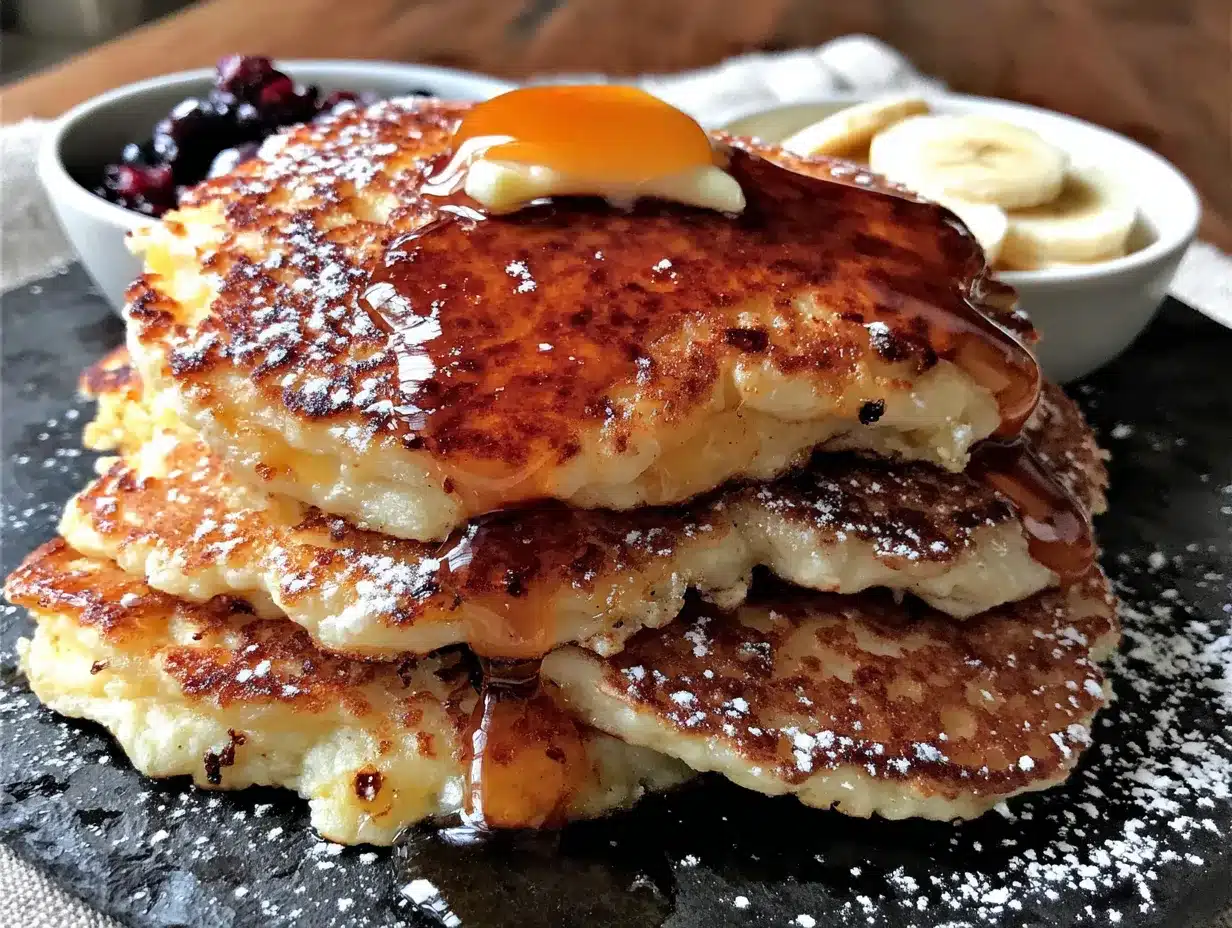
- Serve immediately: Stack them high, add a pat of butter, and drizzle with maple syrup. These pancakes are best fresh off the griddle, but honestly, they’re still pretty good cold from the fridge at 2 AM.
A few notes from my kitchen: If the first pancake looks weird or doesn’t brown evenly, don’t panic. The first one is always a test pancake. Adjust the heat if needed and keep going. Also, if your batter seems too thick in the morning, add a splash of milk to thin it out. If it’s too thin, add a tablespoon of flour. Pancake batter is forgiving—trust your instincts.
Cooking Tips & Techniques
I’ve made these fluffy overnight sourdough starter pancakes probably fifty times by now, and I’ve learned a few things the hard way. Here are my best tips to make sure yours turn out perfect every time:
- Don’t skip the overnight rest. I know it’s tempting to rush it, but the 8-12 hour fermentation is what develops the flavor and texture. I tried making them after just 4 hours once, and they were flat and barely tangy. Patience pays off.
- Use room temperature ingredients. Cold eggs or milk can shock the batter and slow down the fermentation. I take everything out of the fridge about 30 minutes before mixing. If I forget, I’ll warm the milk in the microwave for 15 seconds—don’t tell anyone.
- Watch your heat. Medium-low is your friend. I burned my first batch because I cranked the heat thinking it would cook faster. It didn’t. The pancakes were black on the outside and raw in the middle. Learn from my mistake.
- Don’t overmix after adding the baking soda. Once you add it, stir just until combined. Overmixing deflates the bubbles and gives you dense pancakes. A few lumps are totally fine—they’ll cook out.
- Test the griddle with a tiny bit of batter. Before committing to a full pancake, drop a teaspoon of batter on the griddle. If it sizzles and browns in about 2 minutes, you’re good to go. If it burns, turn the heat down.
- Flip only once. Resist the urge to flip multiple times. One flip is all you need. Flipping more than once can make the pancakes tough and dry. Trust the bubbles—when they pop and the edges look set, it’s time to flip.
- Keep the pancakes warm in a low oven. If you’re making a big batch, place them on a baking sheet in a 200°F (93°C) oven. This keeps them warm without steaming them, which can make them soggy.
One more thing: I once forgot to add the baking soda entirely. The pancakes were flat, dense, and tasted like sourdough that had given up on life. So yeah, don’t skip that step. It’s non-negotiable.
Variations & Adaptations
These fluffy overnight sourdough starter pancakes are incredibly adaptable. I’ve played around with them more than I’d like to admit, and here are some of my favorite variations:
- Blueberry Bliss: Fold in 1 cup (150g) fresh or frozen blueberries right before cooking. The berries burst and create little pockets of jammy sweetness. I use frozen blueberries in winter and fresh in summer—both work great. Just toss them in a little flour first to prevent them from sinking to the bottom.
- Whole Wheat Version: Swap half the all-purpose flour for whole wheat flour. The pancakes will be slightly denser but have a wonderful nutty flavor. Add an extra tablespoon of milk to balance the extra absorption. I tried this on a health kick and ended up liking it more than I expected.
- Gluten-Free Option: Use a 1:1 gluten-free flour blend (like Bob’s Red Mill) instead of all-purpose flour. The texture will be a bit more delicate, so be gentle when flipping. I’ve made these for a gluten-sensitive friend and she said they were the best pancakes she’d had in years.
- Vegan Version: Replace the egg with a flax egg (1 tablespoon flaxseed meal + 3 tablespoons water, let sit for 5 minutes) and use melted coconut oil instead of butter. Use oat milk or almond milk for the milk. The texture is slightly less fluffy but still delicious. I accidentally made these vegan once when I ran out of eggs, and they were surprisingly good.
- Chocolate Chip Dream: Fold in ½ cup (85g) mini chocolate chips after adding the baking soda. The chocolate melts into the pancakes and creates these gooey pockets of goodness. My kids request this version every single weekend.
- Savory Twist: Skip the sugar and vanilla, and add ½ teaspoon garlic powder, ¼ cup (25g) grated Parmesan cheese, and 2 tablespoons chopped chives. Cook as directed and serve with sour cream or smoked salmon. This is my secret brunch party trick—everyone is always surprised.
I’ve also tried adding a mashed banana to the batter, which adds sweetness and moisture. Just reduce the milk by 2 tablespoons to compensate. It’s a great way to use up overripe bananas, and the flavor pairs beautifully with the sourdough tang.
Serving & Storage Suggestions
These fluffy overnight sourdough starter pancakes are best served hot off the griddle, but here’s how to make the most of them:
Serving Suggestions: Stack 3-4 pancakes on a plate, add a pat of butter on top, and drizzle generously with warm maple syrup. For extra flair, top with fresh berries, a sprinkle of powdered sugar, or a dollop of whipped cream. I love serving them with crispy bacon on the side—the salty-sweet combo is unbeatable. For a lighter option, try them with Greek yogurt and a drizzle of honey. They also pair beautifully with a hot cup of coffee or a glass of cold milk.
Storage Instructions: Leftover pancakes can be stored in an airtight container in the refrigerator for up to 3 days. Place a piece of parchment paper between layers to prevent sticking. For longer storage, freeze them: arrange cooled pancakes in a single layer on a baking sheet, freeze for 1 hour, then transfer to a freezer-safe bag or container. They’ll keep for up to 3 months. I always make a double batch and freeze half for busy mornings.
Reheating Tips: The best way to reheat pancakes is in a toaster or toaster oven—it crisps up the edges while keeping the inside fluffy. Pop them in for 1-2 minutes on medium setting. Alternatively, microwave them for 20-30 seconds, but they’ll be softer. For a larger batch, reheat in a 350°F (175°C) oven for 5-7 minutes. I’ve also reheated them in a dry skillet over medium heat for about 1 minute per side—works like a charm.
How Flavors Develop: Interestingly, the sourdough tang mellows slightly after the pancakes are cooked, so they taste even more balanced the next day. If you’re meal prepping, these pancakes actually improve after a day in the fridge. The flavors meld together and the texture stays surprisingly tender.
Nutritional Information & Benefits
Here’s the estimated nutritional breakdown for one serving of these fluffy overnight sourdough starter pancakes (based on 3 pancakes per serving, using whole milk and butter):
| Nutrient | Amount Per Serving |
|---|---|
| Calories | 280 |
| Total Fat | 10g |
| Saturated Fat | 5g |
| Cholesterol | 65mg |
| Sodium | 450mg |
| Total Carbohydrates | 40g |
| Dietary Fiber | 1g |
| Sugars | 8g |
| Protein | 7g |
Health Benefits: The overnight fermentation process makes these pancakes easier to digest than traditional pancakes. The sourdough starter breaks down phytic acid in the flour, which can help your body absorb more nutrients. Plus, the fermentation creates beneficial bacteria that support gut health. The protein from the egg and milk helps keep you full longer, and the complex carbohydrates provide steady energy without the sugar crash. If you use whole wheat flour, you’ll get extra fiber and B vitamins. Honestly, these are about as healthy as pancakes get without sacrificing flavor.
Dietary Considerations: This recipe can be made gluten-free, dairy-free, or vegan with simple substitutions (see Variations section). It contains gluten, dairy, and eggs in its standard form, so adjust accordingly if you have allergies. The sugar content is moderate, and you can reduce it further by using a sugar substitute or omitting it entirely—the pancakes will just be less sweet.
Conclusion
These fluffy overnight sourdough starter pancakes have become a staple in my kitchen for good reason. They’re simple, forgiving, and absolutely delicious. The overnight rest transforms basic ingredients into something special—pancakes that are light, tangy, and satisfying in a way that boxed mix just can’t match. Whether you’re a seasoned sourdough baker or someone who just started a starter and doesn’t know what to do with all that discard, this recipe is for you.
I love how versatile they are. You can dress them up for a fancy brunch or keep them simple for a weekday breakfast. They freeze beautifully, reheat well, and adapt to almost any dietary need. Honestly, I don’t think I’ll ever go back to regular pancakes again. There’s something about that overnight fermentation that just hits different.
Now I want to hear from you! Have you tried making sourdough pancakes before? What’s your favorite topping combination? Drop a comment below and let me know—I’m always looking for new ideas. And if you make these, tag me in your photos. I love seeing these pancakes in kitchens all over the world. Happy cooking, friends!
Frequently Asked Questions
Can I use active sourdough starter instead of discard?
Absolutely! You can use either active starter or discard for this recipe. Active starter will give a slightly stronger tang and more fermentation activity, but discard works perfectly fine. The key is that the starter is bubbly and healthy. If using active starter, you might notice the batter rises a bit more during the overnight rest.
Can I skip the overnight rest and make them immediately?
Technically yes, but you’ll lose the signature flavor and texture. The overnight rest is what develops the sourdough tang and creates a lighter, fluffier pancake. If you’re in a rush, you can let the batter rest for at least 2-3 hours at room temperature, but 8-12 hours is ideal for the best results.
Why did my pancakes turn out flat?
Flat pancakes usually mean one of three things: your baking soda is old and not reacting properly, your batter was overmixed after adding the baking soda, or your starter wasn’t active enough. Check the expiration date on your baking soda and make sure your starter is bubbly and healthy. Also, don’t let the batter sit too long after adding the baking soda—cook it within 5 minutes.
Can I make the batter gluten-free?
Yes! Use a high-quality 1:1 gluten-free flour blend that contains xanthan gum. I’ve had good results with Bob’s Red Mill 1:1 Baking Flour. The texture will be slightly more delicate, so be gentle when flipping. You may also need to add an extra tablespoon of milk to adjust the consistency.
How do I store leftover pancakes?
Store leftover pancakes in an airtight container in the refrigerator for up to 3 days. For longer storage, freeze them in a single layer on a baking sheet, then transfer to a freezer bag. They’ll keep for up to 3 months. Reheat in a toaster, toaster oven, or microwave for a quick breakfast any day of the week.
Pin This Recipe!
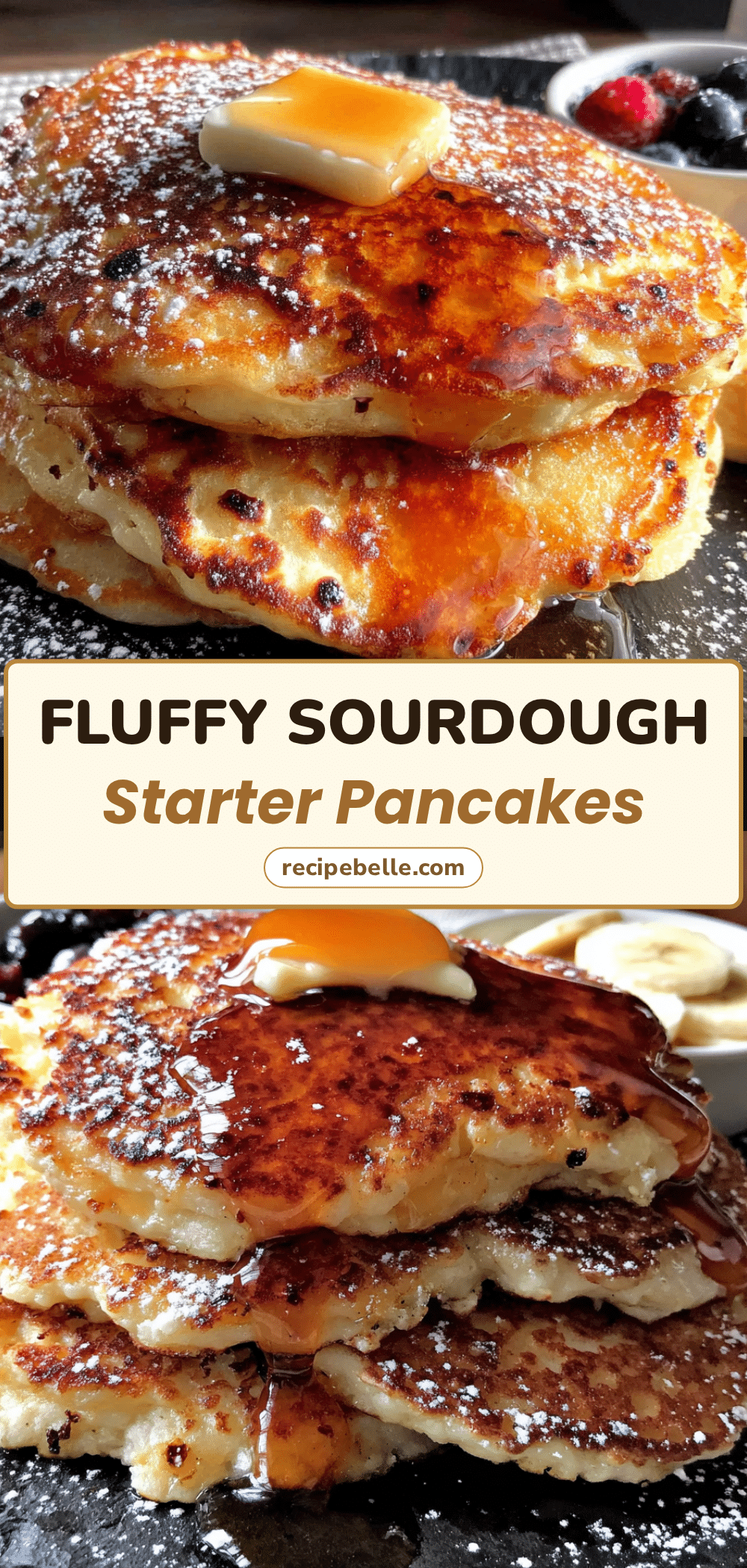
Fluffy Overnight Sourdough Starter Pancakes: Easy 15-Min Breakfast
These fluffy overnight sourdough starter pancakes are light, tangy, and incredibly easy to make. The overnight rest develops the flavor and texture, resulting in pancakes that are tender on the inside and golden on the outside.
- Prep Time: 15 minutes
- Cook Time: 15 minutes
- Total Time: 8 hours 30 minutes (includes overnight rest)
- Yield: 4 servings 1x
- Category: Breakfast
- Cuisine: American
Ingredients
- 1 cup (240g) sourdough starter discard or active starter
- 1 cup (120g) all-purpose flour
- 1 cup (240ml) milk, room temperature
- 1 large egg, room temperature
- 2 tablespoons (25g) granulated sugar
- 2 tablespoons (28g) unsalted butter, melted and slightly cooled
- 1 teaspoon (5g) baking soda
- ½ teaspoon (3g) salt
- 1 teaspoon (5ml) vanilla extract
- Butter or oil for greasing the griddle
Instructions
- The night before, combine sourdough starter discard, all-purpose flour, and room temperature milk in a large bowl. Whisk until smooth. Cover with plastic wrap or a clean towel and let sit on the counter overnight for 8-12 hours.
- In the morning, check the batter—it should be bubbly and slightly expanded. Give it a gentle stir. If there is a layer of liquid on top, whisk it back in.
- Add the egg, sugar, melted butter, vanilla extract, and salt to the batter. Whisk until just combined.
- Sprinkle baking soda over the batter and whisk quickly. The batter will bubble and foam. Let it rest for 2-3 minutes while heating the griddle.
- Heat a griddle or non-stick skillet over medium-low heat. Add a pat of butter or drizzle of oil. The pan is ready when a drop of water sizzles and dances on the surface.
- Using a ¼-cup measure or ladle, pour batter onto the griddle, leaving space between pancakes. Cook until bubbles form on the surface and edges look set, about 2-3 minutes. Flip carefully and cook for another 1-2 minutes until golden brown.
- Transfer cooked pancakes to a plate and cover loosely with a towel or keep warm in a 200°F (93°C) oven while cooking remaining batter.
- Serve immediately with butter and maple syrup.
Notes
The overnight rest is essential for flavor and texture. Use room temperature ingredients for best results. Don’t overmix after adding baking soda. The first pancake is a test pancake—adjust heat if needed. If batter is too thick, add a splash of milk; if too thin, add a tablespoon of flour.
Nutrition
- Serving Size: 3 pancakes
- Calories: 280
- Sugar: 8
- Sodium: 450
- Fat: 10
- Saturated Fat: 5
- Carbohydrates: 40
- Fiber: 1
- Protein: 7
Keywords: sourdough pancakes, overnight pancakes, sourdough starter discard, fluffy pancakes, easy breakfast, sourdough discard recipe