Introduction
Last October, I was at the tail end of a farmers market run, my canvas bag already heavy with squash and the last of the season’s basil. I stopped at a small table tucked between the apple vendor and the honey stand, where an older woman named Rosa was selling handwritten recipe cards for a dollar each. She watched me fumbling with my wallet, trying to balance my purchases, and didn’t say anything at first. Then she just slid a card across the table and said, “This one is for when the air gets cold and you need something warm to hold onto.”
I bought it on impulse, honestly, mostly because of the way she said it. The card was stained on one corner and the handwriting was a little messy, but the title was clear: Cinnamon Apple Cider Cake. It took me three tries to get it right—the first one sank in the middle, and the second one was so dry I almost gave up. But that third attempt? That was the one. The moment I pulled it from the oven, the whole kitchen smelled like fall had walked through the door and decided to stay.
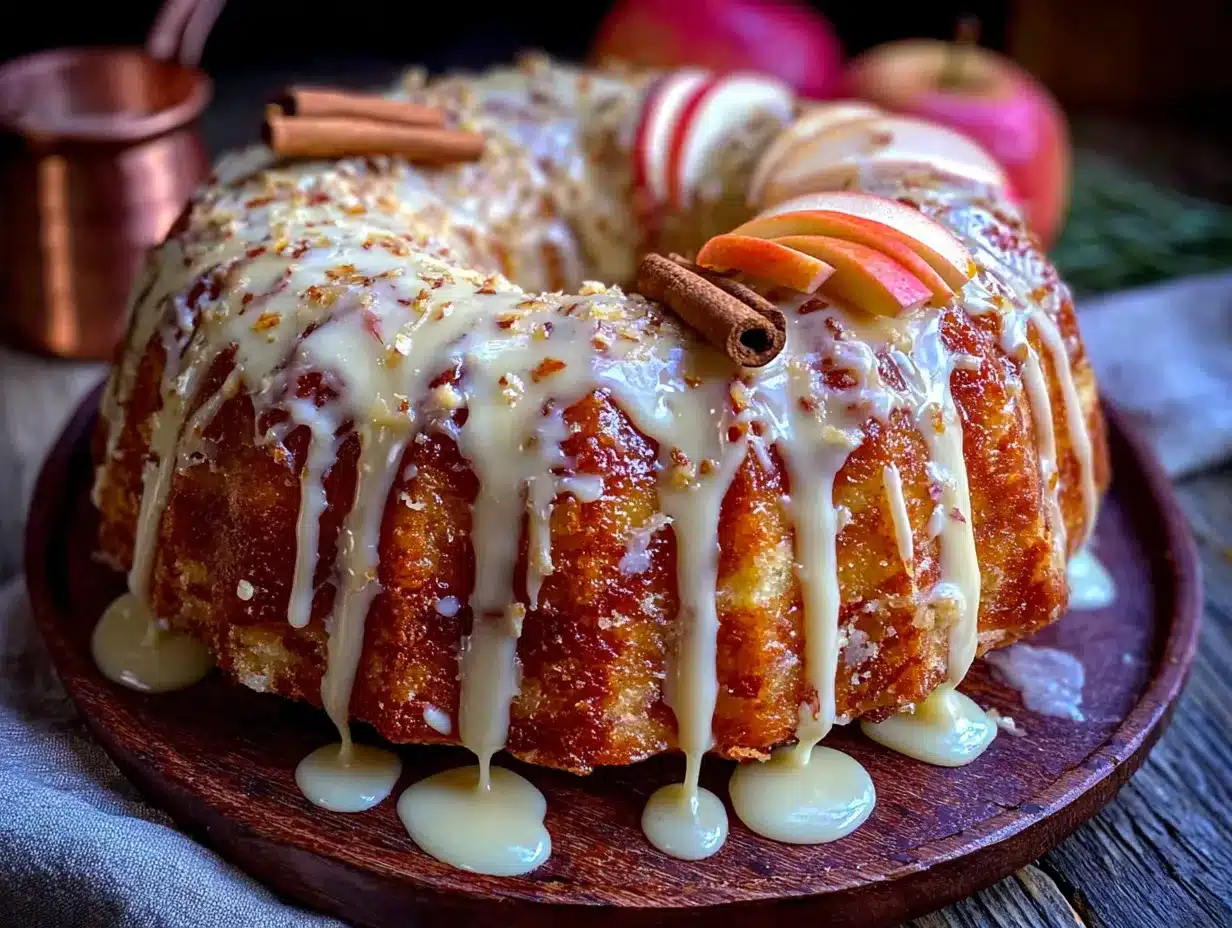
This cozy cinnamon apple cider bundt cake is what I make when I want to slow down. It’s not fancy, and it doesn’t try to be. It’s the kind of cake you slice thick and eat with your hands while standing at the counter, maybe with a cup of coffee nearby. The apple cider keeps it tender, the cinnamon and brown sugar give it that deep, almost caramel-like warmth, and the whole thing comes together with ingredients you probably already have. Maybe you’ve been there—staring at a pile of apples, wanting something that feels like a hug in dessert form. This is that cake.
Why You’ll Love This Recipe
I’ve tested this cozy cinnamon apple cider bundt cake more times than I care to admit, and every single batch confirmed what I suspected from that first successful attempt: this recipe is something special. It’s the kind of cake that disappears before you’ve had a chance to savor a second slice yourself.
- Quick & Easy: From start to finish, this cake is ready in about an hour and fifteen minutes. Most of that time is hands-off baking, so you can tidy up the kitchen or put your feet up while it works its magic.
- Simple Ingredients: No need to hunt down specialty flours or obscure spices. You probably have everything in your pantry right now—flour, sugar, eggs, butter, and of course, apple cider.
- Perfect for Fall Gatherings: Whether it’s a Thanksgiving dessert table, a cozy Sunday brunch, or a weekday treat that makes the house smell incredible, this cake fits the moment.
- Crowd-Pleaser: I’ve brought this to potlucks and family dinners, and it gets the same reaction every time. People who claim they don’t like cake ask for seconds. Kids and adults both go for it.
- Unbelievably Delicious: The texture is where this cake shines. It’s moist without being dense, tender without being crumbly, and the apple cider reduction concentrates all that fruity, spiced flavor into every bite.
What makes this recipe different from other apple cakes is the technique. Instead of just pouring in apple cider straight from the jug, you reduce it first. That extra step concentrates the flavor and removes some of the water, so you get intense apple taste without a soggy crumb. It’s a small thing, but it makes a big difference. I learned this trick from a pastry chef friend who told me it’s the secret to any fruit-based cake that actually tastes like fruit.
This cake isn’t just good—it’s the kind that makes you close your eyes after the first bite. It’s comfort food reimagined, simpler than a layered cake but with the same soul-soothing satisfaction. Perfect for impressing guests without stress, or turning a quiet Tuesday night into something memorable.
What Ingredients You Will Need
This recipe uses simple, wholesome ingredients to deliver bold flavor and satisfying texture without the fuss. Most of these are pantry staples, and the apple cider is easy to find during the fall months.
- For the Cake:
- 2 cups apple cider (not apple juice—cider has more depth and complexity)
- 3 cups all-purpose flour (I prefer King Arthur for consistent results)
- 2 teaspoons baking powder
- 1 teaspoon baking soda
- 1 teaspoon ground cinnamon
- ½ teaspoon ground nutmeg (freshly grated if you have it)
- ½ teaspoon salt
- 1 cup unsalted butter, softened (adds richness and tenderness)
- 1 ½ cups granulated sugar
- ½ cup light brown sugar, packed (adds moisture and a hint of molasses)
- 3 large eggs, room temperature (helps the batter emulsify properly)
- 2 teaspoons vanilla extract
- 1 cup buttermilk, room temperature (or substitute with 1 cup milk + 1 tablespoon lemon juice, let sit 5 minutes)
- For the Cinnamon Swirl:
- 3 tablespoons granulated sugar
- 2 tablespoons light brown sugar
- 2 teaspoons ground cinnamon
- Pinch of cloves (optional, but adds warmth)
- For the Glaze (Optional but Recommended):
- 1 cup powdered sugar
- 2-3 tablespoons apple cider (use the reduced cider from step 1)
- ¼ teaspoon ground cinnamon
Ingredient Tips: For the apple cider, look for unfiltered cider if you can find it—it has more sediment and flavor. If you only have filtered cider, it will still work, just reduce it as directed. The buttermilk is important for tenderness, but if you don’t have any, the DIY substitute works perfectly. I’ve used it many times when I forgot to buy buttermilk, and the cake comes out exactly the same.
Substitution Guidance: For a dairy-free version, use vegan butter and substitute the buttermilk with unsweetened almond milk mixed with a tablespoon of apple cider vinegar. For a gluten-free option, use a 1:1 gluten-free baking flour blend—I’ve had good luck with Bob’s Red Mill. The texture will be slightly different, but the flavor will still be wonderful.
Equipment Needed
You don’t need a lot of fancy equipment for this cozy cinnamon apple cider bundt cake, but a few key tools make the process smoother.
- 10-cup bundt pan: This is non-negotiable. A standard bundt pan works perfectly. If you only have a 12-cup pan, the cake will be shorter but still delicious.
- Small saucepan: For reducing the apple cider. A 1-quart saucepan is ideal.
- Large mixing bowls: Two bowls—one for dry ingredients, one for wet ingredients.
- Electric mixer: A hand mixer or stand mixer works. I’ve made this by hand with a whisk, but it takes more effort to get the butter and sugar properly creamed.
- Rubber spatula: For scraping down the bowl and folding in the dry ingredients.
- Cooling rack: Essential for letting the cake cool evenly before glazing.
- Measuring cups and spoons: Accurate measurements matter in baking.
Tool Alternatives: If you don’t have a bundt pan, you can bake this in two 9-inch loaf pans. Reduce the baking time to 40-45 minutes and check for doneness with a toothpick. I’ve also used a 9×13-inch baking dish, which works well for a sheet cake version—just bake for 30-35 minutes.
Personal Note: I bought my bundt pan at a thrift store for three dollars, and it’s honestly my favorite baking pan. It’s seasoned from years of use, and nothing sticks to it. If you’re new to bundt cakes, invest in a good non-stick pan and grease it thoroughly—it makes all the difference.
Preparation Method
Let’s walk through this step by step. I’ve included all the little details I wish someone had told me the first time.
- Reduce the apple cider. Pour the 2 cups of apple cider into a small saucepan and bring it to a boil over medium-high heat. Reduce the heat to medium and let it simmer until it’s reduced to about ½ cup. This takes about 15-20 minutes. You’ll know it’s ready when it’s syrupy and smells intensely of apples. Let it cool completely before using. (Pro tip: set a timer so you don’t forget about it and end up with burnt cider—I’ve done that.)
- Preheat and prep. Preheat your oven to 350°F (175°C). Grease your bundt pan thoroughly with butter or non-stick baking spray, making sure to get into all the crevices. Dust the pan with a light coating of flour, tapping out the excess. This double-coating is your insurance against a stuck cake.
- Mix the dry ingredients. In a large bowl, whisk together the flour, baking powder, baking soda, cinnamon, nutmeg, and salt. Set this aside while you work on the wet ingredients.
- Cream the butter and sugars. In a separate large bowl, beat the softened butter with the granulated sugar and brown sugar until light and fluffy. This takes about 3-4 minutes with an electric mixer on medium speed. You’re looking for a pale, creamy mixture that’s increased in volume. Scrape down the sides of the bowl halfway through.
- Add the eggs and vanilla. Add the eggs one at a time, beating well after each addition. Then beat in the vanilla extract. The mixture might look slightly curdled at this point—don’t worry, that’s normal. It will come together once you add the dry ingredients.
- Alternate dry ingredients and buttermilk. With the mixer on low speed, add about one-third of the dry ingredients, then half of the buttermilk, then another third of the dry ingredients, the remaining buttermilk, and finally the last of the dry ingredients. Mix just until combined—overmixing will make the cake tough. Fold in the cooled reduced apple cider with a rubber spatula.
- Make the cinnamon swirl. In a small bowl, mix together the granulated sugar, brown sugar, cinnamon, and cloves (if using). This will create a sweet, spiced ribbon through the middle of the cake.
- Layer the batter. Pour half of the batter into the prepared bundt pan and spread it evenly. Sprinkle the cinnamon sugar mixture over the batter, keeping it away from the edges by about ½ inch. Top with the remaining batter and smooth the surface.
- Bake. Bake for 45-55 minutes, or until a toothpick inserted into the center comes out clean or with a few moist crumbs. The top should be golden brown and the cake should pull away slightly from the sides of the pan. Let the cake cool in the pan for 15 minutes—this is crucial. If you try to flip it too soon, it will break apart.
- Cool completely. Invert the cake onto a cooling rack and let it cool completely before glazing. If you glaze it while it’s still warm, the glaze will melt and soak in instead of forming that beautiful white drizzle.
- Make the glaze. Whisk together the powdered sugar, 2 tablespoons of the reduced apple cider (or regular cider), and cinnamon until smooth. Add more cider if needed to reach a pourable consistency. Drizzle over the cooled cake.
Cooking Tips & Techniques
After making this cozy cinnamon apple cider bundt cake more times than I can count, I’ve picked up a few tricks that make the process smoother and the results more consistent.
The reduction is non-negotiable. I know it’s an extra step, and I know you might be tempted to skip it. Don’t. The first time I made this cake, I was impatient and used full-strength cider. The cake was wet and dense, and the apple flavor was barely there. Reducing the cider concentrates the flavor and removes excess liquid, so you get that deep apple taste without a soggy crumb. It’s worth the extra 15 minutes.
Room temperature ingredients matter. I cannot stress this enough. Cold eggs and cold buttermilk will seize the butter and give you a lumpy batter. Take everything out of the fridge an hour before you start baking. If you forget, you can warm the buttermilk in the microwave for 10-15 seconds and place the eggs in a bowl of warm water for 5 minutes.
Grease the pan like you mean it. Bundt pans are notorious for sticking. I use a pastry brush to coat every nook and cranny with softened butter, then dust with flour. Some people swear by a baking spray that contains flour—I’ve used that too, and it works well. The key is to be thorough. There’s nothing worse than pulling out a broken cake.
Don’t overmix. Once you add the dry ingredients, mix just until the flour disappears. Overmixing develops the gluten and makes the cake tough. A few lumps in the batter are perfectly fine—they’ll bake out.
Check for doneness early. Ovens vary, so start checking at 45 minutes. Insert a toothpick into the center of the cake. If it comes out clean, it’s done. If there’s wet batter on it, give it another 5 minutes and check again.
Let it cool in the pan. That 15-minute rest in the pan is when the cake sets and releases from the sides. If you try to flip it too early, it will fall apart. Be patient—I learned this the hard way when I ended up with a pile of cake crumbs instead of a beautiful bundt.
Variations & Adaptations
One of the things I love about this cozy cinnamon apple cider bundt cake is how adaptable it is. Here are some variations I’ve tried and loved.
Apple Cider Donut Cake: For a twist that tastes like those apple cider donuts from the orchard, add ½ teaspoon of apple pie spice to the dry ingredients and brush the baked cake with melted butter before dusting it with cinnamon sugar. It’s dangerously good.
Dairy-Free Version: I made this for a friend who’s lactose intolerant, and it worked beautifully. Use vegan butter (I like Miyoko’s) and substitute the buttermilk with 1 cup of unsweetened oat milk mixed with 1 tablespoon of apple cider vinegar. Let it sit for 5 minutes before using. The cake was slightly less tender but still delicious.
Gluten-Free Adaptation: Use a 1:1 gluten-free baking flour blend. I’ve tested this with Bob’s Red Mill and Cup4Cup, and both worked well. Add an extra tablespoon of buttermilk to compensate for the drier gluten-free flour. The texture is a bit more delicate, so handle the cake gently when removing it from the pan.
Spiced Apple Cake: Add ½ cup of finely diced fresh apple (I use Honeycrisp or Fuji) to the batter along with the reduced cider. Toss the diced apple in a tablespoon of flour first to prevent it from sinking to the bottom. This adds little pockets of tender fruit throughout the cake.
Maple Glaze Variation: Replace the apple cider in the glaze with 2 tablespoons of pure maple syrup and 1 tablespoon of milk. The maple flavor pairs beautifully with the cinnamon and apple.
Serving & Storage Suggestions
This cozy cinnamon apple cider bundt cake is versatile enough for any occasion, from a casual weekday treat to a holiday centerpiece.
Serving: I love serving this cake slightly warm, with a dollop of lightly sweetened whipped cream or a scoop of vanilla ice cream. The contrast between the warm spiced cake and the cold cream is heavenly. For a more indulgent presentation, drizzle caramel sauce over each slice and sprinkle with a pinch of flaky sea salt.
Complementary Pairings: This cake begs for a hot beverage. A cup of spiced chai, a dark roast coffee, or a mug of hot apple cider all work beautifully. If you’re serving it for brunch, pair it with a simple frittata or a bowl of yogurt and granola to balance the sweetness.
Storage: Store the cake in an airtight container at room temperature for up to 3 days. The glaze might soften slightly, but that’s part of the charm. If you’ve already sliced the cake, place a piece of wax paper between the cut sides to keep them from drying out.
Freezing: This cake freezes beautifully. Wrap the completely cooled cake (unglazed) tightly in plastic wrap, then in a layer of aluminum foil. Freeze for up to 3 months. To thaw, let it sit at room temperature for 3-4 hours, then glaze and serve. I often bake two cakes at once and freeze one for later—it’s a lifesaver during the holiday season.
Reheating: For that just-baked warmth, microwave individual slices for 15-20 seconds. Or place slices on a baking sheet and warm them in a 300°F oven for 5-7 minutes. The aroma will fill your kitchen all over again.
Flavor Development: Here’s a secret: this cake actually tastes better the next day. The flavors meld and deepen overnight, and the texture becomes even more moist. If you can resist eating it the day you bake it, you’ll be rewarded with an even better cake on day two.
Nutritional Information & Benefits
While this cozy cinnamon apple cider bundt cake is definitely a treat, it does have some redeeming qualities worth mentioning.
Estimated Nutritional Values (per slice, based on 12 servings):
- Calories: 385
- Fat: 17g
- Carbohydrates: 55g
- Protein: 5g
- Fiber: 1g
- Sugar: 34g
Health Highlights: The apple cider provides a small amount of vitamin C and antioxidants, particularly if you use unfiltered cider. Cinnamon has been studied for its anti-inflammatory properties and its ability to help regulate blood sugar. While this cake isn’t health food, it’s made with real ingredients and no artificial preservatives or additives.
Dietary Considerations: This recipe contains gluten, dairy, and eggs. For those with dietary restrictions, see the variations section for gluten-free and dairy-free adaptations. The cake is nut-free as written, making it safe for school functions or gatherings where nut allergies are a concern.
Personal Perspective: I believe in balance. This cake is a celebration of fall flavors, and it’s meant to be enjoyed without guilt. One slice won’t derail your wellness goals, and the joy it brings—both in the baking and the eating—is its own kind of nourishment.
Conclusion
This cozy cinnamon apple cider bundt cake has become a staple in my fall baking rotation, and I think it deserves a spot in yours too. It’s the kind of recipe that feels special without being fussy, the kind that fills your kitchen with the scent of cinnamon and apples and makes everyone wander in asking, “What’s baking?”
I love that this cake adapts to whatever you have on hand and whatever occasion you’re celebrating. It’s forgiving enough for a beginner baker and interesting enough for someone who’s been at this for years. The reduced apple cider trick is one I’m genuinely proud of, and I hope it becomes a go-to technique in your kitchen too.
I’d love to hear how your cake turns out. Did you try a variation? Did you serve it with something unexpected? Drop a comment below and let me know—I read every single one, and your stories and questions are what keep this blog going. And if you share a photo on social media, tag me so I can see your beautiful creation.
Go ahead, preheat that oven. Fall is waiting.
Frequently Asked Questions
Can I use apple juice instead of apple cider?
Technically yes, but the flavor won’t be as deep. Apple juice is thinner and sweeter, with less of that tangy, complex apple flavor. If you’re in a pinch, go ahead and use it, but reduce it the same way you would cider. The cake will still be good—just not quite as amazing.
Why did my bundt cake stick to the pan?
This usually happens for one of two reasons: the pan wasn’t greased thoroughly enough, or the cake wasn’t cooled long enough in the pan. Make sure you get butter or spray into every crevice of the pan, and don’t skip the flour dusting. And that 15-minute rest in the pan is crucial—set a timer and don’t rush it.
Can I make this cake ahead of time?
Absolutely. In fact, I recommend it. The cake tastes even better the next day. Bake it, cool it completely, and store it tightly wrapped at room temperature. Glaze it just before serving for the prettiest presentation. You can also freeze the unglazed cake for up to 3 months.
How do I know when the apple cider is reduced enough?
You’re looking for about ½ cup of syrupy liquid. It should coat the back of a spoon and smell intensely of cooked apples. If you tilt the saucepan, the liquid should move slowly, like thin maple syrup. Don’t let it go too far, or it will turn into apple caramel—which is delicious, but not what we want here.
Can I add nuts or dried fruit to this cake?
Yes! Fold in ½ cup of chopped pecans or walnuts along with the reduced cider for a nice crunch. Dried cranberries or chopped dried apples also work beautifully. If you’re adding dried fruit, toss it in a tablespoon of flour first to keep it from sinking to the bottom of the pan.
Pin This Recipe!
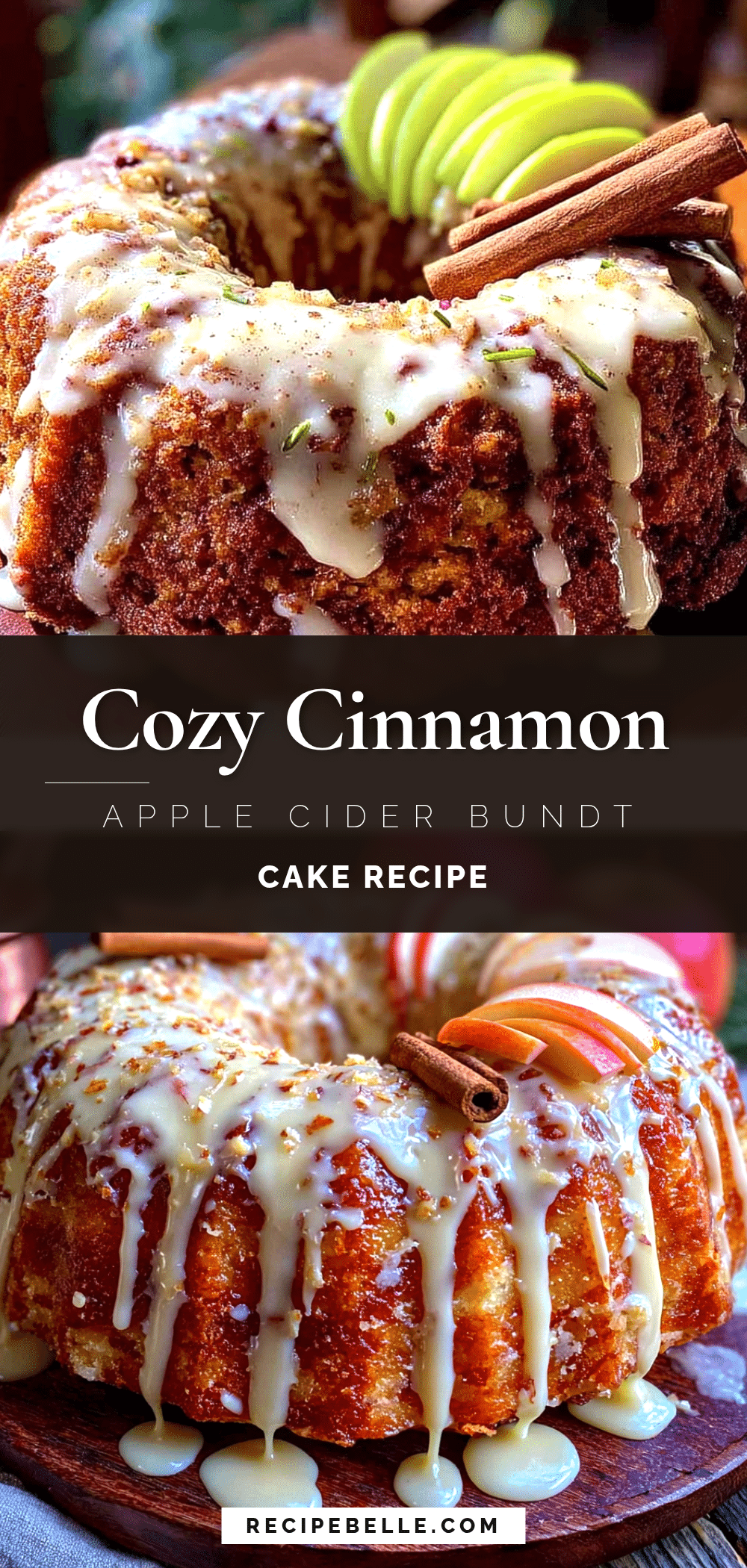
Cozy Cinnamon Apple Cider Bundt Cake

This cozy cinnamon apple cider bundt cake is what you make when you want to slow down. It’s not fancy, and it doesn’t try to be—it’s the kind of cake you slice thick and eat with your hands while standing at the counter, maybe with a cup of coffee nearby.
- Prep Time: 20 minutes
- Cook Time: 55 minutes
- Total Time: 1 hour 15 minutes
- Yield: 12 servings 1x
- Category: Dessert
- Cuisine: American
Ingredients
- 2 cups apple cider (not apple juice)
- 3 cups all-purpose flour
- 2 teaspoons baking powder
- 1 teaspoon baking soda
- 1 teaspoon ground cinnamon
- ½ teaspoon ground nutmeg (freshly grated if you have it)
- ½ teaspoon salt
- 1 cup unsalted butter, softened
- 1 ½ cups granulated sugar
- ½ cup light brown sugar, packed
- 3 large eggs, room temperature
- 2 teaspoons vanilla extract
- 1 cup buttermilk, room temperature (or substitute with 1 cup milk + 1 tablespoon lemon juice, let sit 5 minutes)
- 3 tablespoons granulated sugar (for cinnamon swirl)
- 2 tablespoons light brown sugar (for cinnamon swirl)
- 2 teaspoons ground cinnamon (for cinnamon swirl)
- Pinch of cloves (optional, for cinnamon swirl)
- 1 cup powdered sugar (for glaze)
- 2–3 tablespoons apple cider (use the reduced cider from step 1, for glaze)
- ¼ teaspoon ground cinnamon (for glaze)
Instructions
- Reduce the apple cider: Pour the 2 cups of apple cider into a small saucepan and bring it to a boil over medium-high heat. Reduce the heat to medium and let it simmer until it’s reduced to about ½ cup. This takes about 15-20 minutes. Let it cool completely before using.
- Preheat and prep: Preheat your oven to 350°F (175°C). Grease your bundt pan thoroughly with butter or non-stick baking spray, making sure to get into all the crevices. Dust the pan with a light coating of flour, tapping out the excess.
- Mix the dry ingredients: In a large bowl, whisk together the flour, baking powder, baking soda, cinnamon, nutmeg, and salt. Set aside.
- Cream the butter and sugars: In a separate large bowl, beat the softened butter with the granulated sugar and brown sugar until light and fluffy, about 3-4 minutes with an electric mixer on medium speed. Scrape down the sides of the bowl halfway through.
- Add the eggs and vanilla: Add the eggs one at a time, beating well after each addition. Then beat in the vanilla extract.
- Alternate dry ingredients and buttermilk: With the mixer on low speed, add about one-third of the dry ingredients, then half of the buttermilk, then another third of the dry ingredients, the remaining buttermilk, and finally the last of the dry ingredients. Mix just until combined. Fold in the cooled reduced apple cider with a rubber spatula.
- Make the cinnamon swirl: In a small bowl, mix together the granulated sugar, brown sugar, cinnamon, and cloves (if using).
- Layer the batter: Pour half of the batter into the prepared bundt pan and spread it evenly. Sprinkle the cinnamon sugar mixture over the batter, keeping it away from the edges by about ½ inch. Top with the remaining batter and smooth the surface.
- Bake: Bake for 45-55 minutes, or until a toothpick inserted into the center comes out clean or with a few moist crumbs. Let the cake cool in the pan for 15 minutes.
- Cool completely: Invert the cake onto a cooling rack and let it cool completely before glazing.
- Make the glaze: Whisk together the powdered sugar, 2 tablespoons of the reduced apple cider (or regular cider), and cinnamon until smooth. Add more cider if needed to reach a pourable consistency. Drizzle over the cooled cake.
Notes
The apple cider reduction is non-negotiable for best flavor and texture. Room temperature ingredients are important for proper emulsification. Grease the bundt pan thoroughly to prevent sticking. Let the cake cool in the pan for exactly 15 minutes before inverting. The cake tastes even better the next day as flavors meld. For a dairy-free version, use vegan butter and substitute buttermilk with unsweetened almond milk mixed with 1 tablespoon apple cider vinegar. For gluten-free, use a 1:1 gluten-free baking flour blend.
Nutrition
- Serving Size: 1 slice
- Calories: 385
- Sugar: 34
- Sodium: 320
- Fat: 17
- Saturated Fat: 10
- Carbohydrates: 55
- Fiber: 1
- Protein: 5
Keywords: cinnamon apple cider bundt cake, fall dessert, apple cake, bundt cake, easy fall recipe, apple cider cake