“Why can’t you just brown the butter in the microwave?” my friend Jen asked, peering over my shoulder as I stood ready to melt a stick of butter in a saucepan. I started to explain why that wouldn’t work—something about even heating and watching for the milk solids to toast properly. Then I stopped. Honestly, I had no good reason. I was just being stubborn.
So I tossed the butter into a microwave-safe bowl, set the timer for 30-second bursts, and watched. And you know what? It worked. Perfectly browned butter in under three minutes, no stirring, no babysitting a hot pan. I felt equal parts thrilled and ridiculous. Here I was, someone who spends way too much time in the kitchen, getting schooled by a friend who barely cooks.
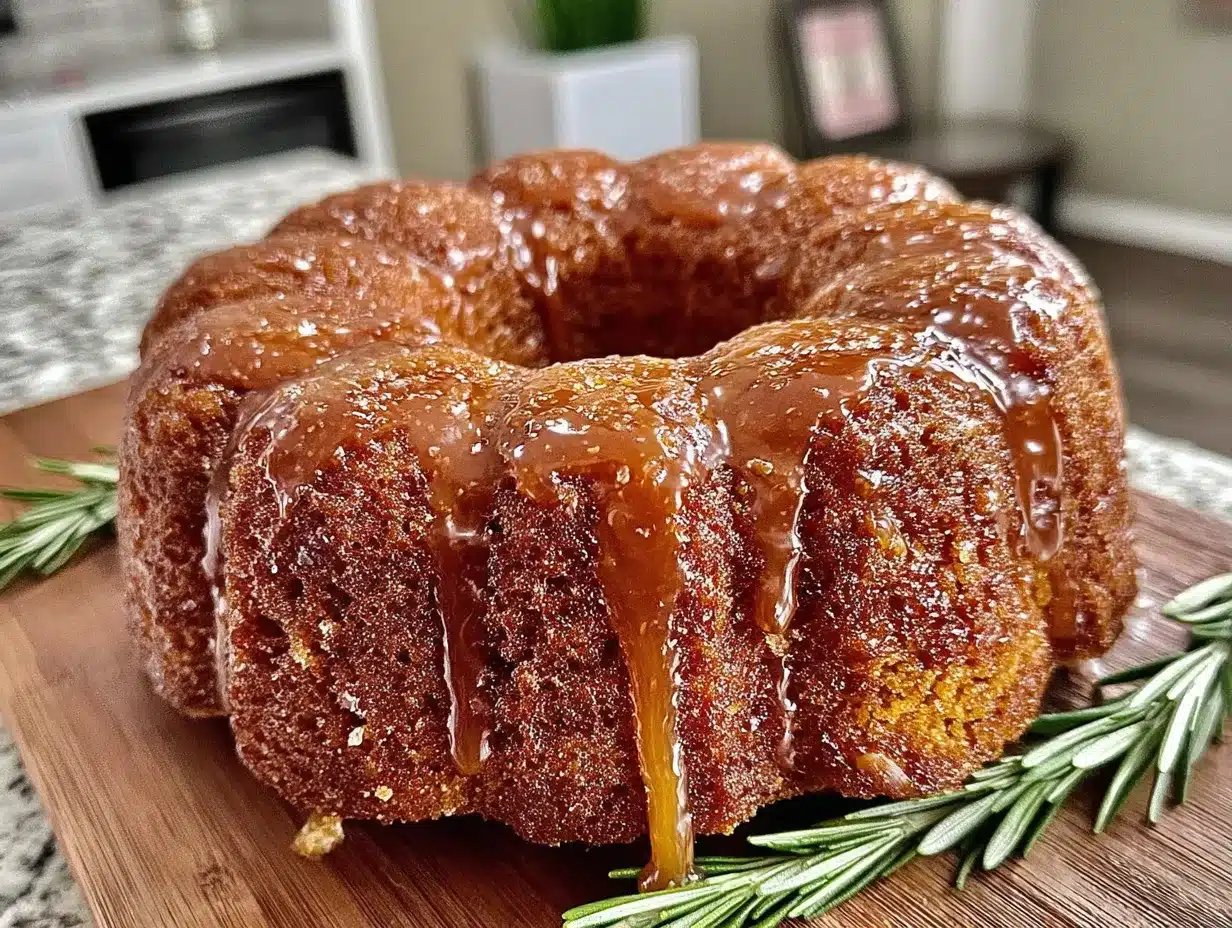
That little moment changed how I approach this Easy Brown Butter Pumpkin Bundt Cake with Maple Glaze. It reminded me that cooking doesn’t have to be complicated to be impressive. And let me tell you, when you are hosting a dinner party or a festive get-together, this cake is exactly the kind of showstopper you want on your table. It is rich, moist, and smells like autumn in a pan. The maple glaze drips down the sides like something from a bakery window. I keep making it because it makes me look like I tried way harder than I actually did. Maybe you have been there too.
Why You’ll Love This Recipe
This isn’t just another pumpkin cake recipe. After testing this over a dozen times for various gatherings—from Thanksgiving dinners to casual potlucks—I can tell you this version stands apart. The brown butter brings a nutty, almost caramel-like depth that regular melted butter just cannot match. It is the kind of detail that makes guests pause mid-bite and ask, “What is in this?”
- Perfect for Hosting: This bundt cake feeds a crowd beautifully. One cake yields 12 to 16 generous slices, making it ideal for dinner parties, holiday brunches, or festive potlucks.
- Make-Ahead Friendly: You can bake this cake a day ahead. In fact, the flavors get even better overnight as the brown butter and pumpkin meld together.
- Simple Ingredients: No weird specialty items here. Pumpkin puree, basic baking staples, and a can of maple syrup are all you need.
- Crowd-Pleaser: I have brought this to three different gatherings this fall alone, and each time, people asked for the recipe before they even finished their slice.
- Unbelievably Delicious: The texture is incredibly moist thanks to the pumpkin, while the brown butter adds a sophisticated nuttiness. The maple glaze on top is the perfect finishing touch—not too sweet, just glossy and gorgeous.
What makes this recipe different from the dozens of other pumpkin bundt cakes out there is the brown butter technique and the ratios. I spent weeks adjusting the flour-to-pumpkin ratio to get a cake that is dense enough to hold its shape in a bundt pan but still light and tender. It is comfort food reimagined—familiar enough to feel cozy, but special enough to impress guests without stress.
What Ingredients You Will Need
This recipe uses simple, wholesome ingredients to deliver a cake that tastes anything but basic. Most of these are pantry staples, which makes this perfect for last-minute hosting situations.
For the Brown Butter Pumpkin Bundt Cake
- 1 cup (226g) unsalted butter – You will brown this first. I recommend using a good quality butter like Kerrygold for richer flavor, but any unsalted butter works fine.
- 1 ¾ cups (350g) granulated sugar – Regular white sugar gives the cake a tender crumb. Do not substitute with brown sugar here, as it changes the moisture balance.
- ½ cup (100g) packed light brown sugar – This adds a touch of molasses depth that pairs beautifully with the pumpkin and maple.
- 4 large eggs – Room temperature eggs incorporate better into the batter. If you forgot to take them out ahead of time, place them in a bowl of warm water for 5 minutes.
- 1 (15-ounce) can pumpkin puree – Not pumpkin pie filling! Make sure you grab 100% pure pumpkin puree. Libby’s is my go-to brand for consistent results.
- 2 teaspoons vanilla extract – Pure vanilla extract makes a noticeable difference over imitation. I always splurge on the real stuff for baking.
- 3 cups (375g) all-purpose flour – Spoon and level your flour for accuracy. Scooping directly from the bag packs in too much flour and makes the cake dry.
- 2 teaspoons baking powder – Make sure it is fresh. Test by dropping a little into warm water—if it fizzes, it is good.
- 1 teaspoon baking soda
- 1 teaspoon salt – Fine sea salt or table salt works best.
- 2 teaspoons ground cinnamon
- 1 teaspoon ground ginger
- ½ teaspoon ground nutmeg – Freshly grated nutmeg is incredible here if you have it.
- ¼ teaspoon ground cloves
- ½ cup (120ml) buttermilk – Room temperature. If you do not have buttermilk, add 1 tablespoon of lemon juice or white vinegar to regular milk and let it sit for 5 minutes.
For the Maple Glaze
- ¼ cup (60ml) pure maple syrup – Do not use pancake syrup. The real stuff makes all the difference here.
- 1 ½ cups (180g) powdered sugar – Sifted to avoid lumps.
- 2 tablespoons (30g) unsalted butter – Melted.
- 1-2 tablespoons milk – To adjust consistency. Start with 1 tablespoon and add more as needed.
- Pinch of salt – This balances the sweetness beautifully.
Equipment Needed
You do not need a professional bakery setup for this cake, but having the right tools makes the process smoother. Here is what you will need:
- 10 to 12-cup bundt pan – This is non-negotiable. A standard 10-cup bundt pan works perfectly. I use a Nordic Ware classic bundt pan, and it has never let me down. If you have a smaller pan, the batter may overflow.
- Microwave-safe bowl – For browning the butter the easy way. A glass measuring cup works great.
- Large mixing bowls – One for dry ingredients, one for wet ingredients.
- Electric hand mixer or stand mixer – You can mix by hand, but the batter is thick, so a mixer saves your arm.
- Whisk – For combining dry ingredients evenly.
- Rubber spatula – For scraping down the bowl and folding in the last bits of flour.
- Cooling rack – Essential for even cooling. A wire rack prevents the bottom from getting soggy.
- Pastry brush – For greasing every nook and cranny of the bundt pan. I use melted butter or a baking spray with flour.
If you do not have a microwave, you can brown the butter in a light-colored saucepan over medium heat. Just swirl it constantly and watch for the milk solids to turn golden brown. The whole process takes about 5 to 7 minutes.
Preparation Method
Take your time with these steps. Rushing is the number one reason bundt cakes stick to the pan or turn out dry. I learned that the hard way when I tried to rush through a batch before guests arrived and ended up with half the cake stuck to the pan.
- Preheat your oven to 350°F (175°C). Position the rack in the lower third of the oven. This helps the cake bake evenly without the top browning too quickly.
- Brown the butter. Place the 1 cup of unsalted butter in a microwave-safe bowl. Microwave in 30-second bursts, swirling the bowl between each interval. After about 2 to 3 minutes total, the butter will turn a deep golden brown and smell nutty and amazing. Watch closely—it goes from brown to burnt fast. Pour the browned butter into a separate bowl to stop the cooking process. Let it cool slightly while you prepare the other ingredients.
- Prepare the bundt pan. Use a pastry brush to coat the inside of the pan thoroughly with melted butter or baking spray. Pay special attention to the center tube and any decorative ridges. Then dust the pan with a light coating of flour, tapping out the excess. This double-coating method is your insurance policy against sticking.
- Whisk the dry ingredients. In a large bowl, whisk together the 3 cups all-purpose flour, 2 teaspoons baking powder, 1 teaspoon baking soda, 1 teaspoon salt, 2 teaspoons cinnamon, 1 teaspoon ginger, ½ teaspoon nutmeg, and ¼ teaspoon cloves. Set aside.
- Mix the wet ingredients. In the bowl of a stand mixer fitted with the paddle attachment (or a large bowl with a hand mixer), beat the browned butter, 1 ¾ cups granulated sugar, and ½ cup brown sugar together on medium speed until well combined, about 2 minutes. The mixture will look grainy—that is normal.
- Add the eggs one at a time. Beat in each egg on low speed until just incorporated before adding the next. Scrape down the sides of the bowl after the second egg. Add the 2 teaspoons vanilla extract and mix briefly.
- Add the pumpkin puree. Pour in the entire can of pumpkin puree and mix on low until combined. The batter will look curdled at this point. Do not panic—that is just the pumpkin and butter not fully emulsifying yet. It will come together once the flour goes in.
- Alternate adding dry ingredients and buttermilk. With the mixer on low speed, add about one-third of the flour mixture. Mix until just a few streaks of flour remain. Pour in half of the buttermilk and mix briefly. Repeat with another third of flour, then the remaining buttermilk, and finally the last of the flour. Stop mixing as soon as the flour disappears. Overmixing at this stage develops gluten and makes the cake tough.
- Fold the batter one last time. Use a rubber spatula to give the batter a few gentle folds from the bottom up. This ensures everything is evenly combined without overworking the batter. The final batter should be thick, smooth, and slightly glossy.
- Pour the batter into the prepared pan. Spoon the batter into the bundt pan and spread it evenly. Tap the pan on the counter a few times to release any air bubbles trapped in the batter.
- Bake for 50 to 60 minutes. Place the pan in the preheated oven and bake until a wooden skewer or toothpick inserted near the center comes out clean or with a few moist crumbs. Start checking at 50 minutes. The top should be deep golden brown and spring back when lightly pressed.
- Cool the cake in the pan. Set the pan on a wire rack and let it cool for exactly 15 minutes. Do not skip this step—cooling too briefly causes the cake to fall apart, while cooling too long makes it stick. After 15 minutes, invert the pan onto the cooling rack and lift it off gently. Let the cake cool completely, about 1 to 2 hours, before glazing.
- Make the maple glaze. While the cake cools, whisk together the ¼ cup maple syrup, 1 ½ cups sifted powdered sugar, 2 tablespoons melted butter, and a pinch of salt in a small bowl. Add 1 tablespoon of milk and whisk until smooth. If the glaze is too thick to drizzle, add another tablespoon of milk. If it is too thin, add a little more powdered sugar.
- Glaze the cake. Once the cake is completely cool, place it on a serving plate. Drizzle the maple glaze over the top, letting it cascade down the sides naturally. Let the glaze set for about 15 minutes before slicing.
Cooking Tips & Techniques
After making this cake for every fall gathering I have hosted over the past three years, I have collected a few hard-won lessons. Let me save you some trouble.
Browning butter in the microwave is legit. I was skeptical too, but it works beautifully. Just use a bowl that is tall enough to prevent splattering, and watch it closely in the last 30-second burst. The butter will foam up and then settle into a golden brown. The smell is your best cue—when it smells nutty and rich, it is done.
Do not skip the buttermilk. I tried making this cake with regular milk once because I was out of buttermilk, and the texture was noticeably less tender. The acid in buttermilk reacts with the baking soda to help the cake rise and stay moist. If you do not have buttermilk, the lemon juice trick works perfectly.
Grease the pan like your reputation depends on it. I cannot stress this enough. A stuck bundt cake is heartbreaking, especially when you have guests waiting. I use a pastry brush to get melted butter into every ridge and crevice, then dust with flour. Some bakers swear by a baking spray that contains flour, like Baker’s Joy. That works too.
Room temperature ingredients matter. Cold eggs and cold buttermilk will seize the browned butter and give you a lumpy batter. Take everything out of the fridge about 30 minutes before you start baking. If you forgot, place the eggs in warm water for 5 minutes and microwave the buttermilk for 10 seconds.
Watch your bake time. Ovens vary wildly. My old oven baked this cake in exactly 52 minutes, but my new one takes 58 minutes. Start checking at 50 minutes, and trust the toothpick test over the timer. A few moist crumbs are fine—you do not want a dry cake.
Variations & Adaptations
One of the best things about this cake is how adaptable it is. Here are a few variations I have tried and loved:
Gluten-Free Version: Substitute the all-purpose flour with a good quality 1-to-1 gluten-free baking flour blend. I have used Bob’s Red Mill with great results. Add 1 teaspoon of xanthan gum if your blend does not already include it. The texture will be slightly more crumbly but still delicious.
Dairy-Free Adaptation: Use a plant-based butter for browning (I like Miyoko’s for its rich flavor) and substitute the buttermilk with ½ cup of unsweetened almond milk mixed with 1 tablespoon of lemon juice. For the glaze, use vegan butter and a dairy-free milk like oat milk.
Spice It Up: If you love a bolder pumpkin spice flavor, add ½ teaspoon of cardamom and a pinch of white pepper to the dry ingredients. The cardamom adds an almost floral note that pairs beautifully with the maple glaze.
Nutty Crunch: Fold ¾ cup of toasted pecans or walnuts into the batter just before pouring it into the pan. The nuts add texture and complement the brown butter flavor perfectly. I did this for a Thanksgiving potluck, and it was the first thing to disappear from the dessert table.
Chocolate Twist: Add ½ cup of mini chocolate chips to the batter. The chocolate chunks against the pumpkin and maple flavors are unexpectedly wonderful. Use dark chocolate chips for a less sweet option.
Serving & Storage Suggestions
This cake is a showstopper at room temperature, which makes it perfect for hosting. Here is how to serve and store it:
Serving: Place the glazed cake on a beautiful cake stand or platter. Let it sit at room temperature for about 30 minutes before slicing if you have refrigerated it. Serve slices with a dollop of lightly sweetened whipped cream or a scoop of vanilla bean ice cream. The contrast of cold, creamy ice cream with the tender, spiced cake is absolutely magical.
What to Serve Alongside: This cake pairs beautifully with a cup of hot apple cider, a spiced chai latte, or a bold cup of coffee. For a brunch spread, serve it alongside a savory frittata or a banana bread for variety. If you are hosting a fall dinner party, I like to serve this cake with a simple roasted pear salad to start and a creamy Tuscan chicken as the main course—the warm spices tie everything together.
Storage: Store the cake in an airtight container at room temperature for up to 3 days. If you have glazed the cake, place a sheet of wax paper between the lid and the cake to prevent the glaze from sticking. For longer storage, refrigerate the cake for up to a week. The cake actually tastes even better on day two as the flavors meld together.
Freezing: This cake freezes beautifully. Wrap the unglazed cake tightly in plastic wrap, then in a layer of aluminum foil. Freeze for up to 3 months. When ready to serve, thaw the cake overnight in the refrigerator, bring it to room temperature, then glaze and serve. I always keep one in the freezer for unexpected guests.
Reheating: For that fresh-from-the-oven warmth, microwave individual slices for 15 to 20 seconds. If reheating the whole cake, warm it in a 300°F (150°C) oven for about 10 minutes, then glaze after warming.
Nutritional Information & Benefits
While this cake is certainly a treat, it does offer some nutritional perks thanks to the pumpkin. Here is the estimated nutritional breakdown per slice (based on 16 servings):
| Nutrient | Amount Per Slice |
|---|---|
| Calories | 385 |
| Total Fat | 16g |
| Saturated Fat | 10g |
| Cholesterol | 82mg |
| Sodium | 310mg |
| Total Carbohydrates | 57g |
| Dietary Fiber | 2g |
| Sugars | 38g |
| Protein | 5g |
| Vitamin A | 85% DV |
| Vitamin C | 2% DV |
| Calcium | 8% DV |
| Iron | 10% DV |
Pumpkin is packed with vitamin A, which supports eye health and immune function. It also provides fiber, which helps with digestion and keeps you feeling satisfied. The brown butter adds a small amount of vitamin A and healthy fats. This cake is not health food, but it is a more nutrient-dense dessert option than many other cakes. It is also vegetarian-friendly and can be adapted to be gluten-free or dairy-free as noted above. Potential allergens include dairy, gluten, and eggs.
I believe in balance—enjoying a slice of this cake with friends and family is part of a well-lived life. It is about the joy of sharing something delicious, not about perfection.
Conclusion
This Easy Brown Butter Pumpkin Bundt Cake with Maple Glaze has become my secret weapon for fall hosting. It is impressive enough for a Thanksgiving table, simple enough for a Tuesday night potluck, and forgiving enough for a beginner baker. The brown butter adds a layer of sophistication that makes people think you spent hours in the kitchen, when really, the microwave did most of the work.
I love this recipe because it reminds me that cooking is not about being right all the time. Sometimes the best discoveries come from letting someone else take the lead—even if they suggest something as unconventional as microwaving butter. That willingness to be wrong opened up a whole new way of baking for me.
I would love to hear how this cake turns out for you. Did you try any variations? Did your guests ask for the recipe? Drop a comment below and let me know. And if you share it on social media, tag me—I want to see your gorgeous glazed bundt cakes. Happy baking, friends!
Frequently Asked Questions
Can I use canned pumpkin pie filling instead of pumpkin puree?
No, do not substitute pumpkin pie filling. It contains added sugar and spices that will throw off the balance of this recipe. Stick with 100% pure pumpkin puree for the best results. Libby’s is a reliable brand that I use every time.
Why did my bundt cake stick to the pan?
This usually happens for one of two reasons: the pan was not greased thoroughly enough, or the cake was left to cool too long in the pan. Use a pastry brush to coat every ridge with melted butter or baking spray, then dust with flour. Let the cake cool for exactly 15 minutes before inverting—not more, not less.
Can I make this cake without a mixer?
Absolutely. The batter is thick, so you will need some arm strength, but it is completely doable. Use a wooden spoon and mix the wet ingredients vigorously before folding in the dry ingredients. Just be careful not to overmix once the flour is added.
How do I know when the brown butter is ready?
The butter will go from melted to foamy to a deep golden brown. Watch for the milk solids at the bottom to turn a warm amber color, and the butter will smell intensely nutty and toasty. In the microwave, this takes about 2 to 3 minutes total in 30-second bursts. Swirl the bowl between each burst to check the color.
Can I freeze this cake with the glaze already on it?
I recommend freezing the cake without the glaze. The glaze can become sticky and messy during thawing. Freeze the unglazed cake wrapped tightly in plastic wrap and foil for up to 3 months. When you are ready to serve, thaw it overnight in the fridge, bring it to room temperature, and then drizzle the fresh maple glaze on top.
Pin This Recipe!
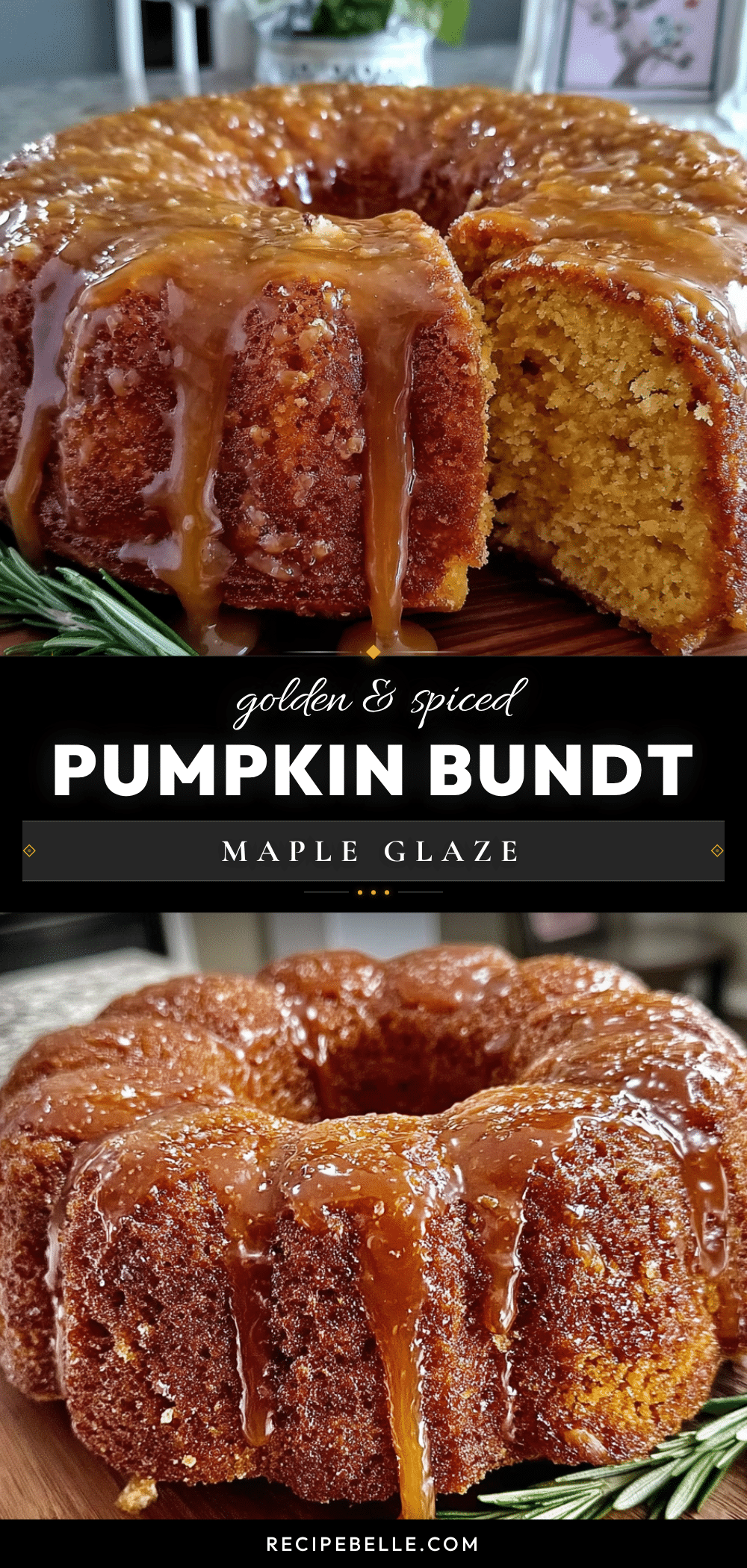
Easy Brown Butter Pumpkin Bundt Cake with Maple Glaze
This moist and tender pumpkin bundt cake features nutty brown butter and a glossy maple glaze. It’s a showstopper dessert perfect for fall gatherings, yet surprisingly simple to make.
- Prep Time: 20 minutes
- Cook Time: 55 minutes
- Total Time: 1 hour 15 minutes
- Yield: 16 servings 1x
- Category: Dessert
- Cuisine: American
Ingredients
- 1 cup (226g) unsalted butter
- 1 ¾ cups (350g) granulated sugar
- ½ cup (100g) packed light brown sugar
- 4 large eggs, room temperature
- 1 (15-ounce) can pumpkin puree (not pumpkin pie filling)
- 2 teaspoons vanilla extract
- 3 cups (375g) all-purpose flour
- 2 teaspoons baking powder
- 1 teaspoon baking soda
- 1 teaspoon salt
- 2 teaspoons ground cinnamon
- 1 teaspoon ground ginger
- ½ teaspoon ground nutmeg
- ¼ teaspoon ground cloves
- ½ cup (120ml) buttermilk, room temperature
- ¼ cup (60ml) pure maple syrup
- 1 ½ cups (180g) powdered sugar, sifted
- 2 tablespoons (30g) unsalted butter, melted
- 1–2 tablespoons milk
- Pinch of salt
Instructions
- Preheat oven to 350°F (175°C). Position rack in lower third of oven.
- Brown the butter: Place 1 cup unsalted butter in a microwave-safe bowl. Microwave in 30-second bursts, swirling between intervals, until deep golden brown and nutty (about 2-3 minutes). Pour into a separate bowl to stop cooking; let cool slightly.
- Prepare bundt pan: Brush inside of a 10-12 cup bundt pan thoroughly with melted butter or baking spray, then dust with flour, tapping out excess.
- Whisk dry ingredients: In a large bowl, whisk together flour, baking powder, baking soda, salt, cinnamon, ginger, nutmeg, and cloves. Set aside.
- Mix wet ingredients: In a stand mixer with paddle attachment (or large bowl with hand mixer), beat browned butter, granulated sugar, and brown sugar on medium speed until well combined, about 2 minutes.
- Add eggs one at a time, beating on low until just incorporated. Scrape down bowl after second egg. Add vanilla and mix briefly.
- Add pumpkin puree and mix on low until combined (batter may look curdled).
- Alternate adding dry ingredients and buttermilk: With mixer on low, add one-third of flour mixture, mix until just a few streaks remain. Add half the buttermilk, mix briefly. Repeat with another third of flour, remaining buttermilk, then last of flour. Stop mixing as soon as flour disappears.
- Fold batter gently with a rubber spatula from bottom up to ensure even mixing. Batter should be thick, smooth, and slightly glossy.
- Pour batter into prepared pan, spread evenly. Tap pan on counter a few times to release air bubbles.
- Bake for 50-60 minutes, until a wooden skewer inserted near center comes out clean or with a few moist crumbs. Start checking at 50 minutes.
- Cool cake in pan on a wire rack for exactly 15 minutes. Invert onto rack and lift pan off gently. Let cool completely, about 1-2 hours, before glazing.
- Make maple glaze: Whisk together maple syrup, sifted powdered sugar, melted butter, and pinch of salt. Add 1 tablespoon milk and whisk until smooth. Add more milk if too thick, more powdered sugar if too thin.
- Once cake is completely cool, place on serving plate. Drizzle glaze over top, letting it cascade down sides. Let set about 15 minutes before slicing.
Notes
Browning butter in the microwave works perfectly—watch closely to avoid burning. Do not skip the buttermilk; it ensures a tender crumb. Grease the bundt pan thoroughly to prevent sticking. Room temperature ingredients are important for a smooth batter. Start checking for doneness at 50 minutes. The cake can be made a day ahead; flavors improve overnight. Freeze unglazed cake for up to 3 months.
Nutrition
- Serving Size: 1 slice
- Calories: 385
- Sugar: 38
- Sodium: 310
- Fat: 16
- Saturated Fat: 10
- Carbohydrates: 57
- Fiber: 2
- Protein: 5
Keywords: pumpkin bundt cake, brown butter, maple glaze, fall dessert, easy bundt cake, pumpkin cake