My Aunt Clara wasn’t trying to impress anyone. I’d stopped by on a random Tuesday to borrow her cake pan, and the smell hit me before I even got through the screen door. It was sweet and savory all at once, like someone had figured out the secret to making a kitchen smell like a hug. She was pulling a loaf pan out of the oven, looking slightly annoyed that I’d caught her mid-cooking. “It’s just meatloaf,” she said, wiping her hands on her apron. “Nothing fancy.”
Let me tell you, that loaf was anything but “just” anything. The top was sticky and caramelized, catching the afternoon light like stained glass. She sliced into it without ceremony, and the steam that rose up smelled like the best dinner party I’d never been to. I stood there, holding her cake pan, completely distracted. She handed me a forkful right there in the kitchen, and I think I actually closed my eyes. The glaze had this perfect balance of tangy and sweet, and the meat itself was so tender it practically fell apart.
I asked her for the recipe, and she shrugged. “It’s the one my mom used. Nothing special.” But that’s the thing, right? The best recipes are the ones people make without thinking twice. They’ve made them so many times that the movements are muscle memory. That meatloaf wasn’t trying to be a showstopper — it just was. And honestly, maybe you’ve been there, standing in someone else’s kitchen, watching them throw together something that feels like magic while they act like it’s no big deal. That’s the energy I wanted to bottle.
I’ve made this classic meatloaf with brown sugar glaze more times than I can count since that Tuesday afternoon. It’s become my go-to for potlucks, family dinners, and especially those nights when I want to feed people something that feels like a warm blanket. Every time I pull it out of the oven, I think of Aunt Clara’s nonchalant shrug and that first forkful. This recipe has staying power, and once you try it, you’ll understand why.
Why You’ll Love This Recipe
Let’s be real for a second — meatloaf has a bit of a reputation. People think of it as that dry, boring dinner from childhood that you had to choke down. But this classic meatloaf with brown sugar glaze is the one that changes minds. I’ve seen it happen at dinner parties, holiday tables, and casual weeknight hangs. It’s the dish that gets people asking for seconds and, more importantly, for the recipe.
- Perfect for Hosting: This meatloaf is a dinner party superstar. It scales easily, feeds a crowd without breaking the bank, and looks gorgeous on a platter. Your guests will think you spent hours on it.
- Simple Ingredients: You probably already have most of these in your pantry. No fancy grocery trips needed — just good, honest ingredients that come together beautifully.
- Make-Ahead Friendly: This is a lifesaver when you’re hosting. You can prep it the night before, pop it in the oven when guests arrive, and let the smell do the work of getting everyone excited for dinner.
- Crowd-Pleaser: Kids love it, adults love it, picky eaters love it. I’ve served this to people who swore they hated meatloaf, and they walked away converted.
- Unbelievably Tender: The secret is in the combination of ground beef and pork, plus a few tricks that keep every bite moist and flavorful. No dry meatloaf here.
What makes this recipe different from all the others? It’s the brown sugar glaze, honestly. That sticky, caramelized top is what takes this from “good” to “I need this recipe right now.” The glaze caramelizes in the oven, creating this gorgeous crust that locks in moisture and adds a sweet-savory punch that’s absolutely addictive. I’ve tested this recipe a dozen times, tweaking the ratios until everything was just right. This isn’t just another version — it’s my best version.
What Ingredients You Will Need
This recipe uses simple, wholesome ingredients that work together to deliver bold flavor and that irresistible texture. Most of these are pantry staples, which makes this classic meatloaf with brown sugar glaze perfect for last-minute hosting or planned dinner parties alike.
For the Meatloaf
- Ground beef (1 ½ lbs / 680g) — I recommend 80/20 for the best balance of flavor and moisture. Too lean and your meatloaf will be dry. I personally prefer ground chuck from a local butcher when I can get it.
- Ground pork (½ lb / 225g) — This is my secret weapon. The extra fat from the pork keeps the meatloaf incredibly tender and adds a subtle sweetness that pairs beautifully with the glaze. You can use all beef if you prefer, but trust me on this one.
- Yellow onion (1 medium, finely diced) — Onion adds moisture and flavor. Make sure to dice it small so it melts into the meatloaf. I like to sauté mine briefly before adding it to the mixture — it takes the raw edge off and adds a deeper flavor.
- Garlic (3 cloves, minced) — Because garlic makes everything better. Use fresh garlic here, not the jarred stuff. The flavor is noticeably brighter.
- Eggs (2 large, lightly beaten) — Eggs act as a binder, holding everything together so your meatloaf doesn’t fall apart when you slice it.
- Breadcrumbs (1 cup / 120g) — Plain or panko work great. Breadcrumbs absorb moisture and help keep the meatloaf tender. I’ve used gluten-free breadcrumbs with excellent results.
- Whole milk (½ cup / 120ml) — Milk soaks into the breadcrumbs and creates steam as the meatloaf cooks, keeping it moist. You can use any milk you have on hand.
- Worcestershire sauce (2 tablespoons) — This adds that deep, savory umami flavor that makes meatloaf taste so satisfying. I’m partial to Lea & Perrins.
- Ketchup (2 tablespoons) — Adds a touch of sweetness and acidity to the meat mixture itself. Don’t skip it — it works behind the scenes.
- Dried thyme (1 teaspoon) — Thyme adds an earthy, slightly floral note that pairs wonderfully with beef. You can use fresh thyme if you have it — just double the amount.
- Salt (1 ½ teaspoons) — Season generously. Meatloaf needs enough salt to bring out all the other flavors.
- Black pepper (½ teaspoon) — Freshly ground is always better.
- Fresh parsley (2 tablespoons, chopped) — Optional, but adds a fresh pop of color and flavor. I add it when I’m feeling fancy.
For the Brown Sugar Glaze
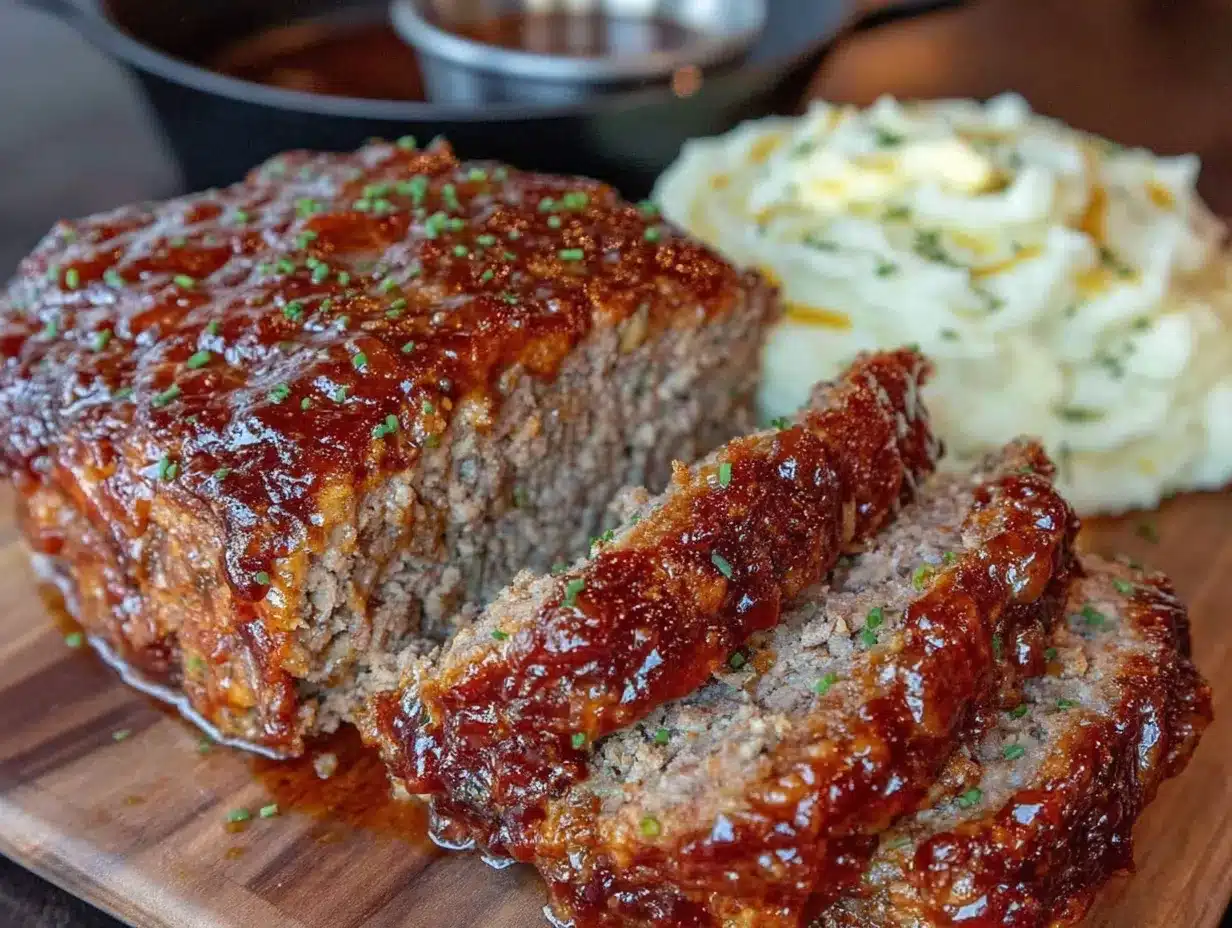
- Ketchup (½ cup / 120ml) — This is the base of the glaze. It provides tanginess and body.
- Brown sugar (⅓ cup / 70g, packed) — Light or dark brown sugar works. Dark brown sugar will give you a deeper, more molasses-forward flavor. Pack it firmly when measuring.
- Apple cider vinegar (1 tablespoon) — A splash of vinegar cuts through the sweetness and adds a lovely tang. You can use white vinegar in a pinch.
- Dijon mustard (1 teaspoon) — Adds a subtle heat and complexity to the glaze. Yellow mustard works too, but Dijon is more sophisticated.
- Worcestershire sauce (1 teaspoon) — A little extra umami never hurt anyone.
Equipment Needed
You don’t need a fancy kitchen to make this classic meatloaf with brown sugar glaze. Most of these tools are things you probably already own. Here’s what you’ll need:
- Large mixing bowl — You need room to get your hands in there and mix everything together. I use a big ceramic bowl that belonged to my grandmother.
- 9×5 inch loaf pan — This is the classic shape for meatloaf. If you don’t have one, you can shape the meatloaf free-form on a baking sheet lined with parchment paper. I actually prefer the free-form method sometimes because it gives you more caramelized edges.
- Baking sheet — If you’re going free-form, a rimmed baking sheet catches any drips. Line it with foil for easy cleanup.
- Small saucepan — For making the glaze. Any small pot will do.
- Whisk — To combine the glaze ingredients smoothly.
- Chef’s knife and cutting board — For dicing the onion and mincing the garlic. A sharp knife makes all the difference.
- Measuring cups and spoons — Accuracy matters in baking and cooking alike.
- Meat thermometer — This is non-negotiable for perfectly cooked meatloaf. An instant-read thermometer is my favorite tool in the kitchen. It takes the guesswork out of cooking.
- Parchment paper or aluminum foil — For easy removal from the pan and minimal cleanup.
Preparation Method
Making this classic meatloaf with brown sugar glaze is easier than you think. Follow these steps, and you’ll have a showstopper on your table in no time. I’ve added sensory cues along the way so you know exactly what to look for.
- Preheat your oven to 350°F (175°C). Position the rack in the center of the oven. While it’s heating, line your loaf pan with parchment paper, leaving some overhang on the sides — this makes lifting the meatloaf out a breeze. If you’re going free-form, line a baking sheet with foil or parchment.
- Make the brown sugar glaze. In a small saucepan over medium heat, combine ½ cup ketchup, ⅓ cup packed brown sugar, 1 tablespoon apple cider vinegar, 1 teaspoon Dijon mustard, and 1 teaspoon Worcestershire sauce. Whisk everything together until the sugar dissolves and the mixture is smooth. Let it simmer gently for 2-3 minutes, until it thickens slightly. You’ll notice it turning a deeper, richer red color. Remove from heat and set aside to cool. The glaze will thicken more as it cools.
- Sauté the aromatics. Heat a small skillet over medium heat with a drizzle of olive oil. Add the finely diced onion and cook for 4-5 minutes, until it’s translucent and fragrant. Add the minced garlic and cook for another 30 seconds, until you can smell it. Remove from heat and let it cool slightly. This step is optional but highly recommended — it mellows the onion and garlic, creating a sweeter, more complex flavor in the meatloaf.
- Combine the breadcrumbs and milk. In a small bowl, mix together 1 cup of breadcrumbs and ½ cup of whole milk. Let it sit for 5 minutes. The breadcrumbs will absorb the milk and form a paste. This is called a panade, and it’s the secret to tender meatloaf. It should look like wet oatmeal when it’s ready.
- Mix the meatloaf ingredients. In your large mixing bowl, combine 1 ½ lbs ground beef, ½ lb ground pork, the sautéed onion and garlic, the breadcrumb mixture, 2 beaten eggs, 2 tablespoons Worcestershire sauce, 2 tablespoons ketchup, 1 teaspoon dried thyme, 1 ½ teaspoons salt, ½ teaspoon black pepper, and the chopped parsley if using. Use your hands to gently mix everything together. Don’t overmix — you want to combine just until everything is evenly distributed. Overworking the meat will make your meatloaf dense and tough. The mixture should feel moist and cohesive but not wet.
- Shape the meatloaf. Transfer the meat mixture to your prepared loaf pan and press it gently into an even shape. Don’t pack it down too hard — you want it to hold together but still have some air pockets for tenderness. If you’re going free-form, shape the mixture into a loaf shape on your prepared baking sheet, about 2 inches high. Make sure the sides are fairly even so it cooks uniformly.
- Apply the glaze. Spoon about half of the brown sugar glaze over the top of the meatloaf. Use the back of the spoon to spread it evenly, letting some drip down the sides. Reserve the remaining glaze for later. The glaze should look glossy and thick on top of the raw meatloaf.
- Bake the meatloaf. Place the meatloaf in the preheated oven and bake for 45 minutes. After 45 minutes, carefully remove it from the oven and spread the remaining glaze over the top. Return it to the oven and continue baking for another 15-20 minutes. Total baking time is about 60-65 minutes. The meatloaf is done when an instant-read thermometer inserted into the center registers 160°F (71°C). The top should be caramelized and sticky, and the edges should be slightly crispy.
- Rest before slicing. This is the hardest part, I know. Let the meatloaf rest in the pan for 10-15 minutes after you take it out of the oven. During this time, the juices redistribute throughout the meatloaf, ensuring every slice is moist and flavorful. If you slice it too soon, those juices will run out onto the cutting board, and you’ll lose all that goodness. The internal temperature will also rise a few degrees during resting, bringing it to a safe 165°F (74°C).
- Slice and serve. Use the parchment paper overhang to lift the meatloaf out of the pan. Transfer it to a cutting board. Slice it into 1-inch thick pieces using a sharp knife. The slices should hold together beautifully, with the glaze glistening on top. Arrange the slices on a platter and spoon any juices from the pan over the top.
Cooking Tips & Techniques
I’ve made this classic meatloaf with brown sugar glaze more times than I can count, and I’ve learned a few things along the way. Here are my best tips for getting it perfect every time.
Don’t skip the panade. That mixture of breadcrumbs and milk is non-negotiable. I learned this the hard way when I tried to save time by just tossing dry breadcrumbs into the meat. The result was a dry, crumbly meatloaf that fell apart on the plate. The panade acts as a moisture reservoir, keeping every bite tender and juicy. If you’re out of milk, you can use broth or even water in a pinch.
Use a meat thermometer. I cannot stress this enough. Meatloaf is one of those dishes where visual cues can be misleading. The outside might look perfectly browned while the inside is still undercooked. An instant-read thermometer takes the guesswork out of the equation. I’ve ruined more than a few meatloaves by relying on the “cut it open and check” method. Trust the thermometer.
Let the meatloaf rest. I know you’re hungry. I know the smell is driving you crazy. But if you slice into that meatloaf right out of the oven, you’re going to end up with a crumbly mess. The resting period is when the magic happens. The juices redistribute, the structure sets, and the glaze firms up into a proper crust. Set a timer if you have to. Your patience will be rewarded.
Line your pan with parchment paper. This was a game-changer for me. Before I started doing this, I spent way too much time scrubbing baked-on glaze off my loaf pan. The parchment paper creates a handy sling that lets you lift the meatloaf right out of the pan without any drama. Plus, cleanup takes about 30 seconds.
Don’t overmix. This is probably the most common mistake people make with meatloaf. When you overmix, you develop the proteins in the meat too much, which leads to a dense, tough texture. Mix just until everything comes together. It’s okay if there are a few streaks of breadcrumb or parsley — they’ll blend in during baking. Use a light hand and work quickly.
Variations & Adaptations
One of the best things about this classic meatloaf with brown sugar glaze is how adaptable it is. I’ve tried several variations over the years, and they’ve all been delicious in their own way. Here are some of my favorites.
Turkey Meatloaf: Swap the ground beef and pork for ground turkey or chicken. Because turkey is leaner, add an extra tablespoon of olive oil to the mixture and consider using dark meat turkey for more moisture. The cooking time remains about the same, but check the internal temperature — turkey is done at 165°F (74°C).
Cheese-Stuffed Meatloaf: This is my personal favorite when I want to impress guests. After shaping half of the meat mixture into the pan, create a shallow well down the center and fill it with shredded cheddar, mozzarella, or even crumbled feta. Top with the remaining meat mixture, seal the edges, and bake as directed. The melted cheese center is absolutely decadent.
BBQ Glaze Twist: If you’re not in the mood for the brown sugar glaze, swap it for your favorite barbecue sauce. I’ve used a smoky chipotle BBQ sauce before, and it gave the meatloaf a completely different personality — bolder, spicier, and perfect for summer cookouts. Just brush it on the same way you would the brown sugar glaze.
Gluten-Free Version: Replace the regular breadcrumbs with gluten-free breadcrumbs or crushed gluten-free crackers. I’ve used crushed rice cakes in a pinch, and they worked surprisingly well. Make sure your Worcestershire sauce is gluten-free — some brands contain malt vinegar, which has gluten.
Veggie-Packed Meatloaf: Grate a carrot or a zucchini into the meat mixture for added moisture and nutrients. Squeeze the excess liquid out of the zucchini before adding it. You won’t even taste the vegetables, but they’ll make the meatloaf even more tender and add a subtle sweetness.
Serving & Storage Suggestions
This classic meatloaf with brown sugar glaze is incredibly versatile when it comes to serving. Here’s how I like to present it and store any leftovers.
Serving Temperature and Presentation: Serve the meatloaf warm, right after it’s rested. I like to slice it on a wooden cutting board and arrange the slices on a large platter. Spoon any remaining pan juices over the top for extra moisture and shine. Garnish with a sprinkle of fresh parsley for a pop of color. The caramelized glaze on top makes it look incredibly appetizing without any extra effort.
What to Serve Alongside: This meatloaf pairs beautifully with classic sides. Mashed potatoes are the obvious choice — the creamy texture complements the rich meatloaf perfectly. Roasted vegetables like carrots, green beans, or Brussels sprouts add color and balance. A simple green salad with a tangy vinaigrette cuts through the richness of the meatloaf. For a heartier meal, serve it with mac and cheese or buttery corn on the cob. When I’m hosting, I set up a little buffet with the meatloaf as the centerpiece and let guests help themselves to sides.
Storage Instructions: Leftover meatloaf keeps beautifully. Store it in an airtight container in the refrigerator for up to 4 days. The flavors actually deepen overnight, so leftovers might taste even better than the first serving. You can also freeze the meatloaf — either whole or in slices. Wrap it tightly in plastic wrap, then in aluminum foil, and freeze for up to 3 months. Thaw overnight in the refrigerator before reheating.
Reheating Methods: The best way to reheat meatloaf is in the oven. Place slices on a baking sheet, cover loosely with foil, and warm at 300°F (150°C) for 10-15 minutes. This prevents the glaze from burning while the meat heats through. You can also reheat individual slices in a skillet over medium-low heat with a splash of water or broth, covered, for about 5 minutes. The microwave works in a pinch, but the texture won’t be as good — the meat can dry out and the glaze can become rubbery.
How Flavors Develop: One thing I love about this meatloaf is how the flavors meld together over time. The first day, it’s bright and bold. By the second or third day, the flavors have mellowed and blended into something even more harmonious. That’s why I often make it a day ahead when I’m hosting — it actually gets better with time.
Nutritional Information & Benefits
While this classic meatloaf with brown sugar glaze is undeniably a comfort food, it does offer some nutritional benefits worth noting. Here’s a rough breakdown per serving (based on 8 servings):
| Nutrient | Amount Per Serving |
|---|---|
| Calories | 380 |
| Protein | 28g |
| Fat | 22g |
| Saturated Fat | 8g |
| Carbohydrates | 18g |
| Fiber | 1g |
| Sugar | 12g |
| Sodium | 720mg |
Health Benefits: This meatloaf is a good source of high-quality protein, which is essential for muscle repair and satiety. The beef and pork provide iron, zinc, and B vitamins, particularly B12. The onions and garlic offer antioxidants and anti-inflammatory compounds. Using a mix of meats gives you a broader nutrient profile than using beef alone.
Dietary Considerations: This recipe contains gluten (from breadcrumbs) and dairy (from milk). For a gluten-free version, use gluten-free breadcrumbs. For a dairy-free version, use unsweetened almond milk or oat milk in the panade. The recipe is nut-free and egg-free if you omit the eggs and use a flax egg substitute (1 tablespoon ground flaxseed mixed with 3 tablespoons water per egg).
My Perspective: I believe in balance. This meatloaf is a celebration dish, not an everyday meal. It’s meant to be shared with people you love, enjoyed without guilt, and savored. Pair it with a big green salad or roasted vegetables, and you’ve got a well-rounded meal that satisfies both the body and the soul.
Frequently Asked Questions
Can I make this meatloaf ahead of time?
Absolutely! You can prepare the meatloaf mixture and shape it in the pan up to 24 hours in advance. Cover it tightly with plastic wrap and refrigerate. When you’re ready to bake, add about 10-15 minutes to the cooking time since you’re starting from cold. You can also make the glaze ahead of time and store it in the refrigerator for up to a week.
Why did my meatloaf fall apart?
There are a few common reasons. You might have skipped the panade (breadcrumb and milk mixture), which acts as a binder. You might have used meat that’s too lean — the fat helps hold everything together. Or you might have sliced it too soon after baking. Let it rest for at least 10 minutes to allow the structure to set before slicing.
Can I use only ground beef instead of the beef and pork mix?
Yes, you can use all ground beef. I recommend using 80/20 ground beef for the best moisture and flavor. The pork adds extra tenderness and a subtle sweetness, but the meatloaf will still be delicious with just beef. If you’re using leaner beef, consider adding an extra tablespoon of olive oil to the mixture.
How do I know when the meatloaf is fully cooked?
The most reliable method is using an instant-read meat thermometer. Insert it into the center of the meatloaf — it should read 160°F (71°C). The meatloaf will continue cooking as it rests, reaching a safe 165°F (74°C). Visual cues include a caramelized top, juices running clear, and the meatloaf pulling away slightly from the sides of the pan.
Can I freeze the meatloaf with the glaze on top?
Yes, you can freeze the fully cooked and glazed meatloaf. Let it cool completely, then wrap it tightly in plastic wrap followed by aluminum foil. Freeze for up to 3 months. To serve, thaw overnight in the refrigerator and reheat in a 300°F (150°C) oven until warmed through. The glaze might lose a bit of its shine, but the flavor will still be excellent.
Conclusion
This classic meatloaf with brown sugar glaze is more than just a recipe — it’s a reminder that the best dishes don’t need to be complicated. Aunt Clara made it look effortless because she’d been making it for decades, and now I hope you’ll make it enough times that it becomes second nature for you too.
Whether you’re hosting a dinner party, feeding your family on a busy weeknight, or just craving something that tastes like home, this meatloaf delivers every single time. The glaze caramelizes into something magical, the meat stays tender and juicy, and the whole experience feels like a warm hug on a plate.
I’d love to hear how yours turns out. Did you add your own twist? Serve it with something unexpected? Share your experience in the comments below — I read every single one, and I love seeing how you make this recipe your own. And if you know someone who thinks they don’t like meatloaf, this is the recipe to change their mind. Trust me on that.
Pin This Recipe!
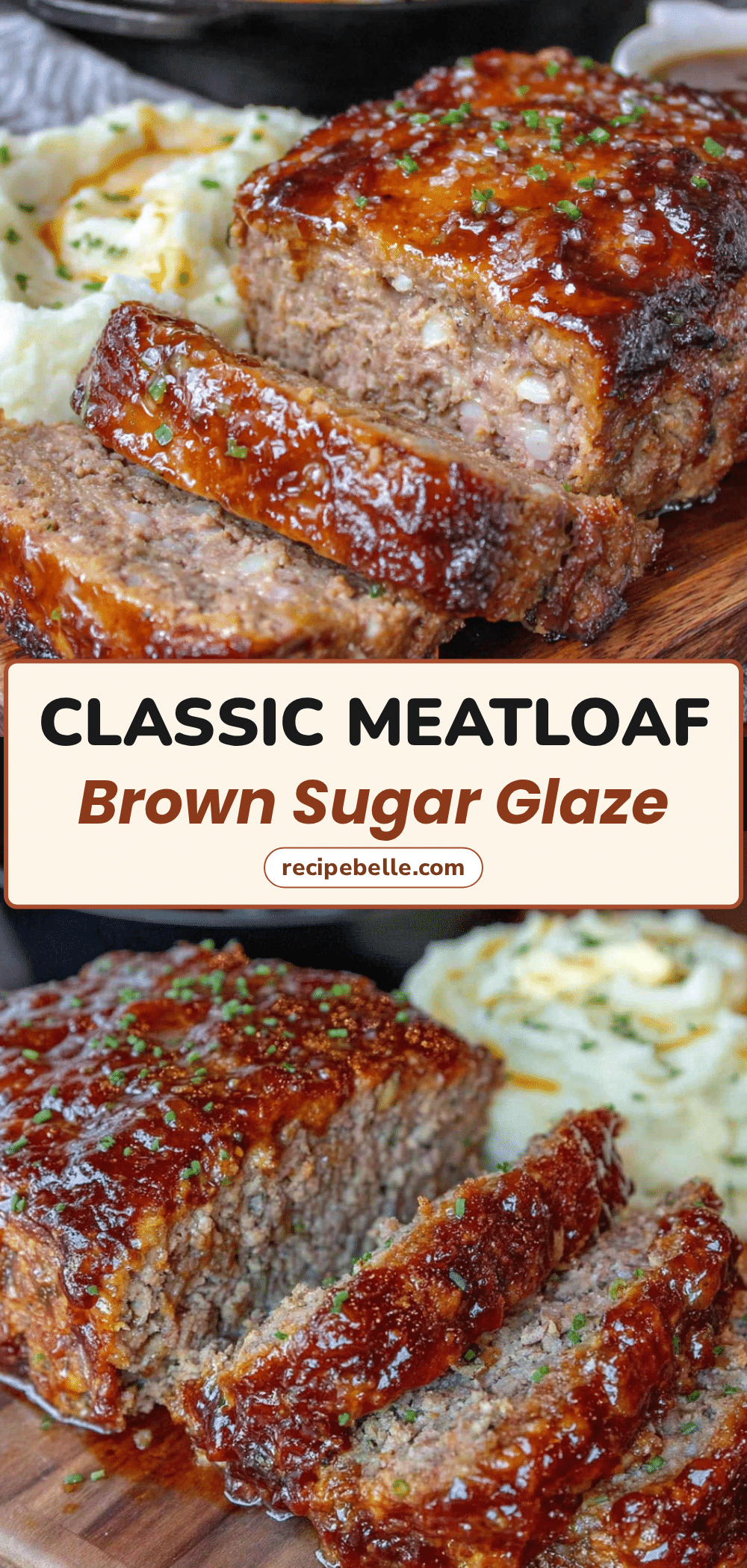
Classic Meatloaf with Brown Sugar Glaze – Best Easy Dinner
This classic meatloaf with brown sugar glaze is tender, juicy, and topped with a sticky caramelized glaze that makes it irresistible. Perfect for family dinners or potlucks, it’s a crowd-pleaser that changes minds about meatloaf.
- Prep Time: 20 minutes
- Cook Time: 60 minutes
- Total Time: 1 hour 20 minutes
- Yield: 8 servings 1x
- Category: Main Course
- Cuisine: American
Ingredients
- 1 ½ lbs (680g) ground beef (80/20)
- ½ lb (225g) ground pork
- 1 medium yellow onion, finely diced
- 3 cloves garlic, minced
- 2 large eggs, lightly beaten
- 1 cup (120g) breadcrumbs (plain or panko)
- ½ cup (120ml) whole milk
- 2 tablespoons Worcestershire sauce
- 2 tablespoons ketchup
- 1 teaspoon dried thyme
- 1 ½ teaspoons salt
- ½ teaspoon black pepper
- 2 tablespoons fresh parsley, chopped (optional)
- ½ cup (120ml) ketchup (for glaze)
- ⅓ cup (70g) brown sugar, packed (for glaze)
- 1 tablespoon apple cider vinegar (for glaze)
- 1 teaspoon Dijon mustard (for glaze)
- 1 teaspoon Worcestershire sauce (for glaze)
Instructions
- Preheat oven to 350°F (175°C). Line a 9×5 inch loaf pan with parchment paper, leaving overhang, or line a baking sheet with foil for free-form.
- Make the glaze: In a small saucepan over medium heat, combine ½ cup ketchup, ⅓ cup packed brown sugar, 1 tablespoon apple cider vinegar, 1 teaspoon Dijon mustard, and 1 teaspoon Worcestershire sauce. Whisk until sugar dissolves and mixture simmers for 2-3 minutes until slightly thickened. Remove from heat and set aside.
- Sauté aromatics: Heat a small skillet over medium heat with a drizzle of olive oil. Cook the finely diced onion for 4-5 minutes until translucent. Add minced garlic and cook 30 seconds. Remove from heat and let cool slightly.
- Combine breadcrumbs and milk in a small bowl. Let sit for 5 minutes to form a panade (should look like wet oatmeal).
- In a large mixing bowl, combine ground beef, ground pork, sautéed onion and garlic, breadcrumb mixture, beaten eggs, 2 tablespoons Worcestershire sauce, 2 tablespoons ketchup, dried thyme, salt, black pepper, and parsley (if using). Mix gently with your hands until just combined. Do not overmix.
- Transfer meat mixture to prepared loaf pan and press gently into an even shape. For free-form, shape into a loaf about 2 inches high on the baking sheet.
- Spoon half of the glaze over the top of the meatloaf and spread evenly, letting some drip down the sides. Reserve remaining glaze.
- Bake for 45 minutes. Remove from oven, spread remaining glaze over the top, and continue baking for 15-20 minutes, until internal temperature reaches 160°F (71°C).
- Let meatloaf rest in the pan for 10-15 minutes. The internal temperature will rise to 165°F (74°C).
- Use parchment overhang to lift meatloaf out of pan. Transfer to cutting board, slice into 1-inch thick pieces, and serve.
Notes
Don’t skip the panade (breadcrumb and milk mixture) – it keeps the meatloaf tender. Use a meat thermometer for perfect doneness. Let the meatloaf rest before slicing to allow juices to redistribute. Line the pan with parchment paper for easy removal and cleanup. Do not overmix the meat mixture to avoid a dense texture.
Nutrition
- Serving Size: 1 slice (1/8 of reci
- Calories: 380
- Sugar: 12
- Sodium: 720
- Fat: 22
- Saturated Fat: 8
- Carbohydrates: 18
- Fiber: 1
- Protein: 28
Keywords: meatloaf, brown sugar glaze, classic meatloaf, easy dinner, comfort food, ground beef, ground pork