Marta from the community garden watched me fumbling with a dry, sad-looking chicken breast at the shared summer barbecue last July. She didn’t say anything at first—just gave me that knowing look that gardeners and grandmothers seem to perfect over time. Then she walked over to her cooler, pulled out a small mason jar of what looked like green-flecked butter, and simply said, “Try this. It’s the only way.” She didn’t lecture me about dry chicken or tell me her recipe was life-changing. She just handed me the butter and went back to her coleslaw. That moment—standing there with a jar of herb butter in one hand and a pair of tongs in the other—completely changed how I approach chicken forever. I mean, honestly, I’d spent years overcooking chicken breasts because I was terrified of undercooking them. Maybe you’ve been there too? That panic when you cut into a chicken breast and it’s either raw or sawdust? Marta’s herb butter was the answer I didn’t know I needed. I adapted her method to make it my own—using ingredients I could find at any grocery store, simplifying the process for busy weeknights, and making sure it still felt indulgent even when I was trying to eat well. This healthy herb butter baked chicken breast recipe has become my go-to for those nights when I want something that feels special but doesn’t require a culinary degree. It’s the kind of recipe that makes you close your eyes after the first bite, and honestly, that’s why I keep making it.
Why You’ll Love This Recipe
Let me tell you why this herb butter baked chicken breast recipe has earned a permanent spot in my weekly rotation. After testing this method at least a dozen times—sometimes with friends who are certified nutritionists, sometimes for picky eaters—I can confidently say this is the version that works every single time.
- Quick & Easy : Comes together in under 35 minutes, perfect for those evenings when you’re staring at the fridge wondering what to make. The active prep time is maybe 10 minutes.
- Simple Ingredients : You probably have most of these in your kitchen right now. No trips to specialty stores or hunting down obscure spices. Just real food that makes sense.
- Perfect for Meal Prep : This chicken stays juicy even after refrigeration, which is honestly a miracle for baked chicken breast. Make a batch on Sunday and you’re set for the week.
- Crowd-Pleaser : I’ve served this to everyone from my health-conscious sister to my butter-loving dad, and it gets rave reviews every single time. It’s that rare recipe that satisfies both camps.
- Unbelievably Delicious : The herb butter creates this gorgeous crust while keeping the inside impossibly tender. It’s comfort food that happens to be good for you, not the other way around.
What makes this recipe different from every other baked chicken breast out there? It’s the technique. Most recipes either drown the chicken in oil or leave it completely dry. This method uses just enough herb butter to create a protective barrier that locks in moisture while infusing every bite with flavor. I tested it with plain butter, olive oil, and even yogurt marinades—nothing comes close to the texture you get from this herb butter method. It’s not just another chicken recipe. It’s the one that makes you wonder why you ever struggled with dry chicken in the first place.
What Ingredients You Will Need
This recipe uses simple, wholesome ingredients to deliver bold flavor and satisfying texture without the fuss. Most of these are pantry staples or easy to find at any grocery store.
- Boneless, skinless chicken breasts (2 large, about 8 ounces each) — Look for breasts that are similar in size so they cook evenly. If they’re huge, consider butterflying them.
- Unsalted butter (3 tablespoons, softened) — I prefer Kerrygold for its rich flavor, but any good-quality unsalted butter works. Salted butter will make the final dish too salty.
- Fresh garlic (3 cloves, minced) — Don’t use the jarred stuff here. Fresh garlic makes a real difference in the herb butter.
- Fresh parsley (2 tablespoons, finely chopped) — Flat-leaf or curly both work. Parsley adds that fresh, clean flavor.
- Fresh rosemary (1 tablespoon, finely chopped) — Strip the leaves from the stem before chopping. Dried rosemary can be used in a pinch, but fresh is better.
- Fresh thyme (1 teaspoon, leaves stripped from stems) — Lemon thyme is lovely if you can find it, but regular thyme is perfect.
- Lemon juice (1 tablespoon, fresh squeezed) — Bottled lemon juice won’t give you the same brightness. Roll the lemon on the counter before juicing to get more out of it.
- Lemon zest (1 teaspoon) — Don’t skip this! The zest adds a concentrated lemon flavor that juice alone can’t match.
- Salt (1 teaspoon, or to taste) — I use fine sea salt. Kosher salt works too, but you might need a bit more.
- Black pepper (½ teaspoon, freshly ground) — Freshly ground pepper is noticeably more aromatic than pre-ground.
- Olive oil (1 tablespoon) — Just a little to help the seasoning stick and encourage browning. A light olive oil or avocado oil works well.
Ingredient Tips from My Kitchen: For the best texture, let your chicken breasts sit at room temperature for about 15 minutes before cooking. Cold chicken straight from the fridge cooks unevenly. Also, if you’re using dried herbs instead of fresh, use about one-third of the amount—dried herbs are more concentrated. I’ve made this with dairy-free butter alternatives like Miyoko’s, and it works beautifully if you’re avoiding dairy.
Equipment Needed
Nothing fancy here. You probably already have everything you need.
- Baking dish (9×13 inch or similar) — Glass, ceramic, or metal all work. I prefer ceramic for even heat distribution. If using metal, avoid dark nonstick pans as they can cause over-browning.
- Small bowl for mixing the herb butter — Any small bowl will do. I use the same one every time, a little ceramic number with a chip in the rim.
- Chef’s knife and cutting board — For mincing garlic and chopping herbs. A sharp knife makes this job so much easier.
- Meat thermometer — This is non-negotiable, honestly. A simple instant-read thermometer costs about $10 and will save you from dry chicken forever. I’ve ruined too many chicken breasts guessing.
- Measuring spoons — For the herbs and seasonings. Eyeballing works for some things, but for this recipe, the ratios matter.
- Kitchen tongs — For handling the chicken without piercing it. Piercing releases juices and dries out the meat.
- Aluminum foil — For tenting the chicken after it comes out of the oven. This resting step is crucial.
If you don’t have a meat thermometer, you can check doneness by cutting into the thickest part of the breast—but honestly, just get the thermometer. It’s the best investment you’ll make for cooking chicken.
Preparation Method
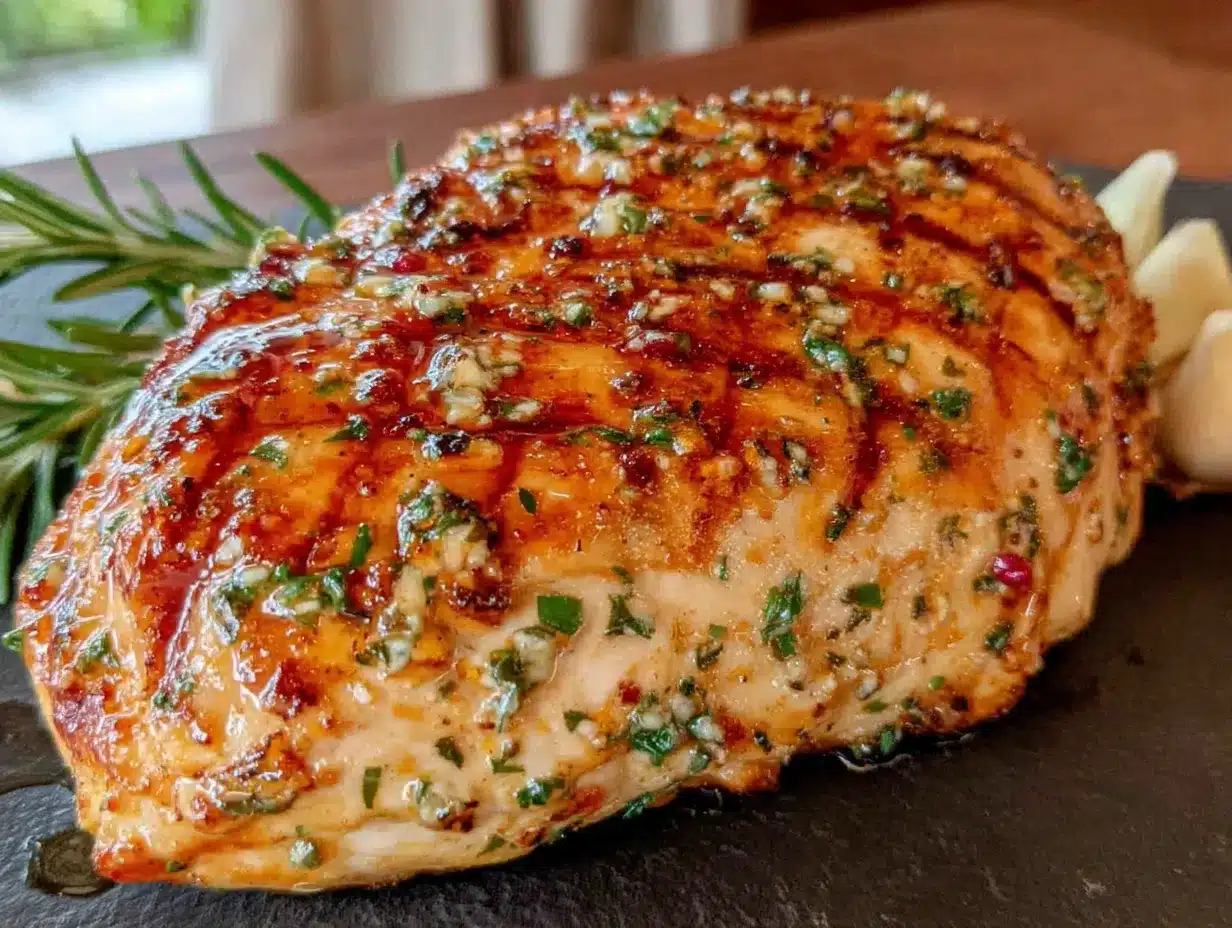
Let me walk you through this step by step. I’ve tested this method more times than I can count, so trust me on the details.
- Preheat your oven to 400°F (200°C). Give it a full 15-20 minutes to reach temperature. A properly preheated oven is key for getting that nice golden exterior.
- Make the herb butter. In a small bowl, combine the softened butter, minced garlic, chopped parsley, rosemary, thyme, lemon juice, and lemon zest. Mix everything together with a fork until it’s well combined and looks like a soft, green-flecked paste. Taste a tiny bit—it should be bright and herby with a hint of garlic. Set it aside at room temperature. (If you make it ahead, let it come to room temperature before using—cold butter won’t spread evenly.)
- Prepare the chicken. Pat the chicken breasts completely dry with paper towels. This is important—excess moisture will steam the chicken instead of browning it. If the breasts are uneven in thickness, place one hand flat on top and carefully slice through the middle horizontally to create two even pieces. Don’t worry if they’re not perfect; just aim for even thickness.
- Season the chicken. Drizzle the olive oil over both sides of the chicken and rub it in gently. Season both sides with salt and pepper. Be generous but not heavy-handed—you can always add more salt later, but you can’t take it away. Let the seasoned chicken sit for 5 minutes while you prepare the baking dish.
- Apply the herb butter. Using your fingers or a small spatula, spread about 1 tablespoon of herb butter evenly over the top of each chicken breast. Don’t just plop it in the middle—spread it from edge to edge like you’re frosting a tiny cake. The butter will melt and create a protective coating as it bakes.
- Arrange in the baking dish. Place the chicken breasts in the baking dish with about an inch of space between them. If they’re touching, they’ll steam instead of roast. Any remaining herb butter can be dolloped on top—don’t waste it.
- Bake for 20-25 minutes. The exact time depends on the thickness of your chicken. At 20 minutes, start checking with your meat thermometer. You’re looking for an internal temperature of 160°F (71°C) in the thickest part. The temperature will rise to 165°F (74°C) during resting, so pull it out just before it hits the target. The chicken should feel firm but still have a little give when pressed.
- Rest the chicken. Remove the baking dish from the oven and tent it loosely with aluminum foil. Let the chicken rest for 5-7 minutes. I know it’s tempting to cut right into it, but this step is crucial. The juices need time to redistribute throughout the meat. If you cut too soon, they’ll run out onto the plate, leaving you with dry chicken.
- Serve and enjoy. Spoon any pan juices over the chicken before serving. The herb butter will have created a beautiful golden crust and a pool of flavorful juices underneath. Slice against the grain for the most tender pieces.
A note from my kitchen: The first time I made this, I forgot to zest the lemon before juicing it. Don’t be me. Zest first, then juice. Trust me on this one.
Cooking Tips & Techniques
After making this recipe more times than I can count, here’s what I’ve learned the hard way.
Bring your chicken to room temperature. I know food safety rules say otherwise, but letting chicken sit out for 15-20 minutes before cooking makes a real difference in even cooking. Cold chicken cooks unevenly—the outside dries out while the inside stays raw. I learned this after one too many dry dinners.
Don’t skip the resting step. I once had a friend over for dinner, and she asked why I was letting the chicken sit under foil instead of serving it immediately. I explained that resting allows the juices to redistribute. She was skeptical until she cut into her piece and saw how moist it was. Now she rests all her meat. It’s that simple.
Use a meat thermometer every time. I cannot stress this enough. Chicken breasts are lean and unforgiving. Overcook them by even 5 minutes, and you’re eating dry meat. The difference between 160°F and 170°F is the difference between juicy and sawdust. I ruined at least a dozen chicken breasts before I finally bought a $12 thermometer. Best investment I ever made.
Butter temperature matters. Cold herb butter won’t spread evenly. It’ll clump up and leave bare spots on your chicken. Let it soften on the counter for at least 30 minutes before mixing. If you’re in a hurry, microwave it for 5-second intervals, stirring between each, until it’s soft but not melted.
For the crispiest exterior, switch your oven to broil for the last 2 minutes of cooking. Watch it carefully—broilers work fast, and you don’t want burnt butter. I’ve done this successfully many times, but I’ve also burned a few batches while answering the phone. Set a timer.
Variations & Adaptations
This recipe is incredibly flexible. Here are some ways I’ve adapted it over the years.
Dietary Adaptations: For a dairy-free version, substitute the butter with a high-quality vegan butter or coconut oil. Miyoko’s European-style cultured vegan butter works beautifully. For a lower-fat option, reduce the butter to 1 tablespoon and use a light coating of olive oil spray instead. The texture won’t be quite as luxurious, but it’s still delicious.
Herb Variations: The herb combination is endlessly customizable. Try tarragon and chives for a French-inspired version, or cilantro and lime zest for a Mexican twist. In summer, I use basil and oregano from my garden. In winter, I lean toward sage and rosemary. Fresh dill is lovely with lemon, especially if you’re serving the chicken with salmon or fish.
Flavor Boosters: Add 1 teaspoon of Dijon mustard to the herb butter for extra tang. Or stir in 1 tablespoon of grated Parmesan cheese for a savory, umami kick. I once added a pinch of red pepper flakes, and it was amazing—just enough heat to wake up the flavors without being spicy.
Cooking Method Variations: This recipe works beautifully on the grill. Prepare the herb butter as directed, then grill the chicken over medium heat for 6-8 minutes per side. The herb butter creates a gorgeous char. You can also cook it in an air fryer at 375°F for 15-18 minutes, flipping halfway through. For skillet cooking, sear the chicken in a cast-iron pan for 3-4 minutes per side, then finish in the oven.
My Personal Favorite Variation: I once added a tablespoon of sun-dried tomato pesto to the herb butter, and it was incredible. The sweetness of the tomatoes balanced the herbs perfectly. I served it with a simple arugula salad, and it felt like restaurant-quality food. Definitely try this if you have sun-dried tomato pesto on hand.
Serving & Storage Suggestions
This chicken is versatile enough to pair with almost anything. Here’s how I like to serve and store it.
Serving Suggestions: Serve the chicken hot, sliced against the grain, with the pan juices spooned over the top. It pairs beautifully with roasted vegetables like asparagus, broccoli, or Brussels sprouts. For a lighter meal, serve it over a bed of mixed greens with cherry tomatoes and a simple lemon vinaigrette. For something heartier, try it with mashed potatoes or a side of wild rice. The herb butter creates its own sauce, so you don’t need gravy or extra dressing.
Storage Instructions: Store leftover chicken in an airtight container in the refrigerator for up to 4 days. The chicken stays remarkably moist thanks to the herb butter. For longer storage, wrap individual portions tightly in plastic wrap and place in a freezer-safe bag. Frozen chicken will keep for up to 3 months. Thaw overnight in the refrigerator before reheating.
Reheating Tips: The best way to reheat this chicken is in the oven at 300°F for 10-15 minutes, covered with foil. This gentle heat warms the chicken without drying it out. You can also microwave it, but expect some moisture loss. For a quick lunch, slice the cold chicken and toss it into a salad or wrap. Honestly, I sometimes prefer the leftovers cold—the flavors have melded together beautifully overnight.
How Flavors Develop: The herb butter flavors actually deepen and meld after a day in the refrigerator. The garlic mellows, the herbs infuse more deeply, and the lemon brightens everything. This is one of those rare dishes that tastes even better the next day.
Nutritional Information & Benefits
Here’s the nutritional breakdown for one serving (one chicken breast with herb butter, without sides):
- Calories: Approximately 320
- Protein: 42g
- Fat: 16g (including 8g saturated fat)
- Carbohydrates: 2g
- Fiber: 0g
- Sugar: 0g
- Sodium: 580mg
Health Benefits: Chicken breast is an excellent source of lean protein, which supports muscle maintenance and keeps you feeling full. The herbs in this recipe—parsley, rosemary, and thyme—are rich in antioxidants and anti-inflammatory compounds. Garlic supports immune health, and lemon juice provides a boost of vitamin C. This recipe is naturally low in carbohydrates and can fit into most dietary patterns, including keto, paleo, and gluten-free diets.
Dietary Considerations: This recipe is gluten-free, low-carb, and nut-free. For dairy-free, use vegan butter. For lower sodium, reduce the salt to ½ teaspoon. Always check your specific dietary needs and adjust accordingly.
My Wellness Perspective: I love that this recipe proves healthy eating doesn’t have to mean bland, boring food. Using real butter and fresh herbs creates a meal that feels indulgent while still being nutritionally balanced. It’s the kind of food that supports your health goals without making you feel deprived.
Conclusion
This herb butter baked chicken breast recipe has become my secret weapon for busy weeknights, meal prep Sundays, and even casual dinner parties. It’s proof that you don’t need complicated techniques or exotic ingredients to make something truly delicious. The herb butter does all the heavy lifting—keeping the chicken moist, infusing it with flavor, and creating that gorgeous golden crust that makes everyone think you spent hours in the kitchen.
I hope you’ll try this recipe and make it your own. Maybe you’ll add a different herb combination, or serve it with your favorite side dish, or discover a variation I haven’t thought of yet. That’s the beauty of cooking—every recipe is just a starting point for your own creativity. I’d love to hear how it turns out for you. Leave a comment below and let me know what you think, or share your own twist on this recipe. And if you’re looking for more easy, healthy dinner ideas, check out our healthy chicken recipes collection or this garlic herb roasted vegetables side dish that pairs perfectly with this chicken.
Happy cooking, friends. Here’s to juicy chicken, flavorful herbs, and meals that make you feel good from the inside out.
Frequently Asked Questions
Can I use dried herbs instead of fresh?
Yes, you can substitute dried herbs for fresh. Use about one-third of the amount called for in the recipe. For example, if the recipe calls for 1 tablespoon of fresh rosemary, use 1 teaspoon of dried. Keep in mind that dried herbs are more concentrated, so the flavor profile will be slightly different—less bright and fresh, but still delicious.
How do I know when the chicken is fully cooked without a thermometer?
While a meat thermometer is the most reliable method, you can check doneness by cutting into the thickest part of the breast. The juices should run clear, and the meat should be opaque throughout with no pinkness. The chicken should feel firm to the touch but still have a little give. However, I really recommend investing in a thermometer—it takes the guesswork out of cooking chicken.
Can I make the herb butter ahead of time?
Absolutely! The herb butter can be made up to 3 days in advance and stored in the refrigerator. Let it come to room temperature for about 30 minutes before using so it spreads easily. You can also freeze the herb butter for up to 3 months. Roll it into a log using plastic wrap, then slice off rounds as needed. This is great for meal prep.
Why is my chicken breast still dry even with the herb butter?
There are a few common culprits. First, you might be overcooking the chicken. Use a thermometer and pull it at 160°F. Second, your oven might run hot—consider using an oven thermometer to verify the temperature. Third, you might be skipping the resting step. Always let the chicken rest for 5-7 minutes under foil. Finally, make sure you’re using enough herb butter—it should coat the entire surface of the chicken.
Can I use this recipe with chicken thighs instead of breasts?
Yes, chicken thighs work beautifully with this herb butter method. Bone-in, skin-on thighs will take about 30-35 minutes at 400°F. Boneless, skinless thighs will cook in about 20-25 minutes. The internal temperature for thighs should reach 175°F for the best texture. Thighs are more forgiving than breasts and will stay juicy even if cooked a bit longer.
Pin This Recipe!
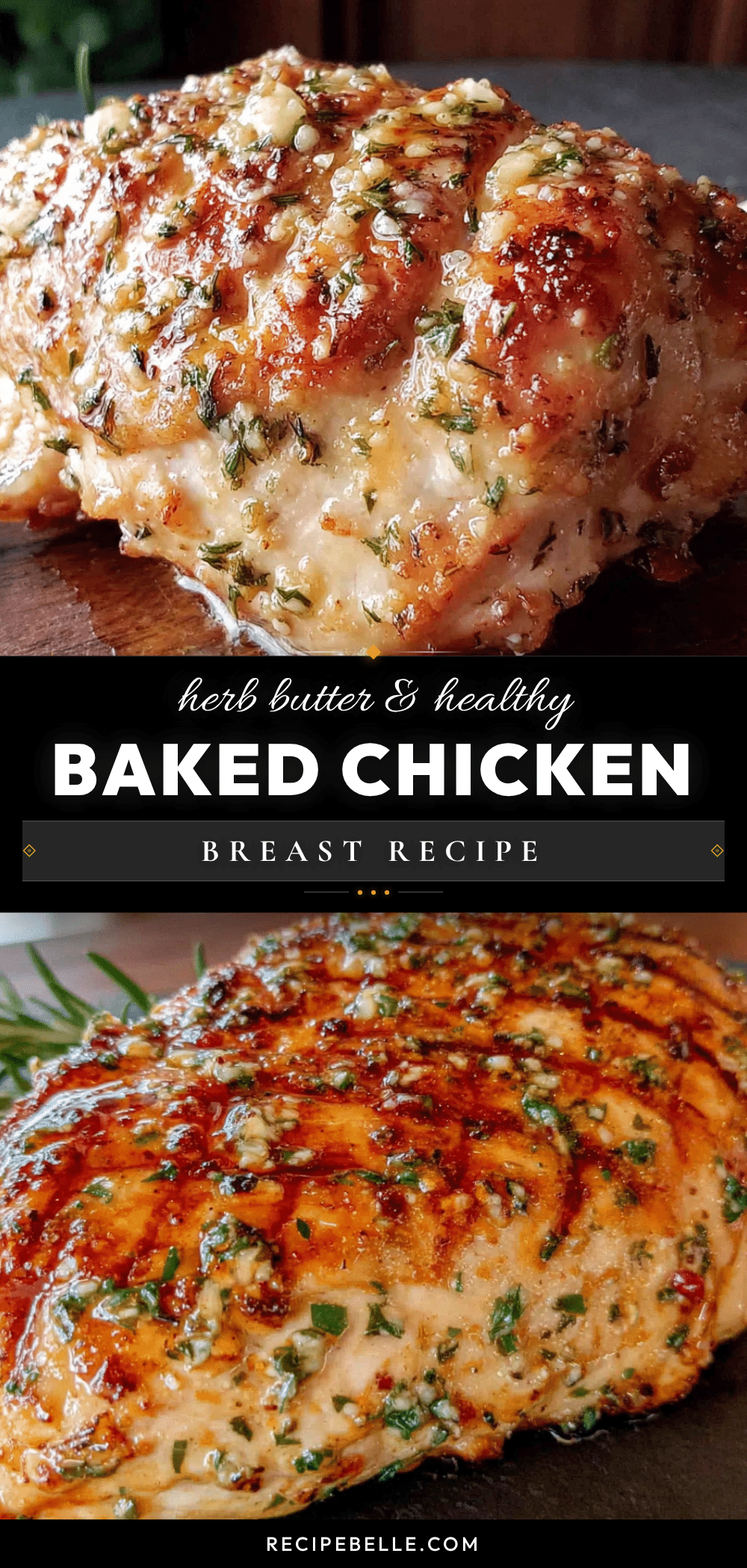
Easy Herb Butter Baked Chicken Breast Recipe
This herb butter baked chicken breast recipe creates a gorgeous golden crust while keeping the inside impossibly tender. It’s the perfect weeknight dinner that feels special but requires minimal effort.
- Prep Time: 10 minutes
- Cook Time: 25 minutes
- Total Time: 35 minutes
- Yield: 2 servings 1x
- Category: Main Course
- Cuisine: American
Ingredients
- 2 large boneless, skinless chicken breasts (about 8 ounces each)
- 3 tablespoons unsalted butter, softened
- 3 cloves fresh garlic, minced
- 2 tablespoons fresh parsley, finely chopped
- 1 tablespoon fresh rosemary, finely chopped
- 1 teaspoon fresh thyme leaves
- 1 tablespoon fresh lemon juice
- 1 teaspoon lemon zest
- 1 teaspoon fine sea salt
- ½ teaspoon freshly ground black pepper
- 1 tablespoon olive oil
Instructions
- Preheat your oven to 400°F (200°C).
- Make the herb butter: In a small bowl, combine softened butter, minced garlic, chopped parsley, rosemary, thyme, lemon juice, and lemon zest. Mix with a fork until well combined and set aside at room temperature.
- Prepare the chicken: Pat chicken breasts completely dry with paper towels. If uneven in thickness, butterfly them to create even pieces.
- Season the chicken: Drizzle olive oil over both sides of the chicken and rub in gently. Season both sides with salt and pepper. Let sit for 5 minutes.
- Apply the herb butter: Spread about 1 tablespoon of herb butter evenly over the top of each chicken breast, covering from edge to edge.
- Arrange in the baking dish: Place chicken breasts in a 9×13-inch baking dish with about an inch of space between them. Dollop any remaining herb butter on top.
- Bake for 20-25 minutes, until internal temperature reaches 160°F (71°C) in the thickest part.
- Rest the chicken: Remove from oven, tent loosely with aluminum foil, and let rest for 5-7 minutes.
- Serve: Spoon pan juices over the chicken before serving. Slice against the grain.
Notes
For best results, let chicken sit at room temperature for 15 minutes before cooking. Use a meat thermometer to avoid overcooking. Resting is crucial for juicy chicken. If using dried herbs, use one-third of the amount. For dairy-free, substitute with vegan butter.
Nutrition
- Serving Size: 1 chicken breast
- Calories: 320
- Sodium: 580
- Fat: 16
- Saturated Fat: 8
- Carbohydrates: 2
- Protein: 42
Keywords: herb butter chicken, baked chicken breast, easy chicken recipe, healthy chicken, weeknight dinner, gluten-free chicken, low-carb chicken