I wasn’t expecting to find my new holiday secret weapon in the middle of a hardware store, but there I was, holding a bag of screws while a man in a flannel shirt explained the perfect ratio of orange juice to cranberries. His name was Leo, and he was the plumbing aisle manager at the local True Value. I had asked him where to find pipe tape, and somehow, twenty minutes later, he was walking me through his grandmother’s cranberry sauce recipe while a customer behind us tapped her foot impatiently. “She was from Maine,” he said, “and she swore fresh ginger was the trick nobody talks about.” I scribbled his instructions on the back of a receipt, bought my pipe tape, and drove home thinking I’d probably never make it.
That was three years ago, and I haven’t made a single batch of cranberry sauce without Leo’s grandmother’s wisdom since. Let me tell you, I’ve tried every version out there—the canned stuff that slides out in a perfect cylinder, the fancy restaurant versions with wine and star anise, the ones that take all day on the stovetop. But this Best Make-Ahead Cranberry Orange Sauce with Fresh Ginger? It’s the one that keeps me coming back. The ginger adds this warm, slightly peppery kick that cuts through the sweetness in a way that makes you close your eyes after the first bite. Honestly, I’ve brought it to four different Thanksgiving dinners now, and every single time, someone asks for the recipe.
Maybe you’ve been there—staring at a holiday menu, wondering how you’ll get everything on the table at once. That’s exactly why this recipe became my go-to. It takes about twenty minutes of active work, then you just let it hang out in the fridge until you need it. The flavors actually get better after a day or two, which feels like cheating but isn’t. I keep making it because it solves a real problem (last-minute holiday chaos) and tastes like something you’d pay too much for at a fancy market. Plus, it makes your kitchen smell incredible—that combination of orange zest and ginger simmering together is basically Christmas in a pot.
Why You’ll Love This Recipe
This isn’t just another cranberry sauce recipe that promises the world and delivers something you could get from a can. I’ve tested this version about a dozen times, tweaking the ginger amount, playing with the orange ratio, and even trying it with different sweeteners. What I landed on is the version that consistently gets the most enthusiastic response from everyone who tries it. Here’s why this one stands out:
- Truly Make-Ahead Friendly: You can make this up to two weeks in advance. It actually tastes better on day three than day one, which means you can cross one more thing off your holiday prep list without sacrificing quality.
- Simple Ingredients, Big Flavor: You need seven ingredients, and five of them are probably already in your pantry. No hunting down obscure spices or specialty items—just fresh cranberries, oranges, ginger, and a few pantry staples.
- Perfect for Busy Holidays: Active time is about twenty minutes. Twenty minutes, and you’ve got a showstopping side dish that tastes like you spent hours on it. That’s the kind of efficiency I can get behind when I’m already juggling a turkey, three sides, and a pie.
- Crowd-Pleaser Across Generations: Kids love the sweet orange notes, adults appreciate the subtle ginger heat, and everyone goes back for seconds. I’ve watched my picky nephew and my food-snob uncle both reach for more at the same table.
- Unbelievably Versatile: This isn’t just for turkey sandwiches (though it’s amazing on those). Spoon it over cheesecake, swirl it into yogurt, or eat it straight from the jar when nobody’s looking. No judgment here.
What makes this recipe different from the dozens of cranberry sauces floating around the internet is the technique. Most recipes just dump everything in a pot and boil it until it thickens. But this one uses a two-step process where you simmer the ginger and orange zest first to infuse the liquid, then add the cranberries. It sounds like a small thing, but it makes a huge difference in how the flavors come through. The ginger isn’t just floating around in there—it’s woven into every bite.
This is the kind of recipe that makes you look like a hero without the stress. It’s comfort food reimagined—faster, easier, but with the same soul-soothing satisfaction that makes holiday meals feel special. Perfect for impressing guests without breaking a sweat, or turning a simple weeknight dinner into something that feels like a celebration.
What Ingredients You Will Need
This recipe uses simple, wholesome ingredients to deliver bold flavor and satisfying texture without any fuss. Most of these are pantry staples or easy to find at any grocery store, especially during the holiday season when cranberries are everywhere.
- Fresh or frozen cranberries (12 ounces / 340 grams): Fresh cranberries are ideal when they’re in season, but frozen work just as well—no need to thaw them first. Look for berries that are firm and bright red, without any soft spots. I’ve used both Ocean Spray brand and store-brand bags, and they all work fine. If using frozen, you might need to simmer an extra minute or two.
- Granulated sugar (¾ cup / 150 grams): This gives the sauce its sweetness and helps with texture. You can reduce it to ½ cup if you prefer a tarter sauce, or swap in coconut sugar for a deeper flavor. I’ve also used honey (½ cup) with good results, though the texture is slightly different.
- Fresh orange juice (½ cup / 120 ml): Freshly squeezed is non-negotiable here—bottled juice has a flat, metallic taste that ruins the bright citrus note. You’ll need about 2 medium oranges for this. Roll them on the counter before juicing to get the most liquid out.
- Orange zest (2 tablespoons): This is where the real orange flavor lives. Use a microplane or fine grater, and be careful to only get the orange part—the white pith underneath is bitter. One large orange usually gives you about 1 tablespoon of zest, so plan for two oranges total (one for juice, one for zest, or both from the same orange if it’s large enough).
- Fresh ginger (1½ tablespoons, finely grated / about 15 grams): This is the secret ingredient that makes this sauce special. Use a microplane for the finest texture—peeled ginger grates much more easily. I recommend using a spoon to peel it rather than a knife; it’s faster and you waste less ginger. The fresh stuff is essential here—dried ginger powder won’t give you the same warm, peppery kick.
- Water (¼ cup / 60 ml): Just regular tap water is fine. This helps the sugar dissolve and the cranberries cook evenly without scorching.
- Pinch of salt: A small pinch (about ⅛ teaspoon) balances the sweetness and brightens all the flavors. Don’t skip it—it makes a noticeable difference.
For the best results, I recommend using organic oranges if you can find them, since you’re using the zest. The conventional ones are usually coated in wax that doesn’t wash off completely. Also, look for ginger that’s firm and smooth—wrinkled ginger is older and has less flavor. If your ginger is a bit past its prime, you might need an extra half tablespoon to get the same punch.
Equipment Needed
You don’t need a fancy kitchen to make this sauce. Here’s what you’ll need, along with a few alternatives if you don’t have the exact tool:
- Medium saucepan (2-3 quart capacity): A heavy-bottomed saucepan works best for even heat distribution. If you don’t have one, any medium pot will do—just keep an eye on it and stir more frequently to prevent scorching.
- Microplane or fine grater: This is essential for zesting the orange and grating the ginger. A box grater’s finest side works in a pinch, but a microplane gives you that fluffy, almost powdery texture that dissolves into the sauce beautifully. They cost about $10 and are worth every penny.
- Wooden spoon or silicone spatula: For stirring. Wooden spoons are great because they don’t conduct heat, and you can hear when the cranberries start popping. A silicone spatula works too, just make sure it’s heat-resistant.
- Citrus juicer or reamer: A simple handheld reamer is fine, or you can just squeeze the oranges by hand. If you’re making a double batch, a citrus juicer saves time.
- Measuring cups and spoons: For accuracy. I know some cooks eyeball everything, but for this recipe, the ratios matter for the right texture.
- Storage container with lid: A glass jar or airtight container works perfectly. Mason jars are my favorite because you can see the beautiful color through the glass. Make sure it’s heat-safe if you’re pouring the hot sauce directly in.
- Fine-mesh strainer (optional): If you prefer a smoother sauce without any zest or ginger bits, you can strain it after cooking. I don’t recommend this—the texture is part of what makes it great—but the option is there.
Budget-friendly tip: If you don’t have a microplane, you can use the smallest holes on a box grater. Just be careful with your knuckles—I’ve grated myself more times than I’d like to admit. Also, you can zest the orange with a vegetable peeler and then finely mince the strips with a knife. It takes a bit longer, but it works perfectly fine.
Preparation Method
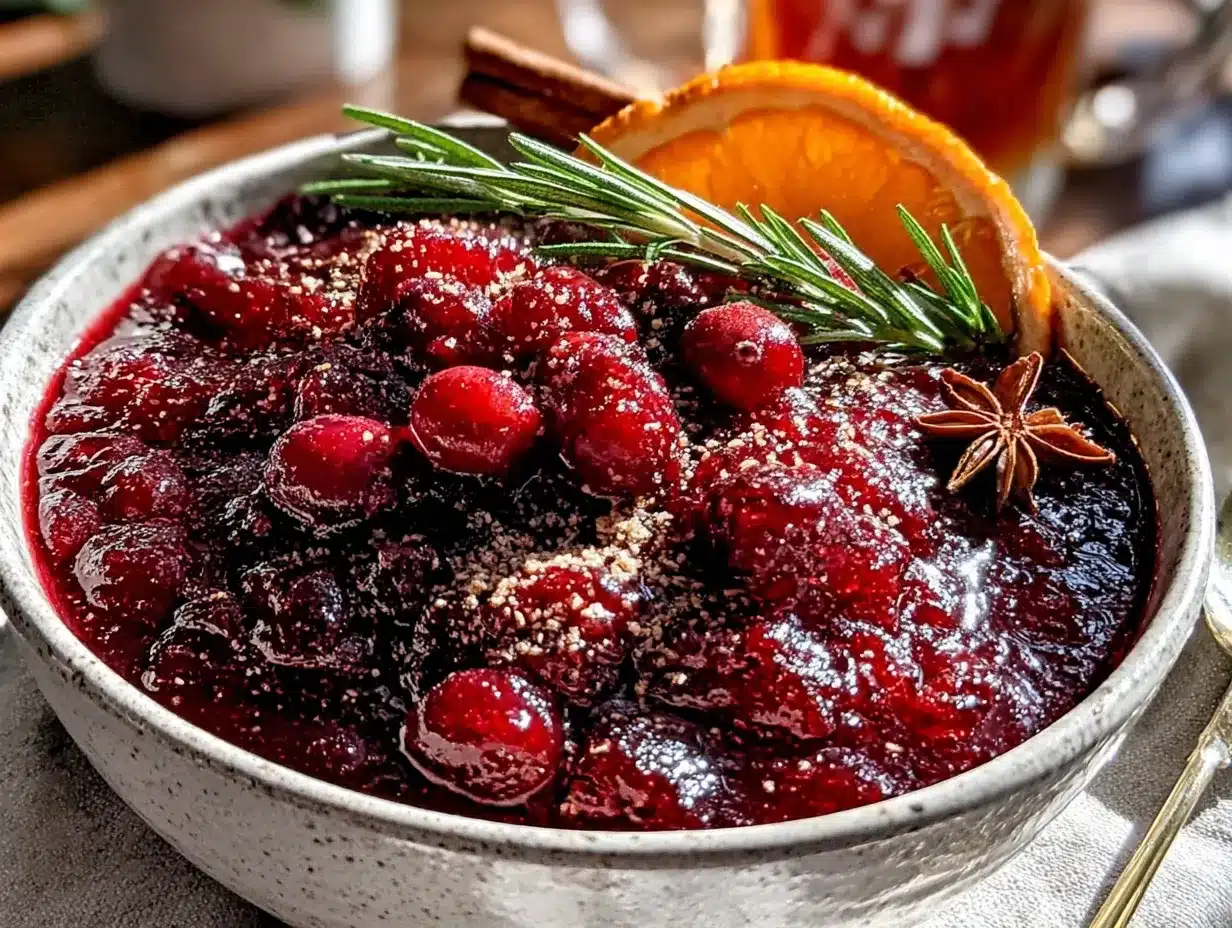
This recipe comes together quickly, but there are a few key moments where paying attention makes the difference between good sauce and unforgettable sauce. Here’s exactly how to do it:
- Prep your ingredients first (5 minutes): Before you turn on the heat, zest and juice your oranges, peel and grate your ginger, and measure out your sugar and water. I learned this the hard way after burning a batch while frantically trying to zest a slippery orange with one hand. Rinse your cranberries in a colander and pick out any soft or shriveled ones—they can make the sauce taste a bit off.
- Start the ginger and orange infusion (3 minutes): In your medium saucepan, combine the water, orange juice, and grated fresh ginger. Turn the heat to medium-high and bring it to a gentle simmer. Let it bubble for about 2 minutes, stirring occasionally. You’ll notice the kitchen starting to smell amazing at this point—that’s the ginger releasing its oils into the liquid. This step is crucial because it infuses the base with ginger flavor before the cranberries even go in.
- Add sugar and orange zest (1 minute): Stir in the granulated sugar and orange zest until the sugar is completely dissolved. The mixture will look a bit cloudy at first, then clear up as the sugar melts. Keep stirring for about 30 seconds to make sure nothing is sticking to the bottom. The zest will start to release its oils, and you’ll get that beautiful citrus aroma joining the ginger.
- Add the cranberries (10-12 minutes): Dump in the cranberries and give everything a good stir. Turn the heat up to medium-high until the mixture comes to a full boil—you should see big, lazy bubbles breaking the surface. Then reduce the heat to medium-low so it’s at a steady simmer. Here’s where the magic happens: the cranberries will start popping open after about 5 minutes. You’ll hear them—it sounds like tiny firecrackers. This is when the pectin releases and the sauce starts to thicken naturally. Stir occasionally, scraping the bottom to prevent sticking.
- Check for doneness (visual cue): After about 10 minutes of simmering, most of the cranberries should have burst open. The sauce should be thick enough that it coats the back of a spoon, but still loose enough to spread. If you drag your spoon through the sauce, the line should hold for a moment before slowly filling back in. It will continue to thicken as it cools, so don’t overcook it—you want it slightly thinner than your desired final consistency. If you prefer a chunkier sauce, leave it on the heat for 8-9 minutes. For a smoother sauce, let it go the full 12 minutes and mash some of the berries with your spoon.
- Add the pinch of salt (30 seconds): Stir in that small pinch of salt. This is not optional—it doesn’t make the sauce salty, it makes everything else taste more like itself. The sweetness pops, the ginger warms up, and the orange flavor brightens. Give it one final stir and taste it. Adjust if needed: more sugar if it’s too tart, a bit more ginger if you want extra kick.
- Cool and store (30 minutes to cool, then refrigerate): Remove the saucepan from the heat and let the sauce cool in the pot for about 15 minutes. Give it a stir occasionally as it cools—this prevents a skin from forming on top. Then transfer it to your storage container. Let it cool completely at room temperature (about another 15-20 minutes) before putting the lid on and refrigerating. If you seal it while it’s still warm, condensation will form inside the container and water down your sauce.
A few troubleshooting notes: If your sauce seems too thin after cooling, don’t panic. You can return it to the saucepan and simmer it for another 3-4 minutes to reduce it further. If it’s too thick, stir in a tablespoon of orange juice or water until it loosens up. And if you accidentally oversweetened it, a squeeze of fresh lemon juice can help balance things out.
Cooking Tips & Techniques
After making this sauce more times than I can count (and messing it up plenty along the way), I’ve picked up a few tricks that make the process smoother and the results more consistent. Here’s what I wish someone had told me earlier:
Don’t skip the ginger infusion step. The first time I made this, I threw everything in the pot at once out of impatience. The result was a sauce where the ginger tasted like an afterthought—present but not integrated. Taking those extra two minutes to simmer the ginger in the liquid first allows the flavor to permeate every cranberry. It’s a small technique that professional chefs use, and it makes a noticeable difference.
Grate ginger with a spoon to peel it. I spent years struggling with a vegetable peeler, losing half the ginger to awkward angles and knuckle scrapes. Then a friend showed me this trick: use the edge of a spoon to scrape off the skin. It’s faster, you waste almost nothing, and it gets into all those little crevices that a peeler can’t reach. The spoon should be metal, not plastic—the edge needs to be sharp enough to catch the skin.
Watch the heat carefully. Cranberry sauce can go from perfect to scorched surprisingly fast. The sugar in the mixture caramelizes at high temperatures, and once it burns, there’s no saving it. Keep your heat at medium-low once the cranberries have burst, and stir more frequently in the last few minutes. If you see dark brown specks forming on the bottom of the pot, you’ve gone too far.
Make a double batch while you’re at it. This sauce freezes beautifully, and having a jar in the freezer means you’re always prepared for unexpected guests or last-minute holiday invitations. I usually make a triple batch in November and stash two jars in the freezer for emergencies. Just thaw it overnight in the fridge and stir well before serving.
One mistake I keep making: Forgetting to stir the sauce while it cools. I get distracted, walk away, and come back to a thick skin on top that I have to pick out. It’s not the end of the world—you can just stir it back in—but it creates lumps that don’t look as pretty. Set a timer for 10 minutes after you take it off the heat so you remember to give it a stir.
Taste as you go. This is the most important tip I can give you. Sugar content varies by brand, oranges have different levels of sweetness, and ginger intensity changes with freshness. Your taste buds are the only reliable guide. I always taste at the end of step 4, before adding salt, and then again after. If something seems off, adjust in small increments—a tablespoon of sugar, a teaspoon of orange juice, a pinch more ginger.
Variations & Adaptations
One of the best things about this recipe is how adaptable it is. I’ve played around with it quite a bit over the years, and here are some variations that have worked well:
Spiced Holiday Version: Add one cinnamon stick and three whole cloves to the pot along with the ginger in step 2. Remove them before storing. The warm spices complement the orange and ginger beautifully, and it makes your kitchen smell like a Christmas market. I serve this version with roasted pork or ham, and it’s always a hit.
Low-Sugar Option: Reduce the sugar to ¼ cup and add 2 tablespoons of maple syrup or honey instead. The sauce will be slightly less thick (since sugar helps with texture), but the flavor is still excellent. You can also use a sugar substitute like monk fruit or erythritol—just note that the texture will be a bit looser. I’ve made this for friends watching their sugar intake, and nobody complained.
Bourbon-Infused Version: After removing the sauce from the heat, stir in 2 tablespoons of good bourbon. The alcohol cooks off almost immediately from the residual heat, leaving behind a warm, smoky depth that pairs surprisingly well with the ginger. I tried this on a whim one year when I had an open bottle on the counter, and it’s become my favorite adult-only version. Skip this one if kids will be eating it.
Extra-Gingery Kick: Double the ginger to 3 tablespoons for a sauce that really wakes you up. This version is not for the faint of heart—the ginger heat lingers on your tongue in a pleasant, almost spicy way. I serve this alongside rich dishes like braised short ribs or duck, where the brightness cuts through the heaviness.
Slow Cooker Method: Combine all ingredients in a small slow cooker and cook on low for 3-4 hours, stirring once halfway through. The texture will be softer and more jam-like, and the flavors meld even more deeply. This is great if you need to free up stovetop space during a big holiday meal. Just be aware that the sauce will be darker and more caramelized than the stovetop version.
Dietary Adaptations: This recipe is naturally gluten-free, dairy-free, and vegan as written. For a lower-carb version, use a sugar substitute and reduce the orange juice to ¼ cup (replace the remaining liquid with water). For a nut-free version, no changes needed—but always check your ingredient labels if serving someone with allergies.
Serving & Storage Suggestions
This sauce is incredibly versatile, and how you serve it can change the whole vibe of a meal. Here’s what I’ve learned about getting the most out of it:
Serving temperature: I prefer this sauce at room temperature or slightly chilled. Straight from the fridge, it’s too thick and the flavors are muted. Let it sit out for about 20-30 minutes before serving, then give it a good stir. If you’re in a hurry, microwave it for 15 seconds at 50% power to take the chill off without cooking it further.
Presentation ideas: Spoon it into a beautiful glass bowl or ceramic dish so the deep ruby color shows through. Garnish with a few fresh cranberries and a curl of orange zest on top for a restaurant-worthy look. For individual servings, I sometimes portion it into small mason jars tied with twine—perfect for holiday gifts or dinner party favors.
What to serve it with: Obviously, it’s amazing with turkey and all the Thanksgiving fixings. But don’t stop there. Try it on roasted pork loin, grilled chicken, or even as a glaze for meatballs. It’s fantastic spread on a turkey sandwich the next day, or swirled into oatmeal for a festive breakfast. I’ve also spooned it over vanilla ice cream and brie cheese—both are surprisingly delicious combinations.
Storage instructions: Store in an airtight container in the refrigerator for up to 2 weeks. The sauce actually improves after a day or two as the flavors continue to meld. If you notice any liquid separating at the top, just stir it back in—that’s just the natural pectin settling.
Freezing: This sauce freezes beautifully for up to 3 months. Let it cool completely, then transfer to a freezer-safe container or zip-top bag. Leave about an inch of headspace for expansion. To thaw, move it to the refrigerator overnight. The texture might be slightly softer after freezing, but the flavor remains excellent. I’ve pulled jars from the freezer in July and they tasted like fresh-made.
Reheating: Warm gently on the stovetop over low heat, stirring occasionally. Or microwave in 20-second bursts at 50% power, stirring between each. Don’t overheat it—you want it warm, not boiling. If it seems too thick after reheating, stir in a tablespoon of water or orange juice to loosen it up.
How flavors develop over time: Day one is bright and fresh, with distinct notes of ginger and orange. By day three, those flavors have mellowed and melded into something more complex and harmonious. The sauce gets slightly darker in color and the texture becomes more jam-like. I actually prefer it on day three or four, which is why this recipe is so perfect for make-ahead holiday prep.
Nutritional Information & Benefits
While this sauce is definitely a treat, it does have some redeeming qualities beyond just tasting amazing. Here’s a rough nutritional breakdown per ¼-cup serving (based on the recipe as written):
- Calories: approximately 110
- Total fat: 0g
- Sodium: 15mg (from the pinch of salt)
- Total carbohydrates: 28g
- Sugars: 24g (mostly from added sugar and natural fruit sugars)
- Fiber: 2g
- Vitamin C: 15% of the Daily Value
Health highlights: Cranberries are packed with antioxidants called proanthocyanidins, which are known for supporting urinary tract health. They also contain vitamin C and fiber, which is good for digestion. Fresh ginger is a powerhouse of anti-inflammatory compounds called gingerols, which can help with nausea and muscle soreness. And oranges bring their own vitamin C boost along with flavonoids that support immune function.
Dietary considerations: This recipe is naturally gluten-free, dairy-free, vegan, and nut-free as written. If you’re watching your sugar intake, the low-sugar variation above works well. The sauce is also free of common allergens like eggs and soy, making it a safe choice for most dietary restrictions.
My personal perspective: I don’t pretend this is a health food—it’s a holiday treat, and that’s okay. But I do feel better serving something made from whole ingredients rather than the canned stuff with high-fructose corn syrup and artificial colors. The ginger and orange bring real nutritional benefits, and the cranberries are a legit superfood. It’s comfort food that happens to have some redeeming qualities, which is the best kind of comfort food in my book.
Conclusion
This Best Make-Ahead Cranberry Orange Sauce with Fresh Ginger has become my signature holiday contribution, and I honestly can’t imagine the season without it. It started with an unexpected conversation in a hardware store aisle, and now it’s the recipe that gets requested every single year. There’s something deeply satisfying about making something so simple that tastes so complete—like you’ve unlocked a secret that was hiding in plain sight.
I hope you’ll give it a try, and more than that, I hope you’ll make it your own. Adjust the ginger up or down, try the bourbon version, double the batch and share a jar with a neighbor. That’s the beauty of a recipe like this—it’s a starting point, not a rulebook. The best cooking happens when you trust your instincts and let your taste buds guide you.
I’d love to hear how it turns out for you. Drop a comment below and let me know if you tried any variations, or if this recipe found its way onto your holiday table. And if you have a story about where you discovered your own favorite recipe, I’m all ears—mine came from a plumbing aisle, so I’m pretty open-minded at this point. Happy cooking, and here’s to stress-free holidays with sauce that steals the show!
Frequently Asked Questions
Can I use dried ginger instead of fresh?
I really don’t recommend it. Fresh ginger has a bright, peppery warmth that dried ginger powder just can’t replicate. The texture is different too—fresh ginger melts into the sauce, while dried ginger can leave a gritty, powdery feel. If you’re in a pinch, use 1 teaspoon of dried ginger, but know that the flavor will be noticeably different and less complex.
How far ahead can I make this sauce?
You can make it up to 2 weeks in advance and keep it in the refrigerator. The flavors actually improve after a few days. For longer storage, freeze it for up to 3 months. Just thaw overnight in the fridge and give it a good stir before serving. I usually make mine the weekend before Thanksgiving and it’s always perfect.
My sauce turned out too thin. Can I fix it?
Absolutely. If it’s still warm, let it simmer for another 5-10 minutes to reduce and thicken. If it’s already cooled, return it to the saucepan and simmer gently until it reaches your desired consistency. You can also stir in 1 teaspoon of cornstarch mixed with 1 tablespoon of cold water (a slurry) and simmer for 2 minutes to thicken it without reducing the volume.
Can I reduce the sugar without ruining the recipe?
Yes, you can cut the sugar to ½ cup without major issues. The sauce will be tarter and slightly less thick (sugar helps with texture), but the flavor will still be excellent. If you go lower than that, I recommend adding 2 tablespoons of maple syrup or honey to help with both sweetness and texture. Taste as you go and adjust to your preference.
What’s the best way to zest an orange without a microplane?
If you don’t have a microplane, use a vegetable peeler to remove thin strips of the orange zest (just the colored part, avoiding the white pith). Then stack the strips and finely mince them with a sharp knife. It takes a bit more time, but it works perfectly. You can also use the finest side of a box grater—just be careful with your fingers!
Pin This Recipe!
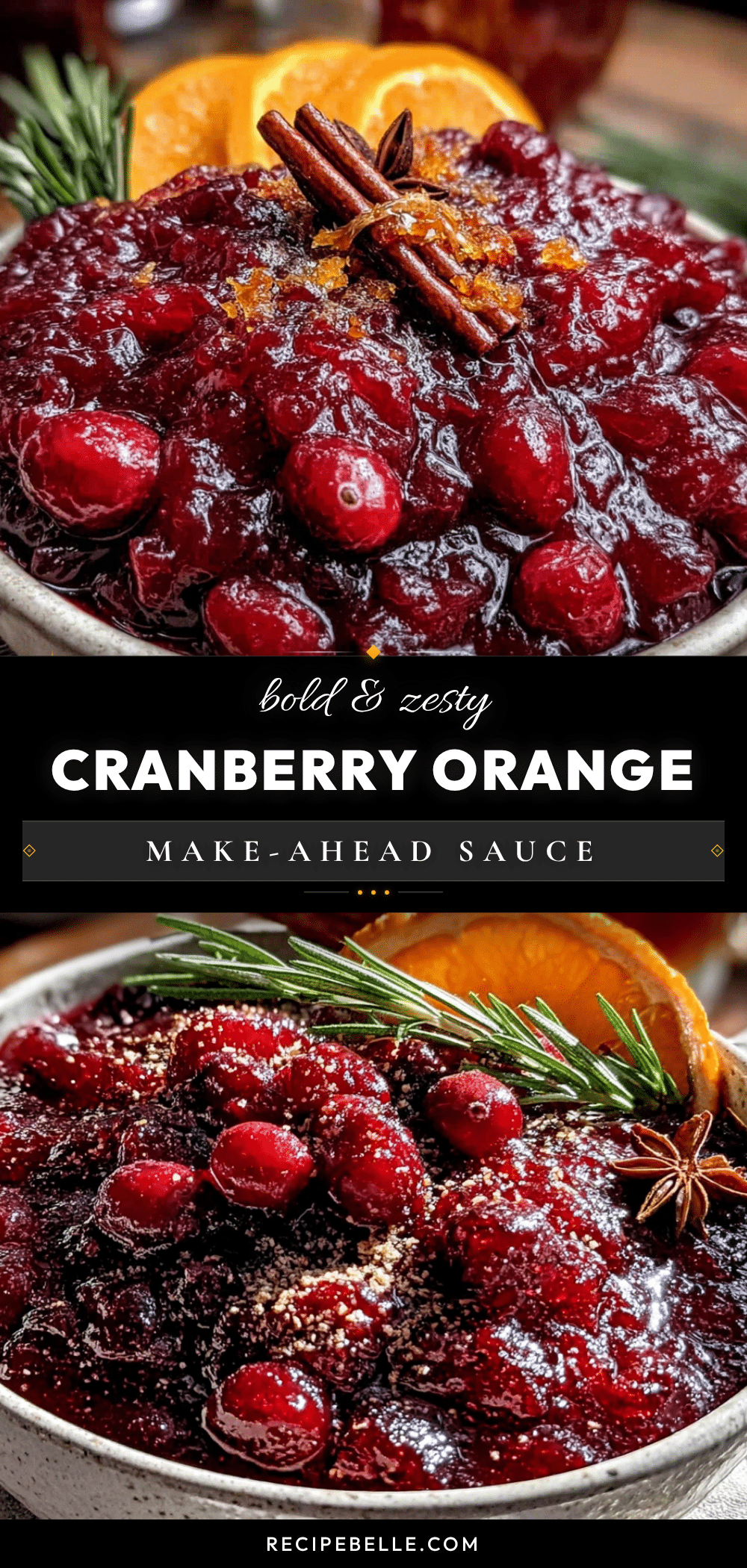
Best Make-Ahead Cranberry Orange Sauce with Fresh Ginger
This make-ahead cranberry orange sauce with fresh ginger is a holiday game-changer. It takes about 20 minutes of active work, uses simple ingredients, and tastes even better after a day or two in the fridge.
- Prep Time: 5 minutes
- Cook Time: 15 minutes
- Total Time: 20 minutes
- Yield: 8 servings 1x
- Category: Side Dish
- Cuisine: American
Ingredients
- 12 ounces (340 grams) fresh or frozen cranberries
- ¾ cup (150 grams) granulated sugar
- ½ cup (120 ml) fresh orange juice
- 2 tablespoons orange zest
- 1½ tablespoons (about 15 grams) fresh ginger, finely grated
- ¼ cup (60 ml) water
- Pinch of salt (about ⅛ teaspoon)
Instructions
- Prep your ingredients first: zest and juice oranges, peel and grate ginger, measure sugar and water. Rinse cranberries and pick out any soft or shriveled ones.
- In a medium saucepan, combine water, orange juice, and grated ginger. Bring to a gentle simmer over medium-high heat and let bubble for about 2 minutes, stirring occasionally.
- Stir in granulated sugar and orange zest until sugar is completely dissolved, about 30 seconds.
- Add cranberries and stir. Increase heat to medium-high until mixture comes to a full boil, then reduce heat to medium-low for a steady simmer. Cook for 10-12 minutes, stirring occasionally, until most cranberries have burst and sauce coats the back of a spoon.
- Stir in the pinch of salt. Taste and adjust sweetness or ginger if needed.
- Remove from heat and let cool in the pot for 15 minutes, stirring occasionally to prevent a skin from forming. Transfer to a storage container and cool completely at room temperature (about 15-20 minutes) before refrigerating.
Notes
The sauce can be made up to 2 weeks in advance and stored in the refrigerator. It freezes well for up to 3 months. For a spiced version, add a cinnamon stick and 3 whole cloves during the ginger infusion step. For a bourbon-infused version, stir in 2 tablespoons of bourbon after removing from heat.
Nutrition
- Serving Size: ¼ cup
- Calories: 110
- Sugar: 24
- Sodium: 15
- Carbohydrates: 28
- Fiber: 2
Keywords: cranberry sauce, orange sauce, ginger, make-ahead, holiday, Thanksgiving, easy, homemade