This was supposed to be a simple roasted butternut squash soup. I had the squash cubed and seasoned, the vegetable stock simmering on the stove, and a brand new immersion blender that I was itching to use. But then, I realized I was completely out of cream. Like, not even a splash of milk in the fridge. And it was pouring rain outside—the kind of relentless Tuesday downpour that makes you question every life choice that led you to this moment. I stood there, staring at the pot of orange puree, feeling that familiar knot of kitchen panic tighten in my chest. The soup was going to be thin, sad, and watery without that creamy finish.
Then my eyes landed on the block of sharp cheddar in the cheese drawer. And the box of elbow macaroni in the pantry. And I thought, well, what if I just… went in a completely different direction? I mean, pureed squash is basically a sauce base, right? I stirred in the cheese, watched it melt into that velvety orange mixture, and tossed in the pasta. Honestly, I was half-expecting a disaster—a grainy, weirdly sweet mess that I’d have to order pizza over. But the first bite stopped me cold. It was creamy, savory, a little nutty from the squash, and so deeply comforting that I forgot all about the soup I was supposed to be making. That was three years ago, and this cozy butternut squash mac and cheese with crispy breadcrumbs has been my go-to comfort meal ever since. Maybe you’ve been there too—staring at a half-failed plan and wondering if dinner is doomed. Trust me, sometimes the best recipes come from the moments you think you’ve messed everything up.
Why You’ll Love This Recipe
Let me tell you, this isn’t just another mac and cheese recipe. This is the one that makes you feel like you’ve hacked the system—getting that ultra-creamy, indulgent comfort food while sneaking in a full serving of vegetables. And nobody at the table will even know. I’ve tested this recipe more times than I can count, tweaking the squash-to-cheese ratio, playing with different breadcrumb toppings, and even serving it to my pickiest friend who “doesn’t do squash.” She asked for seconds. That’s the kind of power we’re working with here.
- Quick & Easy: Comes together in about 45 minutes, most of which is just letting the squash roast. Perfect for those weeknights when you need something cozy but don’t want to spend hours in the kitchen.
- Simple Ingredients: No fancy grocery trips needed. Butternut squash, cheddar, pasta, and a few pantry staples—you probably have most of this already.
- Perfect for Cozy Nights: This is the dish for rainy evenings, cold winter days, or any time you need a warm hug in a bowl. It’s comfort food at its finest.
- Crowd-Pleaser: Kids love the creamy cheese sauce, adults appreciate the subtle squash flavor, and everyone goes crazy for that crispy, golden breadcrumb topping.
- Unbelievably Delicious: The texture is next-level—silky smooth sauce, tender pasta, and that crunchy topping. It’s a symphony of textures and flavors that just works.
What makes this recipe different from the rest? It’s the roasted squash. Instead of just boiling or steaming it, roasting brings out the natural sweetness and nuttiness, adding a depth of flavor that canned puree just can’t match. And that crispy breadcrumb topping? It’s not just for show—it adds a savory crunch that contrasts perfectly with the creamy mac and cheese. This isn’t just another version of butternut squash mac and cheese; it’s the best version. The kind that makes you close your eyes after the first bite and just savor the moment.
What Ingredients You Will Need
This recipe uses simple, wholesome ingredients to deliver bold flavor and satisfying texture without the fuss. Most of these are pantry staples or easy to find at your local grocery store. The key is using good-quality cheddar and fresh butternut squash for the best results.
For the Butternut Squash Puree
- 1 medium butternut squash (about 2-3 pounds), peeled, seeded, and cubed into 1-inch pieces
- 2 tablespoons olive oil (I prefer extra virgin for roasting)
- 1/2 teaspoon salt
- 1/4 teaspoon black pepper
- 1/4 teaspoon garlic powder (optional, but adds a nice savory note)
For the Mac and Cheese
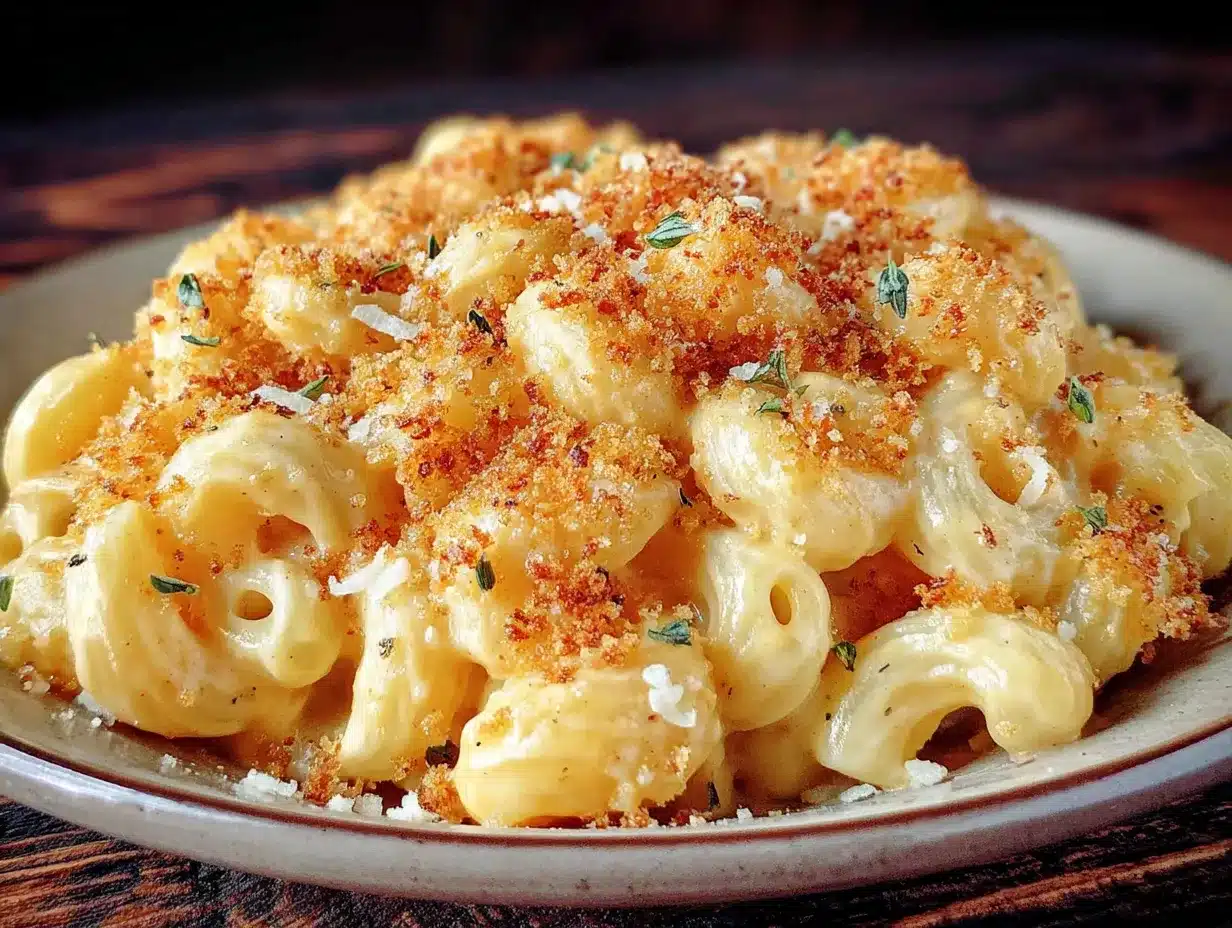
- 12 ounces (340g) elbow macaroni or cavatappi pasta (cavatappi holds the sauce beautifully)
- 3 tablespoons unsalted butter
- 3 tablespoons all-purpose flour
- 2 cups whole milk (warm, for a smoother sauce)
- 1 cup heavy cream (adds richness, but you can use all milk if preferred)
- 2 cups (8 ounces) sharp cheddar cheese, freshly shredded (please shred it yourself—pre-shredded has anti-caking agents that affect melting)
- 1/2 cup (2 ounces) Parmesan cheese, freshly grated
- 1 teaspoon Dijon mustard (a secret weapon for depth of flavor)
- 1/4 teaspoon nutmeg, freshly grated (trust me on this—it’s magic with squash)
- Salt and pepper to taste
For the Crispy Breadcrumb Topping
- 1 cup panko breadcrumbs (they get crunchier than regular breadcrumbs)
- 2 tablespoons unsalted butter, melted
- 1/4 cup Parmesan cheese, grated
- 1/2 teaspoon garlic powder
- 1 tablespoon fresh parsley, chopped (optional, for color)
Ingredient Tips: For the best texture, look for a butternut squash that feels heavy for its size with firm, unblemished skin. I recommend using a block of Tillamook or Cabot sharp cheddar for that perfect melt and bold flavor. If you’re dairy-sensitive, you can substitute the milk and cream with unsweetened oat milk and a dairy-free cream alternative, though the texture will be slightly less rich. The nutmeg is non-negotiable in my book—it brings out the natural sweetness of the squash in a way that’s subtle but unmistakable.
Equipment Needed
You don’t need a professional kitchen to pull this off, but a few key tools will make your life a lot easier. Here’s what you’ll need:
- Baking sheet: For roasting the squash. A rimmed baking sheet works best to catch any juices.
- Large pot: For boiling the pasta. You’ll also use this for the cheese sauce if you’re doing it stovetop.
- Medium saucepan: For making the roux and cheese sauce. I use a heavy-bottomed one to prevent scorching.
- Immersion blender or food processor: To puree the roasted squash into a silky smooth sauce. A regular blender works too, just be careful with hot liquids.
- 9×13-inch baking dish: For assembling and baking the mac and cheese. A 3-quart casserole dish also works.
- Whisk: Essential for a lump-free roux and smooth cheese sauce.
- Box grater: For shredding your own cheese. It takes an extra minute, but the difference in meltability is huge.
- Wooden spoon or spatula: For stirring the sauce and mixing everything together.
If you don’t have an immersion blender, no worries—a potato masher works in a pinch, though the texture will be slightly chunkier. And if you’re short on time, you can skip the baking step and just serve it stovetop with the breadcrumbs sprinkled on top. I’ve done that on busy nights, and it’s still delicious.
Preparation Method
Let’s walk through this step by step. I’ve included all the little details I’ve learned from making this dozens of times, so you can skip the trial and error.
- Preheat and Prep the Squash: Preheat your oven to 400°F (200°C). Toss the cubed butternut squash with olive oil, salt, pepper, and garlic powder on a baking sheet. Spread it in a single layer—crowding the pan will steam the squash instead of roasting it. Roast for 25-30 minutes, flipping halfway through, until the squash is tender and lightly caramelized on the edges. You’ll know it’s done when a fork slides through easily. The caramelization is key—it adds that deep, nutty sweetness that makes this dish special.
- Cook the Pasta: While the squash roasts, bring a large pot of salted water to a boil. Cook the pasta according to package directions until al dente—about 8-9 minutes for elbow macaroni. Don’t overcook it, because it will continue cooking in the oven later. Drain the pasta, but reserve about 1/2 cup of the pasta water. This starchy water is gold for thinning the sauce if needed.
- Make the Squash Puree: Transfer the roasted squash to a blender or food processor. Add 1/2 cup of the milk and blend until completely smooth. You’re looking for a texture like baby food—silky and lump-free. If it’s too thick, add a little more milk. Set aside.
- Start the Cheese Sauce: In a large saucepan, melt the butter over medium heat. Once it’s bubbling, whisk in the flour and cook for 1-2 minutes, stirring constantly. This is your roux, and it should smell slightly nutty and look like a pale paste. Don’t let it brown—you want a light blonde color. Slowly pour in the remaining milk and heavy cream, whisking continuously to prevent lumps. Bring the mixture to a gentle simmer, then reduce the heat to low. It will thicken in about 3-4 minutes, coating the back of a spoon.
- Add the Cheese and Squash: Remove the saucepan from the heat. Stir in the shredded cheddar, Parmesan, Dijon mustard, and nutmeg until the cheese is fully melted and the sauce is smooth. Now, stir in the butternut squash puree until everything is well combined. Taste the sauce and adjust the salt and pepper. It should be creamy, savory, with a hint of sweetness from the squash. If the sauce seems too thick, add a splash of the reserved pasta water to loosen it up.
- Combine and Assemble: Add the cooked pasta to the cheese sauce and stir until every piece is coated. Pour the mixture into a greased 9×13-inch baking dish and spread it evenly.
- Make the Breadcrumb Topping: In a small bowl, combine the panko breadcrumbs, melted butter, Parmesan, and garlic powder. Mix until the breadcrumbs are evenly moistened. Sprinkle this mixture over the mac and cheese in an even layer. Don’t skip this step—it’s what takes this dish from good to unforgettable.
- Bake to Perfection: Bake the mac and cheese at 375°F (190°C) for 20-25 minutes, until the sauce is bubbly around the edges and the breadcrumb topping is golden brown and crispy. If you want extra crunch, broil for the last 1-2 minutes, but watch it closely—breadcrumbs can burn fast. Let it rest for 5 minutes before serving. This allows the sauce to set slightly, making it easier to serve.
Cooking Tips & Techniques
After making this recipe more times than I can count, I’ve picked up a few tricks that make a real difference. Let me share them so you don’t have to learn the hard way.
Don’t skip roasting the squash. I know it’s tempting to boil or microwave it to save time, but roasting concentrates the flavor and brings out natural sugars that you just can’t get any other way. The edges should be slightly browned and caramelized—that’s where the magic happens. I once tried using canned pumpkin puree in a pinch, and while it worked okay, the flavor was flat and one-dimensional. Roasting is worth the extra 10 minutes.
Shred your own cheese. This is non-negotiable, honestly. Pre-shredded cheese is coated with cellulose and anti-caking agents that prevent it from melting smoothly. Your sauce will end up grainy instead of silky. I learned this the hard way when I was in a rush and used a bag of pre-shredded cheddar. The sauce was clumpy and never fully came together. Take the two minutes to shred a block—it makes all the difference.
Use a low heat for the cheese sauce. High heat will cause the cheese to seize up and become stringy. Keep the heat on low after you add the cheese, and stir gently but constantly. If the sauce looks like it’s separating, remove it from the heat immediately and whisk in a splash of cold milk to bring it back together.
Let the mac and cheese rest after baking. I know it’s hard to wait when your kitchen smells like heaven, but resting allows the sauce to thicken and set. If you dig in right away, it will be runny. Five minutes is all it takes, and the texture will be perfect—creamy but not soupy.
Make the breadcrumbs ahead of time. If you’re meal prepping, you can mix the panko, butter, Parmesan, and garlic powder and store it in the fridge for up to 3 days. Just sprinkle it on before baking. This saves a step on busy nights.
Variations & Adaptations
One of the best things about this recipe is how versatile it is. Here are some ways to make it your own, based on what I’ve tried and loved.
Make it Gluten-Free: Swap the all-purpose flour for a gluten-free blend (I like Bob’s Red Mill 1-to-1), use gluten-free pasta, and substitute the panko with gluten-free breadcrumbs. The sauce will be slightly thinner, but it still works beautifully. I’ve made this for a gluten-sensitive friend, and she couldn’t tell the difference.
Add Some Protein: Stir in 2 cups of shredded rotisserie chicken, cooked bacon crumbles, or crispy pancetta before baking. The salty, smoky flavors play perfectly with the sweet squash and sharp cheddar. I once added leftover pulled pork, and it was incredible—like a BBQ mac and cheese hybrid.
Go Vegetarian or Vegan: Use plant-based butter, unsweetened oat milk, and dairy-free cheddar and Parmesan shreds. The texture won’t be quite as creamy, but it’s still delicious. I’ve tested this with Violife cheddar shreds, and they melt surprisingly well.
Seasonal Twists: In the fall, add 1/2 teaspoon of smoked paprika and a pinch of cayenne for warmth. In the spring, stir in 2 cups of wilted spinach or sautéed kale for a pop of green. In the summer, swap the butternut squash for roasted sweet potato or even zucchini (though you’ll need to squeeze out the excess moisture).
Make it Spicier: Add 1/2 teaspoon of red pepper flakes to the breadcrumb topping or stir in 1 tablespoon of hot sauce (like Cholula or Frank’s) into the cheese sauce. The heat cuts through the richness beautifully.
Serving & Storage Suggestions
This cozy butternut squash mac and cheese is best served warm, straight from the oven, with that crispy breadcrumb topping still crunchy. Scoop it into bowls and garnish with a sprinkle of fresh parsley or a crack of black pepper for a pretty finish. It pairs beautifully with a simple green salad dressed with lemon vinaigrette—the acidity cuts through the richness. A side of roasted broccoli or steamed green beans also works wonderfully. For drinks, a crisp white wine like Sauvignon Blanc or a light lager balances the creamy, cheesy flavors.
Storing Leftovers: Let the mac and cheese cool completely, then transfer it to an airtight container. It will keep in the refrigerator for up to 4 days. The breadcrumbs will soften over time, but the flavor will still be amazing. In fact, I think it tastes even better the next day as the flavors meld together.
Reheating: For best results, reheat in a 350°F (175°C) oven for 15-20 minutes, covered with foil to prevent drying out. If you’re in a hurry, microwave individual portions in 30-second bursts, stirring in between. To restore some crunch, sprinkle fresh breadcrumbs on top before reheating in the oven.
Freezing: This mac and cheese freezes beautifully. Assemble the dish but don’t add the breadcrumb topping. Wrap it tightly in plastic wrap and then foil, and freeze for up to 3 months. When you’re ready to bake, thaw it in the fridge overnight, add the breadcrumbs, and bake as directed. You may need to add 5-10 minutes to the baking time since it’s starting from cold.
Nutritional Information & Benefits
Here’s the estimated nutritional breakdown per serving (based on 8 servings):
| Nutrient | Amount per Serving |
|---|---|
| Calories | 485 |
| Total Fat | 28g |
| Saturated Fat | 16g |
| Cholesterol | 75mg |
| Sodium | 620mg |
| Total Carbohydrates | 42g |
| Dietary Fiber | 4g |
| Sugars | 8g |
| Protein | 18g |
| Vitamin A | 180% DV |
| Vitamin C | 25% DV |
| Calcium | 35% DV |
| Iron | 10% DV |
This dish isn’t just comfort food—it’s comfort food with benefits. Butternut squash is packed with vitamin A (great for eye health and immunity) and fiber, which helps keep you full and satisfied. The sharp cheddar provides calcium for strong bones, and the Parmesan adds a boost of protein. While it’s definitely an indulgence, the hidden vegetable content means you’re getting more nutrients than your standard mac and cheese. If you’re watching your sodium, you can reduce the added salt and use low-sodium cheese. This recipe is not gluten-free or vegan as written, but with the substitutions mentioned above, it can be adapted to fit those dietary needs.
Conclusion
So there you have it—my cozy butternut squash mac and cheese with crispy breadcrumbs, born from a rainy Tuesday and a lack of cream. This recipe has become my secret weapon for comfort food cravings, dinner parties, and those days when only something warm and cheesy will do. It’s creamy, savory, a little sweet, and topped with that irresistible crunchy layer that makes every bite exciting. I honestly can’t imagine my recipe collection without it now.
I hope you give this a try and make it your own. Maybe you’ll add extra cheese, toss in some bacon, or spoon it over a bed of greens. Whatever you do, I’d love to hear about it. Drop a comment below and tell me how it turned out—did you make any substitutions? Did your family go back for seconds? Your stories and tweaks inspire me to keep experimenting. And if you loved this recipe, don’t forget to pin it on Pinterest or share it with a friend who needs a little comfort in their life. Happy cooking, friends!
Frequently Asked Questions
Can I use frozen butternut squash instead of fresh?
Absolutely! Frozen butternut squash works great in a pinch. Just thaw it, pat it dry to remove excess moisture, and roast it as directed. You may need to add 5-10 minutes to the roasting time. The texture will be slightly softer, but the flavor is still excellent.
Why did my cheese sauce turn out grainy?
Grainy cheese sauce usually happens for one of two reasons: you used pre-shredded cheese (which has anti-caking agents), or you cooked the sauce over too high heat. Always shred your own cheese and keep the heat on low after adding it. If it does get grainy, whisk in a splash of cold milk or cream to help smooth it out.
Can I make this recipe ahead of time?
Yes! You can assemble the mac and cheese (without the breadcrumb topping) up to 2 days in advance. Cover and refrigerate it. When you’re ready to bake, add the breadcrumb topping and bake as directed, adding 10-15 minutes to the baking time since it’s starting from cold.
How do I get the breadcrumbs extra crispy?
For maximum crunch, broil the mac and cheese for the last 1-2 minutes of baking. Keep a close eye on it—breadcrumbs can go from golden to burnt in seconds. Also, make sure the breadcrumbs are evenly coated with melted butter, which helps them crisp up beautifully.
Can I use a different type of squash?
Definitely! Kabocha, acorn, or even buttercup squash work well in this recipe. Each has a slightly different sweetness and texture, but they all puree into a creamy sauce. You can even use canned pumpkin puree in a pinch—just skip the roasting step and stir it directly into the cheese sauce.
Pin This Recipe!
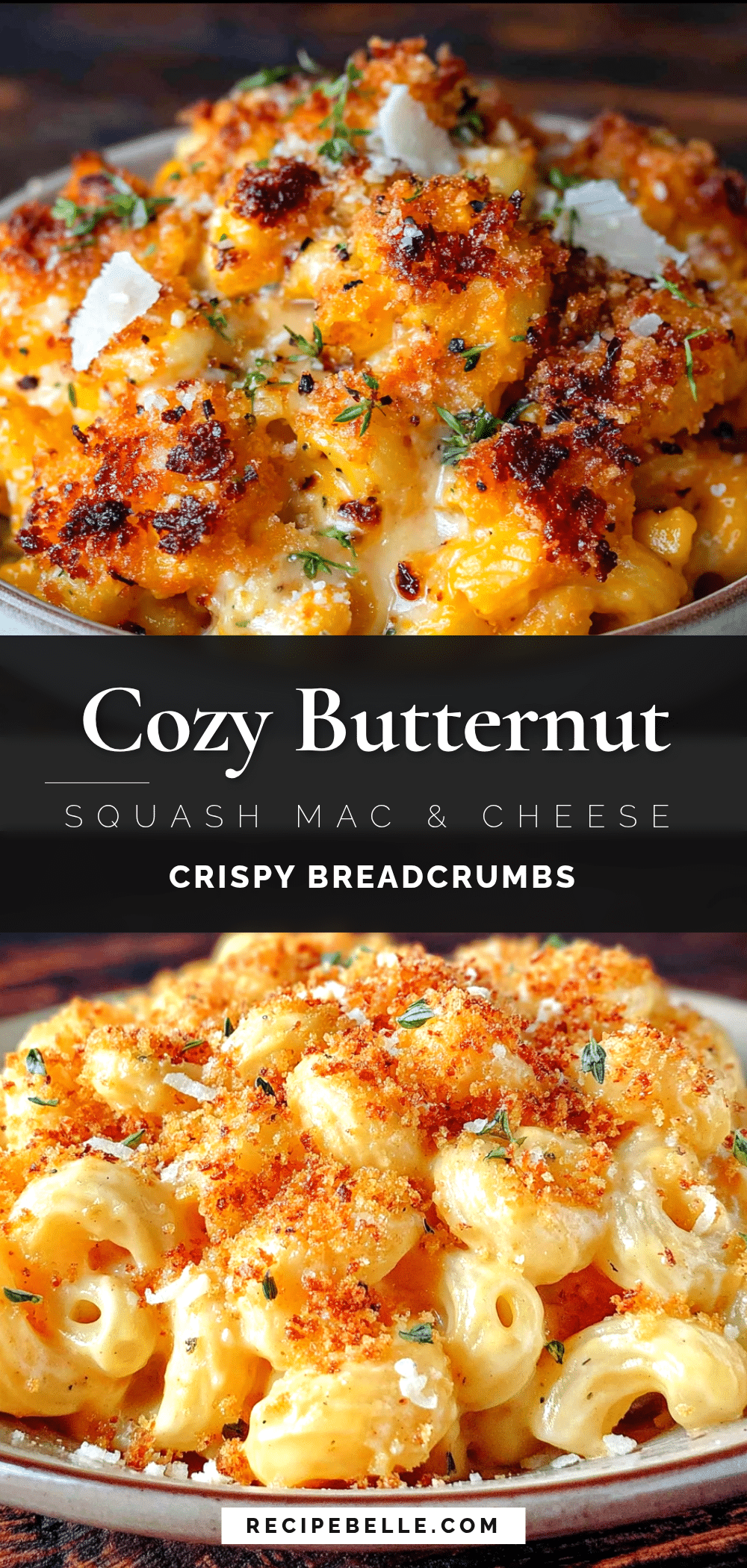
Best Easy Butternut Squash Mac and Cheese Recipe

This creamy, savory butternut squash mac and cheese with crispy breadcrumbs is the ultimate comfort food, born from a rainy Tuesday and a lack of cream. It’s quick, easy, and packed with hidden vegetables, making it a crowd-pleaser that even picky eaters will love.
- Prep Time: 15 minutes
- Cook Time: 45 minutes
- Total Time: 1 hour
- Yield: 8 servings 1x
- Category: Main Course
- Cuisine: American
Ingredients
- 1 medium butternut squash (about 2–3 pounds), peeled, seeded, and cubed into 1-inch pieces
- 2 tablespoons olive oil
- 1/2 teaspoon salt
- 1/4 teaspoon black pepper
- 1/4 teaspoon garlic powder (optional)
- 12 ounces (340g) elbow macaroni or cavatappi pasta
- 3 tablespoons unsalted butter
- 3 tablespoons all-purpose flour
- 2 cups whole milk (warm)
- 1 cup heavy cream
- 2 cups (8 ounces) sharp cheddar cheese, freshly shredded
- 1/2 cup (2 ounces) Parmesan cheese, freshly grated
- 1 teaspoon Dijon mustard
- 1/4 teaspoon nutmeg, freshly grated
- Salt and pepper to taste
- 1 cup panko breadcrumbs
- 2 tablespoons unsalted butter, melted
- 1/4 cup Parmesan cheese, grated
- 1/2 teaspoon garlic powder
- 1 tablespoon fresh parsley, chopped (optional)
Instructions
- Preheat your oven to 400°F (200°C). Toss the cubed butternut squash with olive oil, salt, pepper, and garlic powder on a baking sheet. Spread in a single layer and roast for 25-30 minutes, flipping halfway, until tender and lightly caramelized.
- While the squash roasts, bring a large pot of salted water to a boil. Cook the pasta according to package directions until al dente. Drain, reserving about 1/2 cup of pasta water.
- Transfer the roasted squash to a blender or food processor. Add 1/2 cup of the milk and blend until completely smooth. Set aside.
- In a large saucepan, melt the butter over medium heat. Whisk in the flour and cook for 1-2 minutes, stirring constantly. Slowly pour in the remaining milk and heavy cream, whisking continuously. Bring to a gentle simmer, then reduce heat to low. Cook until thickened, about 3-4 minutes.
- Remove the saucepan from the heat. Stir in the shredded cheddar, Parmesan, Dijon mustard, and nutmeg until melted and smooth. Stir in the butternut squash puree. Season with salt and pepper. If too thick, add a splash of reserved pasta water.
- Add the cooked pasta to the cheese sauce and stir until coated. Pour into a greased 9×13-inch baking dish.
- In a small bowl, combine panko breadcrumbs, melted butter, Parmesan, and garlic powder. Sprinkle over the mac and cheese.
- Bake at 375°F (190°C) for 20-25 minutes, until bubbly and golden. For extra crunch, broil for 1-2 minutes. Let rest for 5 minutes before serving.
Notes
For best results, shred your own cheese and roast the squash until caramelized. Let the mac and cheese rest for 5 minutes after baking to allow the sauce to set. The breadcrumb topping can be made ahead and stored in the fridge for up to 3 days.
Nutrition
- Serving Size: 1 serving
- Calories: 485
- Sugar: 8
- Sodium: 620
- Fat: 28
- Saturated Fat: 16
- Carbohydrates: 42
- Fiber: 4
- Protein: 18
Keywords: butternut squash mac and cheese, easy mac and cheese, creamy mac and cheese, comfort food, vegetarian mac and cheese, baked mac and cheese