There used to be a tiny bakery tucked behind a bike shop on Grand Avenue that made the most incredible rosemary focaccia. When they closed—just a handwritten sign on the door one Tuesday, no warning—I honestly felt a little lost. That bread was my Friday ritual, the thing I picked up after a long week, still warm in its paper bag. After twelve tries—some dense as hockey pucks, others burnt on the bottom—I finally got it. This easy no-knead sourdough focaccia with rosemary is the one that finally matched that memory, and let me tell you, the day I pulled it from the oven, I actually teared up a little. Maybe that sounds dramatic, but if you’ve ever chased a recipe that felt just out of reach, you know that feeling when it finally works.
What makes this recipe special isn’t complicated technique or fancy equipment. It’s patience. And a little bit of sourdough starter that does all the heavy lifting for you. I mean, no kneading? That’s my kind of bread baking. The dough does its thing overnight while you sleep, and by lunchtime the next day, you’ve got this golden, pillowy focaccia with crispy edges and those perfect dimples that hold little pools of olive oil and fragrant rosemary.
I keep making this easy no-knead sourdough focaccia with rosemary because it reminds me that good things don’t have to be hard. It’s forgiving when I’m distracted, flexible when I need to adjust the timing, and it makes my whole kitchen smell like that little bakery I miss so much.
Why You’ll Love This Recipe
Look, I’ve tested a lot of focaccia recipes over the years. Some required hours of kneading, others used so much oil they felt more like fried bread. This one hits the sweet spot. It’s the kind of recipe that makes you look like a hero with minimal effort.
- No Kneading Required : Seriously, zero kneading. The sourdough starter and time do all the work for you. You just mix, wait, and bake.
- Simple Ingredients : Flour, water, sourdough starter, olive oil, salt, and rosemary. That’s it. No fancy grocery store trips needed.
- Perfect for Beginners : If you’re new to sourdough baking, this is the perfect place to start. The high hydration dough is incredibly forgiving, and even if you mess up the timing, it still turns out delicious.
- Make-Ahead Friendly : The bulk fermentation happens overnight in the fridge, so you can prep the dough when it’s convenient and bake it the next day.
- Incredible Texture : That crispy, golden crust with the soft, airy interior dotted with crispy rosemary—it’s next-level comfort food that rivals any bakery.
What makes this easy no-knead sourdough focaccia with rosemary different from every other recipe out there is the technique. I use a higher hydration dough than most—around 85%—which gives you that open, airy crumb without any kneading. Plus, I’ve figured out the exact timing for the cold fermentation that develops the most incredible flavor. It’s not just another focaccia recipe. It’s the one I’ve perfected after all those failed attempts.
Honestly, this recipe makes me close my eyes after the first bite every single time. It’s comfort food reimagined—simpler, more flavorful, and with that same soul-soothing satisfaction that made me fall in love with that little bakery’s bread in the first place.
What Ingredients You Will Need
This easy no-knead sourdough focaccia with rosemary uses simple, wholesome ingredients to deliver that bakery-quality texture and flavor. Most of these are pantry staples, which makes this recipe incredibly accessible.
For the Dough
- Bread flour, 500 grams (about 4 cups) – I prefer King Arthur for its higher protein content, which gives better structure. All-purpose flour works in a pinch, but the crumb won’t be quite as airy.
- Water, 425 grams (about 1 3/4 cups), lukewarm – The temperature matters here. Too hot and you’ll kill the wild yeast in your starter. Aim for body temperature, around 75-80°F.
- Sourdough starter, 150 grams (about 3/4 cup), active and bubbly – Use it when it’s at its peak, about 4-6 hours after feeding. Discard starter works too, but the rise will be slower and less reliable.
- Olive oil, 60 grams (about 1/4 cup), plus extra for the pan – Use good quality extra virgin here. It’s not just for the pan—it flavors the dough too.
- Fine sea salt, 10 grams (about 2 teaspoons) – Table salt works, but sea salt dissolves more evenly into the dough.
For the Topping
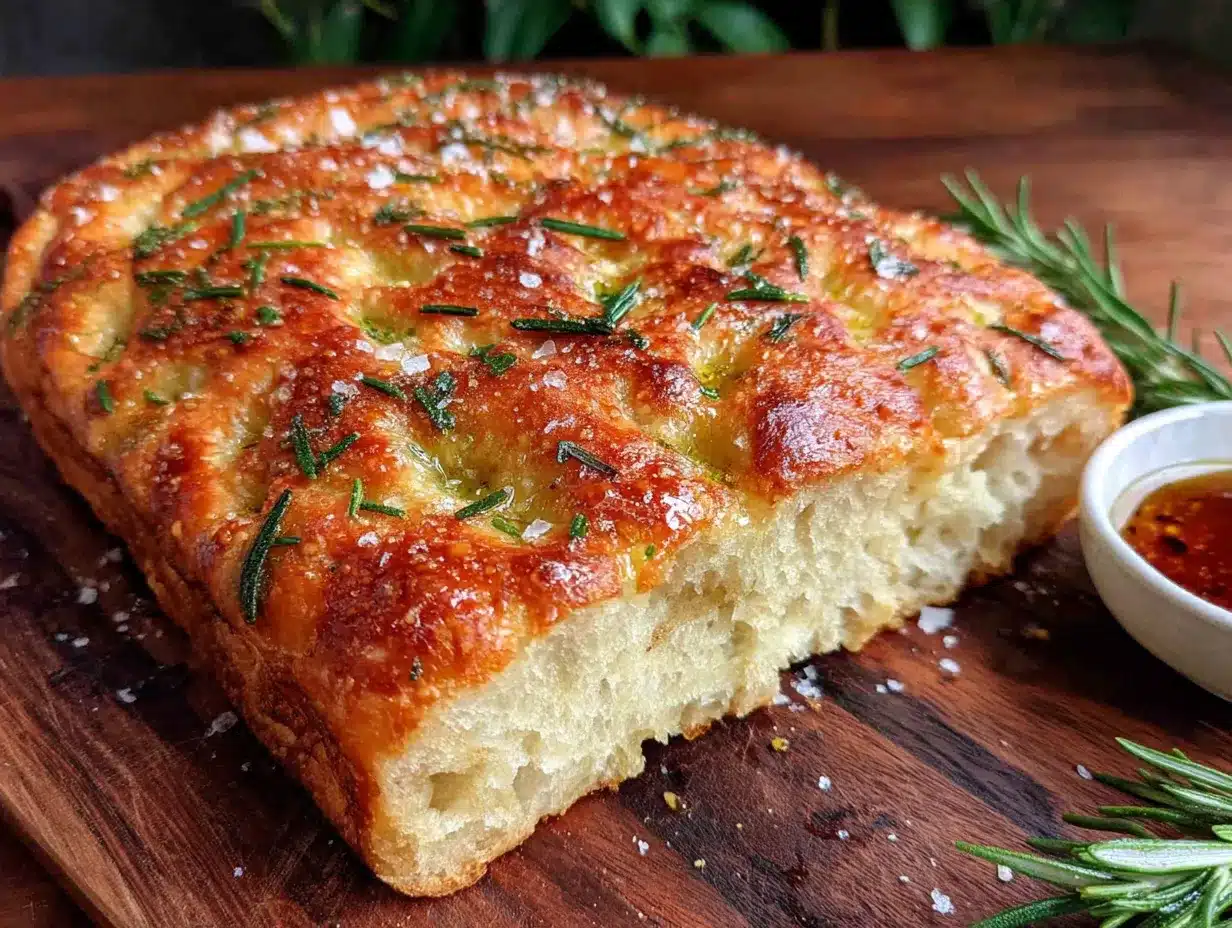
- Fresh rosemary, 2-3 sprigs, leaves stripped and roughly chopped – Dried rosemary works if that’s all you have, but fresh gives that fragrant, piney aroma that makes this focaccia unforgettable.
- Flaky sea salt, for sprinkling – Maldon is my go-to. It adds those little bursts of salt that contrast beautifully with the olive oil.
- Extra olive oil, for drizzling – Don’t skimp here. The oil on top creates that crispy, golden crust.
One thing I learned the hard way—don’t use cold water straight from the tap. It slows down the fermentation significantly. And if your starter has been sitting in the fridge for a while, give it a couple of feedings before using it in this recipe. The more active your starter, the better the rise and flavor in your easy no-knead sourdough focaccia with rosemary.
Equipment Needed
You don’t need much for this recipe, which is part of the beauty of it. Here’s what you’ll need:
- Large mixing bowl – Any big bowl works. I use a ceramic one because it holds heat well, but glass or stainless steel is fine too.
- Digital kitchen scale – This is non-negotiable for sourdough baking. Measuring by volume is too inconsistent, and you’ll get much better results weighing your ingredients.
- 9×13-inch baking pan – A metal pan gives the crispiest bottom crust. Glass or ceramic works, but you’ll need to add 5-10 minutes to the baking time.
- Bench scraper – Helpful for folding the dough and transferring it to the pan. A plastic dough scraper is gentler on non-stick surfaces.
- Plastic wrap or a shower cap – For covering the dough during fermentation. A reusable bowl cover works great too.
- Cooling rack – Essential for keeping that bottom crust crispy. If you let the focaccia cool in the pan, the steam will make it soggy.
I started out using a cheap metal baking pan from the grocery store, and honestly, it worked just fine. You don’t need expensive equipment for this recipe. The one thing I’d splurge on is a good digital scale—it makes a noticeable difference in consistency.
Preparation Method
Let me walk you through this step by step. The timing is flexible here, which is what makes this recipe so manageable for busy schedules.
Step 1: Mix the Dough (10 minutes)
In your large mixing bowl, combine the bread flour and salt. Give them a quick whisk to distribute the salt evenly. In a separate container, stir together the lukewarm water and your active sourdough starter until the starter is mostly dissolved—a few small clumps are fine. Pour the wet ingredients into the dry, add the olive oil, and mix with a rubber spatula or your hand until no dry flour remains. The dough will look shaggy and wet—that’s exactly what you want. Cover the bowl with plastic wrap and let it rest for 30 minutes. This autolyse step gives the flour time to absorb the water, which makes the dough easier to handle later.
Step 2: Perform the Stretch and Folds (2 minutes each, 3 rounds)
After the rest, wet your hand slightly (this prevents sticking) and grab one side of the dough. Stretch it up as high as it will go without tearing, then fold it over the top of the dough. Rotate the bowl a quarter turn and repeat. Do this four times total—one for each side of the bowl. Cover and let rest 30 minutes. Repeat this stretch and fold process two more times, with 30-minute rests in between. By the third round, you’ll notice the dough has become smoother and more elastic. This technique develops the gluten structure without any kneading, which is the secret to that airy crumb in your easy no-knead sourdough focaccia with rosemary.
Step 3: Bulk Fermentation (8-12 hours overnight)
After the last stretch and fold, cover the bowl tightly and place it in the refrigerator. Let it ferment slowly overnight, or for at least 8 hours and up to 12. This cold fermentation is where the magic happens—the flavor develops complexity, and the dough becomes easier to handle. If you’re in a hurry, you can let it sit at room temperature for 4-5 hours instead, but the flavor won’t be as deep.
Step 4: Pan the Dough (5 minutes)
The next morning, generously coat your 9×13-inch baking pan with olive oil—don’t be shy here. Pour about 2 tablespoons of oil into the pan and spread it around. Turn your cold dough out into the pan. It will be sticky and wobbly. Let it sit at room temperature for 30 minutes to take the chill off. Then, using wet hands, gently stretch the dough to the edges of the pan. If it resists, let it rest another 15 minutes and try again. Don’t force it—you’ll deflate all those beautiful air bubbles.
Step 5: Final Proof (2-3 hours)
Cover the pan with plastic wrap or a damp kitchen towel and let the dough proof at room temperature until it’s puffy and has nearly doubled in height. This usually takes 2-3 hours, depending on how warm your kitchen is. The dough should feel aerated and jiggly when you gently shake the pan. About 30 minutes before baking, preheat your oven to 425°F (220°C) with a rack in the middle position.
Step 6: Dimple and Top (5 minutes)
Once the dough is proofed, drizzle another 2 tablespoons of olive oil over the top. Now for the fun part—using your fingertips, press deep dimples all over the surface of the dough. Go all the way down to the bottom of the pan. This isn’t just for looks; those dimples hold the oil and create those signature crispy pockets. Sprinkle the chopped fresh rosemary and flaky sea salt evenly over the top.
Step 7: Bake (25-30 minutes)
Place the pan in the preheated oven and bake for 25-30 minutes, until the top is deep golden brown and the edges look crispy. If the bottom isn’t browning enough, you can transfer the focaccia directly to the oven rack for the last 5 minutes of baking. The internal temperature should read around 200°F (93°C) when done.
Step 8: Cool and Serve (20 minutes)
Remove the focaccia from the pan immediately and transfer it to a cooling rack. Let it cool for at least 20 minutes before cutting—I know it’s tempting to dig in right away, but the texture sets as it cools. That crispy crust needs a few minutes to firm up. Slice it into squares or rectangles and serve warm or at room temperature.
Cooking Tips & Techniques
After those twelve failed attempts, I learned a few things the hard way. Here are the tips that made all the difference for my easy no-knead sourdough focaccia with rosemary.
Don’t skip the stretch and folds. I know it’s tempting to just mix and walk away, but those three rounds of stretching and folding are what build the gluten structure that gives focaccia its characteristic airy crumb. Without them, you’ll end up with a dense, flat bread. Trust me, I learned this on attempt number four.
Use wet hands for everything. This dough is sticky—really sticky. Trying to handle it with dry hands is a recipe for frustration. Keep a small bowl of water nearby and wet your hands before touching the dough at any stage. It makes the process so much smoother.
Watch the proofing, not the clock. The timing I’ve given is a guideline, but every kitchen is different. Your dough is ready for the oven when it’s puffy, jiggly, and has nearly doubled in size. If you press it gently with a finger and the indentation springs back slowly, it’s ready. If it springs back immediately, it needs more time. If it doesn’t spring back at all, you’ve over-proofed it—but don’t panic, it’ll still taste good, just with a denser texture.
Don’t be afraid of the oil. Focaccia is an oil-based bread, and skimping on the olive oil is the fastest way to a dry, disappointing result. The oil in the pan creates that crispy bottom crust, and the oil on top helps the top brown beautifully. Plus, it carries the flavor of the rosemary in a way that water-based steam never could.
Test the bottom crust. About halfway through baking, I like to peek under the focaccia with a spatula. If the bottom isn’t browning as fast as the top, I move the pan to a lower rack or transfer the bread directly to the oven rack for the last 5 minutes. That direct heat contact makes all the difference for a crispy bottom.
Variations & Adaptations
One of the best things about this easy no-knead sourdough focaccia with rosemary is how adaptable it is. Here are some variations I’ve tried and loved:
Herb and Garlic Focaccia: Swap the rosemary for a mix of fresh thyme, oregano, and basil. Add 3-4 cloves of thinly sliced garlic scattered over the top before baking. The garlic gets sweet and almost caramelized in the oven. I made this for a dinner party once, and it disappeared in about ten minutes.
Sun-Dried Tomato and Olive: Press 1/2 cup of chopped sun-dried tomatoes and 1/3 cup of pitted Kalamata olives into the dimples before baking. The salty, tangy flavors pair beautifully with the olive oil. This version is amazing served alongside a simple tomato soup.
Everything Bagel Focaccia: After dimpling and oiling, sprinkle the top with everything bagel seasoning—sesame seeds, poppy seeds, dried garlic, dried onion, and salt. It’s my go-to for breakfast sandwiches or just snacking straight from the pan.
Gluten-Free Adaptation: Substitute the bread flour with a good gluten-free all-purpose flour blend that contains xanthan gum. The texture will be denser and less airy, but it’s still delicious. Reduce the water to 375 grams, as gluten-free flours absorb less liquid. The fermentation time may be shorter, so keep an eye on it.
Cheese Lover’s Focaccia: Sprinkle 1/2 cup of grated Parmesan or crumbled feta over the top during the last 10 minutes of baking. The cheese gets golden and crispy, adding a whole new layer of flavor and texture.
Serving & Storage Suggestions
This easy no-knead sourdough focaccia with rosemary is incredibly versatile when it comes to serving. Here’s how I like to enjoy it:
Serving Temperature: It’s best served warm, within an hour of baking, when the crust is still crispy and the interior is soft and pillowy. But honestly, it’s also fantastic at room temperature—the flavor actually deepens as it cools. I’ve been known to eat it straight from the cooling rack, still slightly warm, with nothing but a little butter.
Pairing Suggestions: This focaccia is perfect alongside a bowl of hearty minestrone soup or a simple Italian salad with a balsamic vinaigrette. It also makes incredible sandwiches—slice it horizontally and fill it with roasted vegetables, fresh mozzarella, and pesto. For breakfast, toast a slice and top it with a fried egg and avocado.
Storage: Store leftover focaccia in an airtight container at room temperature for up to 2 days. Don’t refrigerate it—the cold air will dry it out and make the crust tough. If you need to keep it longer, wrap it tightly in plastic wrap and then foil, and freeze it for up to 3 months.
Reheating: To revive day-old focaccia, pop it in a 350°F (175°C) oven for 5-7 minutes directly on the oven rack. This brings back the crispy crust and warms the interior without making it soggy. Avoid the microwave unless you’re okay with a chewy, rubbery texture.
Flavor Development: Here’s a little secret—this focaccia actually tastes better on day two if you store it properly. The flavors continue to meld and deepen overnight. I sometimes make it a day ahead on purpose, just for that extra flavor punch.
Nutritional Information & Benefits
While I wouldn’t call focaccia a health food, it does have some redeeming qualities when made with sourdough. Here’s the breakdown for one serving (about 1/8 of the recipe):
| Nutrient | Amount per Serving |
|---|---|
| Calories | 280 |
| Total Fat | 12g |
| Saturated Fat | 2g |
| Carbohydrates | 36g |
| Fiber | 2g |
| Protein | 7g |
| Sodium | 480mg |
The sourdough fermentation process offers some benefits. The long fermentation breaks down phytic acid, which can make the minerals in the flour more bioavailable. It also produces beneficial lactic acid bacteria that support gut health. Plus, sourdough has a lower glycemic index compared to bread made with commercial yeast, meaning it causes a slower, more gradual rise in blood sugar.
The olive oil provides heart-healthy monounsaturated fats and antioxidants, while rosemary contains compounds with anti-inflammatory properties. That said, this is still a bread made with white flour, so enjoy it in moderation as part of a balanced diet. I personally see it as a treat—something to savor, not something to eat every day.
Conclusion
This easy no-knead sourdough focaccia with rosemary is the recipe that finally helped me let go of that little bakery on Grand Avenue. It’s not exactly the same—I’ve made it my own over time—but it captures that same spirit of simple, beautiful bread made with care and patience.
I hope you give this recipe a try, even if you’re new to sourdough. The process is forgiving, the ingredients are simple, and the result is genuinely impressive. Feel free to customize it with your favorite toppings or adapt it to what you have in your pantry. That’s the beauty of focaccia—it’s a blank canvas waiting for your personal touch.
I’d love to hear how yours turns out. Did you try a different herb combination? Did you add cheese or olives? Drop a comment below and let me know—I read every single one. And if you share a photo on Pinterest, tag me so I can see your beautiful creation. Happy baking, friend!
Frequently Asked Questions
Can I use active dry yeast instead of sourdough starter?
Yes, you can substitute the sourdough starter with 1 teaspoon of active dry yeast dissolved in the warm water. Let it sit for 5 minutes until frothy, then proceed with the recipe. The flavor won’t be as complex, but the texture will still be great. You’ll also need to add 1 tablespoon of vinegar or lemon juice to mimic the acidity of sourdough.
Why is my focaccia dough so sticky?
That’s completely normal! This is a high-hydration dough—around 85%—which means it’s intentionally wet. The stickiness is what creates that airy, open crumb. Use wet hands when handling it, and resist the urge to add more flour. Adding flour will make the focaccia dense and heavy.
Can I make this recipe without a kitchen scale?
You can, but I don’t recommend it for best results. Sourdough baking is sensitive to hydration levels, and measuring flour by volume can vary by up to 20%. If you must use cups, spoon the flour into the measuring cup and level it off—don’t scoop directly from the bag. Expect some variation in the final texture.
How do I know when my sourdough starter is active enough?
Your starter is ready when it has doubled in size, is full of bubbles, and has a pleasant, slightly tangy smell. It should pass the “float test”—drop a small spoonful into a glass of water, and if it floats, it’s ready. If it sinks, give it another feeding and wait 4-6 hours before using it.
Can I freeze the baked focaccia?
Absolutely! Let the focaccia cool completely, then wrap it tightly in plastic wrap followed by a layer of aluminum foil. Freeze for up to 3 months. To thaw, leave it at room temperature for about an hour, then reheat in a 350°F oven for 5-7 minutes to restore the crispy crust.
Pin This Recipe!
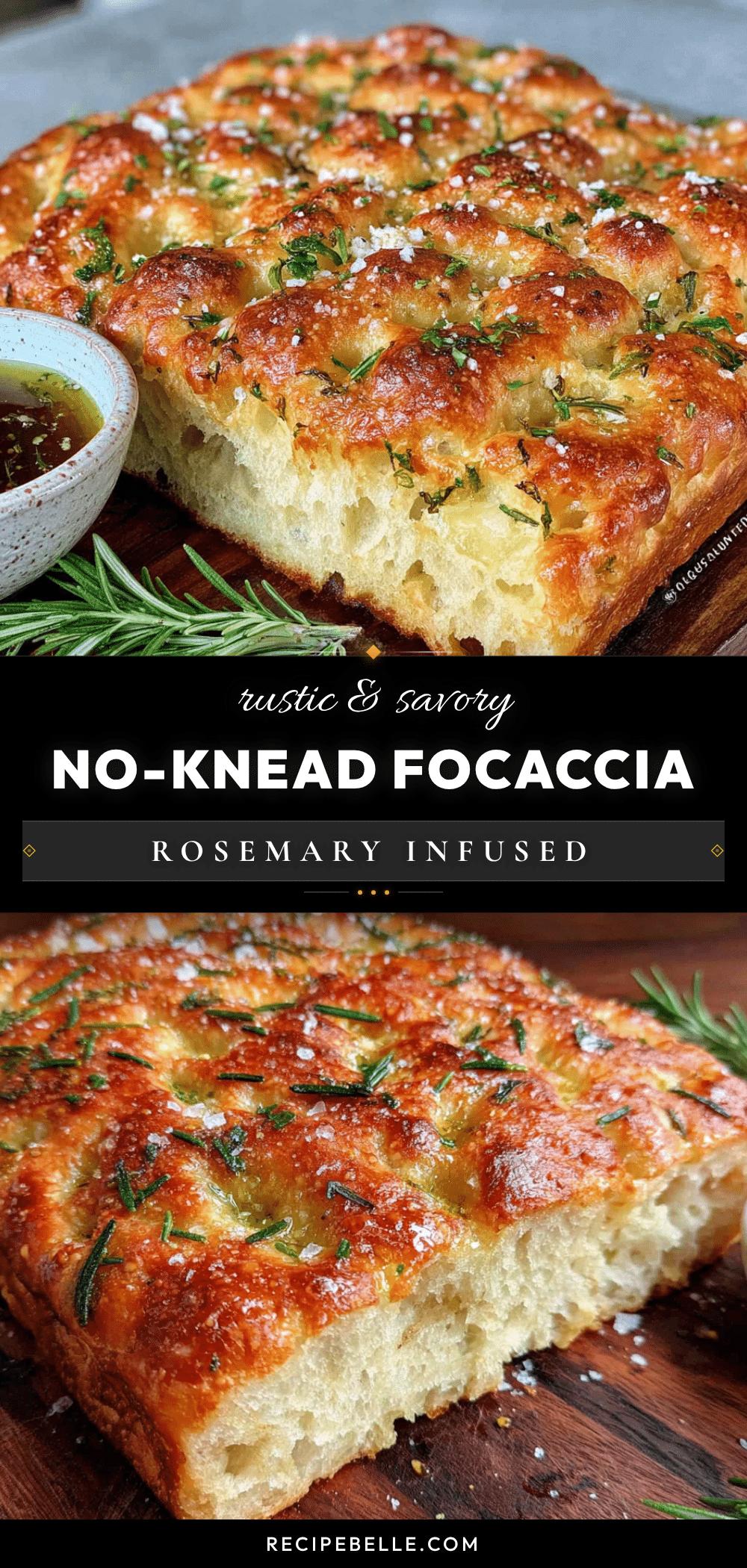
Easy No-Knead Sourdough Focaccia with Rosemary

This easy no-knead sourdough focaccia with rosemary delivers a golden, pillowy bread with crispy edges and perfect dimples that hold pools of olive oil and fragrant rosemary. It’s a forgiving, make-ahead friendly recipe that rivals any bakery.
- Prep Time: 15 minutes
- Cook Time: 30 minutes
- Total Time: 12 hours 45 minutes (includes overnight fermentation)
- Yield: 8 servings 1x
- Category: Bread
- Cuisine: Italian
Ingredients
- 500 grams bread flour (about 4 cups)
- 425 grams lukewarm water (about 1 3/4 cups)
- 150 grams active sourdough starter (about 3/4 cup)
- 60 grams olive oil (about 1/4 cup), plus extra for the pan
- 10 grams fine sea salt (about 2 teaspoons)
- 2–3 sprigs fresh rosemary, leaves stripped and roughly chopped
- Flaky sea salt, for sprinkling
- Extra olive oil, for drizzling
Instructions
- In a large mixing bowl, combine the bread flour and salt. Whisk to distribute the salt evenly.
- In a separate container, stir together the lukewarm water and active sourdough starter until mostly dissolved. Pour the wet ingredients into the dry, add the olive oil, and mix with a rubber spatula or your hand until no dry flour remains. The dough will be shaggy and wet. Cover the bowl with plastic wrap and let it rest for 30 minutes.
- After the rest, wet your hand slightly and grab one side of the dough. Stretch it up as high as it will go without tearing, then fold it over the top. Rotate the bowl a quarter turn and repeat. Do this four times total. Cover and let rest 30 minutes. Repeat this stretch and fold process two more times, with 30-minute rests in between.
- After the last stretch and fold, cover the bowl tightly and place it in the refrigerator. Let it ferment slowly overnight, or for at least 8 hours and up to 12.
- The next morning, generously coat a 9×13-inch baking pan with olive oil. Turn the cold dough out into the pan. Let it sit at room temperature for 30 minutes. Using wet hands, gently stretch the dough to the edges of the pan. If it resists, let it rest another 15 minutes and try again.
- Cover the pan with plastic wrap or a damp kitchen towel and let the dough proof at room temperature until puffy and nearly doubled in height, about 2-3 hours. About 30 minutes before baking, preheat the oven to 425°F (220°C) with a rack in the middle position.
- Once the dough is proofed, drizzle another 2 tablespoons of olive oil over the top. Using your fingertips, press deep dimples all over the surface of the dough. Sprinkle the chopped fresh rosemary and flaky sea salt evenly over the top.
- Place the pan in the preheated oven and bake for 25-30 minutes, until the top is deep golden brown and the edges look crispy. The internal temperature should read around 200°F (93°C) when done.
- Remove the focaccia from the pan immediately and transfer it to a cooling rack. Let it cool for at least 20 minutes before cutting. Slice into squares or rectangles and serve warm or at room temperature.
Notes
Don’t skip the stretch and folds; they build gluten structure. Use wet hands for everything to handle the sticky dough. Watch the proofing, not the clock—the dough is ready when puffy, jiggly, and nearly doubled. Don’t be afraid of the oil; it creates the crispy crust. Test the bottom crust halfway through baking and adjust rack position if needed.
Nutrition
- Serving Size: 1/8 of recipe
- Calories: 280
- Sodium: 480
- Fat: 12
- Saturated Fat: 2
- Carbohydrates: 36
- Fiber: 2
- Protein: 7
Keywords: sourdough focaccia, no-knead focaccia, rosemary focaccia, easy focaccia recipe, homemade focaccia