Introduction
The power went out halfway through my usual Monday bread-making ritual, and honestly, I thought all was lost. But then Clara, my neighbor from the apartment next door, knocked on the door with a quiet smile and a bowl in hand. She didn’t say much at first—just handed me this mix she’d been experimenting with: pumpkin puree, sourdough starter, seeds, and a sprinkle of rosemary. We ended up baking together by candlelight, trading stories about the odd rhythms of city living and how baking can make any day feel a little warmer.
That rustic one-bowl pumpkin sourdough bread recipe stuck with me—not because it was fancy, but because it was honest and simple. It’s the kind of bread you make when you want to feel grounded, when you want to share something pure and comforting without fuss. Maybe you’ve been there, searching for a bread recipe that brings a whisper of autumn and the satisfying crunch of seeds, yet is forgiving enough to make in one bowl without a mess of dishes.
Let me tell you, this recipe feels like a conversation between neighbors who enjoy the quiet moments of baking, not a formal lesson. It respects the sourdough tradition but isn’t afraid to add a little pumpkin sweetness and herbal depth from rosemary. I keep making it—because it’s my calm in the chaos, my way to turn an ordinary day into something a little more soulful.
Why You’ll Love This Recipe
- Quick & Easy: Comes together in under 3 hours (including rising), perfect for busy days when you crave homemade bread without the fuss.
- Simple Ingredients: Uses pantry staples plus seasonal pumpkin puree and a touch of rosemary—no need for specialty stores.
- Perfect for Cozy Gatherings: Ideal for fall brunches, holiday tables, or just a comforting afternoon snack with tea.
- Crowd-Pleaser: The nutty seeds and fragrant rosemary make it appealing to kids and adults alike, with a satisfying crunch and aroma.
- Unbelievably Delicious: The pumpkin adds subtle moisture and sweetness, while the sourdough tang keeps it balanced and complex.
- This isn’t just another pumpkin bread. The one-bowl method and the blend of seeds with rosemary bring rustic charm and a unique texture that’s all its own.
- Every loaf feels like a small celebration of the season—comfort food with a little twist that makes you close your eyes on the first bite.
What Ingredients You Will Need
This recipe uses simple, wholesome ingredients to deliver bold flavor and a satisfying texture without the fuss. Most are pantry staples, and the pumpkin puree is the star that brings moisture and warmth. If you’re baking in the pumpkin season, fresh puree works beautifully, but canned pumpkin puree is a reliable stand-in all year round.
- For the Dough:
- Active sourdough starter (about 100g or ½ cup) – I trust King Arthur Flour’s starter for consistency
- All-purpose flour, 400g (3 1/4 cups) – for the right rustic crumb
- Pumpkin puree, 180g (¾ cup), unsweetened – fresh or canned
- Warm water, 250ml (1 cup) – helps activate the starter and hydrate the dough
- Sea salt, 10g (2 teaspoons) – balances flavor
- For the Seeds and Rosemary Topping:
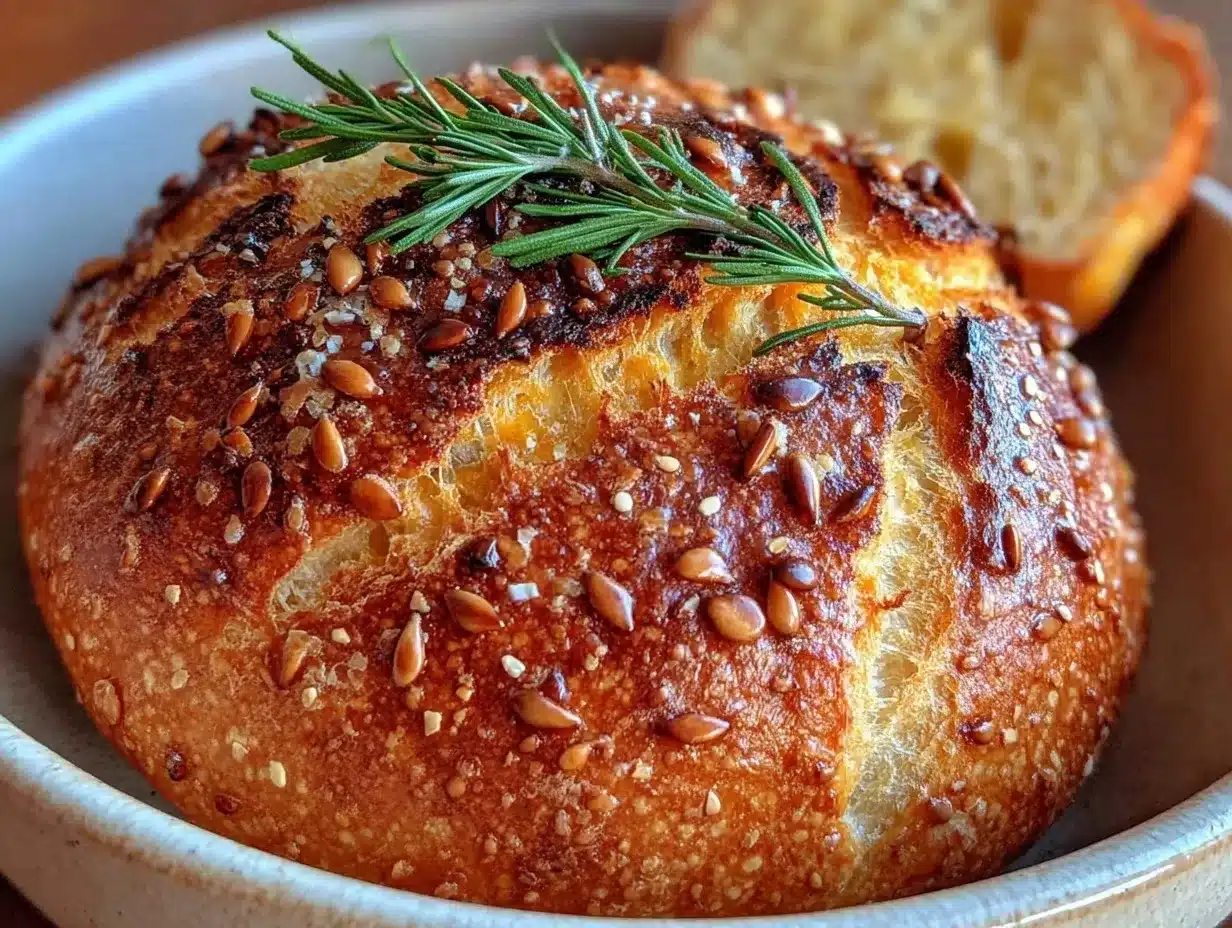
- Mixed seeds (pumpkin, sunflower, sesame), 60g (¼ cup each combined) – for crunch and nuttiness
- Fresh rosemary, finely chopped, 1 tablespoon – aromatic, adds depth
- Olive oil, 2 tablespoons – to lightly brush on top before baking
- Optional: flaky sea salt for sprinkling
Substitution tips: Use gluten-free flour blend in place of all-purpose for a gluten-free option (results vary). Swap rosemary with thyme if you prefer a milder herb. You can also adjust seeds to your liking—hemp or chia add a nice twist.
Equipment Needed
- Large mixing bowl – a sturdy one-bowl setup keeps cleanup easy
- Dutch oven or heavy oven-safe pot with lid – essential for that crispy crust
- Kitchen scale – for precise measuring (recommended but not mandatory)
- Bench scraper or spatula – helps with folding and shaping the dough
- Clean kitchen towel or plastic wrap – to cover the dough during rising
- Oven mitts – hot Dutch ovens demand respect and protection!
If you don’t have a Dutch oven, a cast iron skillet with a metal bowl cover can work as a makeshift cloche. I’ve also baked this bread on a pizza stone covered loosely with a large roasting pan to trap steam. For those on a budget, a heavy ceramic pot can substitute nicely but watch the heat distribution.
Preparation Method
- Mix the starter and pumpkin: In your large bowl, combine 100g (½ cup) active sourdough starter with 180g (¾ cup) pumpkin puree and 250ml (1 cup) warm water. Stir gently until smooth and well combined. This should take about 3 minutes. The batter will be somewhat loose but sticky.
- Add the flour and salt: Sprinkle in 400g (3 ¼ cups) all-purpose flour and 10g (2 teaspoons) sea salt. Using a wooden spoon or your hand, mix until just combined and no dry flour remains. The dough will be shaggy but cohesive. This step takes about 5 minutes; don’t overwork the dough here.
- Bulk fermentation: Cover the bowl with a clean towel or plastic wrap. Let the dough rest at room temperature (around 70°F/21°C) for 2 to 3 hours, folding the dough once every 45 minutes to build strength. To fold, use a wet hand to lift one edge of the dough and fold it over the center; turn the bowl and repeat 3 or 4 times. You’ll notice the dough becoming smoother and more elastic over time.
- Shape the dough: Lightly flour your work surface and gently tip the dough out. Shape it into a round boule by folding the edges underneath and creating surface tension on top. Let it rest for 15 minutes uncovered to relax.
- Final proof: Transfer the dough to a floured banneton basket or a bowl lined with a floured tea towel, seam side up. Cover and let proof for 45 minutes to 1 hour until slightly puffy but not overproofed.
- Preheat the oven: About 30 minutes before baking, place your Dutch oven with the lid inside and preheat to 450°F (230°C). This step is crucial for that signature crust.
- Prepare for baking: Carefully remove the hot Dutch oven. Turn the dough out seam side down onto parchment paper. Brush the top lightly with olive oil, sprinkle mixed seeds and chopped rosemary evenly, and add a pinch of flaky sea salt if you like.
- Bake: Lift the dough with the parchment paper into the Dutch oven. Cover with the lid and bake for 25 minutes. Then remove the lid and bake for an additional 15 minutes until the crust is deep golden brown and crisp.
- Cool: Transfer the bread to a wire rack and let it cool completely before slicing. This usually takes at least an hour and allows the crumb to set perfectly.
Tip: If your dough feels too sticky to handle, lightly oil your hands instead of adding more flour — this keeps the bread moist.
Cooking Tips & Techniques
- Maintaining starter activity: A lively sourdough starter is key. Feed it regularly and bake when it’s at its peak (bubbly and doubled in size).
- Folding technique: The stretch-and-fold during bulk fermentation builds gluten strength without kneading. It’s gentle and effective, especially for wet doughs like this pumpkin sourdough.
- Hydration level: Pumpkin puree adds moisture, so the dough is wetter than typical sourdough. Don’t panic if it feels sticky—this is normal and results in a tender crumb.
- Steam is your friend: Baking in a covered Dutch oven traps steam, creating a shiny, crackly crust. Don’t skip this step or the bread might turn out dense.
- Common mistake: Overproofing leads to a flat loaf. Watch for that gentle puffiness during the final proof, not a dough that’s doubled and collapsing.
- Timing multitasking: Use the bulk fermentation time to prep other dishes, tidy the kitchen, or sip a cup of tea. Bread baking is as much about patience as it is about technique.
Variations & Adaptations
- Dietary: For a gluten-free version, swap all-purpose flour with a gluten-free blend and add 1 teaspoon xanthan gum to help with structure.
- Seasonal: In spring, replace pumpkin puree with mashed roasted sweet potatoes or butternut squash for a similar texture with a different flavor.
- Flavor: Swap rosemary for fresh thyme or sage for an herbal twist. Adding a teaspoon of cinnamon or nutmeg can give it a subtly spiced note perfect for autumn.
- Cooking method: If you don’t have a Dutch oven, bake on a preheated pizza stone and create steam by placing a pan of water on the oven floor. This mimics the moist environment needed for crust development.
- Personal try: Once, I added a handful of chopped walnuts along with the seeds for an extra crunch and earthiness that friends loved at a weekend brunch.
Serving & Storage Suggestions
This rustic pumpkin sourdough bread is best served at room temperature to appreciate its full flavor and texture. Slice it thick with a serrated knife to avoid squashing the crumb. It pairs beautifully with creamy cheeses like ricotta or goat cheese, a drizzle of honey, or a swipe of salted butter.
For a savory touch, serve alongside roasted vegetables or a warm bowl of soup. It’s also delightful toasted for breakfast topped with smashed avocado and a sprinkle of chili flakes.
To store, wrap the bread loosely in a clean kitchen towel and keep at room temperature for up to 3 days. For longer storage, slice and freeze in a sealed bag; toast slices straight from the freezer to revive that fresh-baked taste.
Reheating in a 350°F (175°C) oven for 5-7 minutes refreshes the crust without drying out the crumb. Over time, the flavors meld and the rosemary aroma deepens, making the bread even more tempting the next day.
Nutritional Information & Benefits
This loaf offers a hearty mix of complex carbohydrates from the flour and pumpkin, healthy fats from the seeds, and probiotics from the sourdough fermentation. Per slice (approx. 60g), you get roughly 150 calories, 4g protein, 3g fiber, and 5g fat.
Pumpkin is rich in vitamin A and antioxidants, supporting eye health and immunity. The seeds contribute magnesium and zinc, which are great for metabolism and skin. Rosemary isn’t just aromatic—it contains anti-inflammatory compounds that may support digestion.
Gluten content depends on your flour choice, so gluten-free bakers should use appropriate blends. This bread is naturally free from added sugar, making it a wholesome choice for those mindful of sugar intake.
Conclusion
This rustic one-bowl pumpkin sourdough bread with seeds and rosemary is a recipe that feels like a warm conversation in the kitchen—simple, honest, and full of character. It’s forgiving enough for beginners but rewarding for seasoned bakers who appreciate that perfect balance of crust, crumb, and flavor.
Feel free to tweak the herbs, seeds, or hydration to make it truly yours. I love this bread because it’s not just food—it’s a memory, a moment of calm, and a way to share something good with people I care about.
If you try this recipe, I’d love to hear how you made it your own—drop a comment or share your variations. Happy baking, and may your kitchen be filled with the comforting scent of fresh bread and rosemary!
Frequently Asked Questions
Can I use canned pumpkin puree for this sourdough bread?
Yes! Canned pumpkin puree works perfectly and is a convenient year-round option. Just make sure it’s unsweetened and pure pumpkin, not pie filling.
How do I know if my sourdough starter is active enough?
Your starter should be bubbly and have doubled in size a few hours after feeding. It should also have a pleasant tangy smell. If it’s sluggish, try feeding it a couple more times before baking.
Can I make this bread without seeds or rosemary?
Absolutely. The seeds and rosemary add texture and flavor but are optional. You can simply bake the dough plain or add other toppings like oats or herbs you enjoy.
What’s the best way to store leftover bread?
Wrap it in a kitchen towel at room temperature for up to 3 days. For longer storage, slice and freeze, then toast slices from frozen for best results.
Can I prepare the dough ahead of time?
You can refrigerate the dough after shaping it for the final proof overnight. Just allow it to come to room temperature and puff up before baking.
Pin This Recipe!
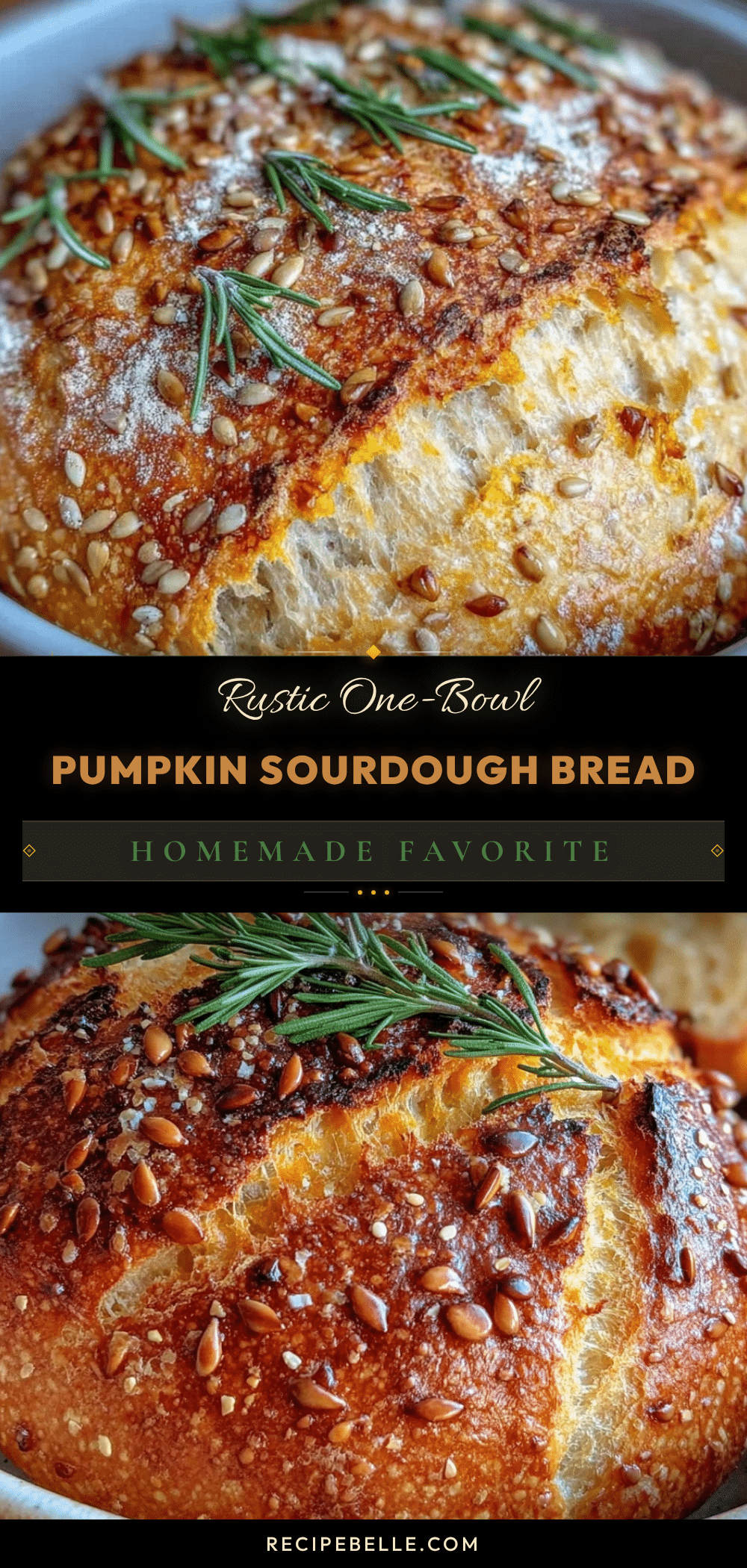
Rustic One-Bowl Pumpkin Sourdough Bread Recipe Easy Homemade Pumpkin Bread with Seeds and Rosemary

A simple, rustic one-bowl pumpkin sourdough bread with seeds and rosemary that combines autumn flavors with a satisfying crunch and a crispy crust. Perfect for cozy gatherings and easy to make with pantry staples.
- Prep Time: 15 minutes
- Cook Time: 40 minutes
- Total Time: 3 hours 55 minutes
- Yield: 1 loaf (about 10-12 slices) 1x
- Category: Bread
- Cuisine: American
Ingredients
- 100g (½ cup) active sourdough starter
- 400g (3 ¼ cups) all-purpose flour
- 180g (¾ cup) pumpkin puree, unsweetened (fresh or canned)
- 250ml (1 cup) warm water
- 10g (2 teaspoons) sea salt
- 60g (¼ cup combined) mixed seeds (pumpkin, sunflower, sesame)
- 1 tablespoon fresh rosemary, finely chopped
- 2 tablespoons olive oil
- Optional: flaky sea salt for sprinkling
Instructions
- In a large bowl, combine 100g (½ cup) active sourdough starter with 180g (¾ cup) pumpkin puree and 250ml (1 cup) warm water. Stir gently until smooth and well combined, about 3 minutes.
- Sprinkle in 400g (3 ¼ cups) all-purpose flour and 10g (2 teaspoons) sea salt. Mix until just combined and no dry flour remains, about 5 minutes. Do not overwork the dough.
- Cover the bowl with a clean towel or plastic wrap. Let the dough rest at room temperature (around 70°F/21°C) for 2 to 3 hours, folding the dough once every 45 minutes by lifting and folding edges over the center 3 or 4 times.
- Lightly flour your work surface and gently tip the dough out. Shape it into a round boule by folding the edges underneath and creating surface tension on top. Let it rest uncovered for 15 minutes.
- Transfer the dough to a floured banneton basket or a bowl lined with a floured tea towel, seam side up. Cover and let proof for 45 minutes to 1 hour until slightly puffy but not overproofed.
- About 30 minutes before baking, place your Dutch oven with the lid inside and preheat oven to 450°F (230°C).
- Carefully remove the hot Dutch oven. Turn the dough out seam side down onto parchment paper. Brush the top lightly with olive oil, sprinkle mixed seeds and chopped rosemary evenly, and add a pinch of flaky sea salt if desired.
- Lift the dough with the parchment paper into the Dutch oven. Cover with the lid and bake for 25 minutes. Remove the lid and bake for an additional 15 minutes until the crust is deep golden brown and crisp.
- Transfer the bread to a wire rack and let it cool completely before slicing, about 1 hour.
Notes
If dough feels too sticky, lightly oil your hands instead of adding more flour to keep bread moist. Maintain a lively sourdough starter for best results. Folding during bulk fermentation builds gluten strength without kneading. Baking in a covered Dutch oven traps steam for a shiny, crackly crust. Avoid overproofing to prevent a flat loaf. Dough can be refrigerated after shaping for final proof overnight; bring to room temperature before baking.
Nutrition
- Serving Size: 1 slice (approx. 60g
- Calories: 150
- Fat: 5
- Fiber: 3
- Protein: 4
Keywords: pumpkin bread, sourdough bread, one-bowl bread, rosemary bread, seed topping, autumn bread, homemade bread, rustic bread