This was supposed to be a roasted chicken and vegetable situation. You know, one of those tidy sheet pan dinners where everything comes out looking like a magazine cover. I had the carrots sliced into perfect little coins, the potatoes cubed just so, and a whole chicken breast that I was going to butterfly with surgical precision. Then my toddler decided 5:00 PM was the perfect time to “help” by dumping the entire bottle of honey onto the counter, and I grabbed the wrong bottle of mustard in my panic to salvage dinner.
Let me tell you, standing there with a sticky counter and a bowl of Dijon instead of the whole grain mustard I meant to grab, I almost just ordered pizza. But I was already committed. The chicken thighs were thawed, the oven was preheating, and honestly, I was too tired to pivot. So I just mixed the honey and the Dijon together with some pantry spices, slathered it over the thighs, and threw everything onto the sheet pan. I figured it would be edible, maybe, and that was the bar for that particular Tuesday.
What came out of the oven was nothing like the plan. The honey caramelized into these sticky, golden edges on the chicken. The Dijon mellowed out into something tangy and rich instead of sharp. The vegetables roasted in that sweet and savory glaze and came out better than any carefully arranged sheet pan dinner I had ever made. I stood there eating a piece right off the pan, genuinely confused about how this accidental combination worked so well. Maybe you have been there—the dinner that saves itself when you are too worn out to care. That is this recipe. It is the one I keep coming back to because it proved that sometimes the best meals happen when you stop trying so hard.
Why You’ll Love This Recipe
I have tested this recipe at least a dozen times since that chaotic Tuesday night, tweaking the mustard ratio, playing with the temperature, and swapping vegetables. Every single time, it delivers. Here is why this sheet pan honey mustard chicken thighs recipe has earned a permanent spot in my weeknight rotation:
- Quick & Easy: From start to table in 30 minutes flat. No marinating, no complicated steps, and only one pan to wash. This is the definition of a weeknight win.
- Simple Ingredients: You probably have everything in your pantry right now. Honey, mustard, chicken thighs, and whatever vegetables are hanging out in your fridge. No special grocery trips required.
- Perfect for Busy Weeknights: This is the meal you make on the nights when you have 20 minutes of energy left and need dinner to handle itself while you unload the dishwasher or help with homework.
- Crowd-Pleaser: My kids, who usually pick around anything that looks like a sauce, actually ask for seconds. The honey tames the mustard enough that even picky eaters go for it.
- Unbelievably Delicious: The glaze caramelizes into this sticky, tangy coating that turns ordinary chicken thighs into something you would order at a restaurant. The vegetables soak up all that flavor and come out tender and sweet.
What makes this different from other sheet pan dinners is the balance. Most honey mustard recipes lean too sweet or too tangy. This one hits that perfect middle ground where the honey adds warmth and the mustard cuts through with just enough bite. Plus, the sheet pan method means the chicken stays juicy while the edges get that caramelized crust that makes every bite interesting. It is comfort food that respects your time.
What Ingredients You Will Need
This recipe uses simple, wholesome ingredients that come together to create something genuinely greater than the sum of their parts. Most of these are pantry staples, which is exactly what you want on a busy weeknight.
- Bone-in, skin-on chicken thighs (6-8 thighs, about 2 pounds total) — The skin crisps up beautifully in the oven and keeps the meat moist. I prefer bone-in for flavor, but boneless works too if that is what you have on hand.
- Honey (1/3 cup) — Go for a runny, mild honey like clover or orange blossom. Avoid anything too thick or crystallized, as it will not mix smoothly into the glaze.
- Dijon mustard (1/4 cup) — This is the star. Dijon has that perfect balance of tang and creaminess. I recommend Grey Poupon for consistency, but any good Dijon works. Do not use yellow mustard here—it is too sharp and lacks depth.
- Whole grain mustard (2 tablespoons) — This adds texture and little pops of mustard seed that burst in your mouth. You can skip it and use all Dijon in a pinch, but the whole grain really makes the glaze special.
- Olive oil (2 tablespoons) — Helps the glaze spread evenly and encourages browning. Avocado oil works too if that is what you have.
- Garlic (4 cloves, minced) — Fresh garlic is non-negotiable here. The pre-minced stuff in a jar lacks the punch you want. I mince mine fine so it melts into the glaze.
- Apple cider vinegar (1 tablespoon) — Brightens everything up and balances the sweetness. White wine vinegar or lemon juice work as substitutes.
- Dried thyme (1 teaspoon) — Earthy and slightly floral, thyme pairs beautifully with honey and mustard. Dried rosemary or oregano work in a pinch.
- Smoked paprika (1/2 teaspoon) — Adds a subtle smokiness that makes the glaze feel more complex than it is. Regular paprika works but smoked is better.
- Salt and black pepper (to taste) — Do not skimp here. The salt brings out the sweetness of the honey and balances the mustard.
- Vegetables of choice (about 3 cups total) — I usually use a mix of broccoli florets, halved Brussels sprouts, and red onion wedges. Carrots, bell peppers, or zucchini all work great. Cut them into uniform pieces so they cook evenly.
Equipment Needed
You do not need much for this recipe, which is exactly the point. Here is what you will need:
- Sheet pan (half-sheet size, 18×13 inches) — A rimmed baking sheet is essential to catch the glaze as it bubbles. I use a Nordic Ware aluminum sheet pan that has held up for years. Avoid dark nonstick pans, as they can burn the glaze before the chicken cooks through.
- Mixing bowl (medium) — For whisking together the glaze. Any bowl works, but a wide one makes mixing easier.
- Whisk — To combine the glaze ingredients smoothly. A fork works in a pinch if you whisk vigorously.
- Chef’s knife and cutting board — For prepping the vegetables and mincing the garlic. A sharp knife makes the whole process faster and safer.
- Tongs — For turning the chicken halfway through cooking and for serving. Silicone-tipped tongs are gentle on the pan.
- Meat thermometer (optional but recommended) — The best way to know your chicken is done without cutting into it and losing juices. I use a simple instant-read thermometer that cost under ten dollars.
If you do not have a sheet pan, a large roasting pan or even a jelly roll pan works. Just make sure it has sides to catch the drips. And if you are short on time, you can skip the whisk and shake everything together in a jar with a tight lid.
Preparation Method
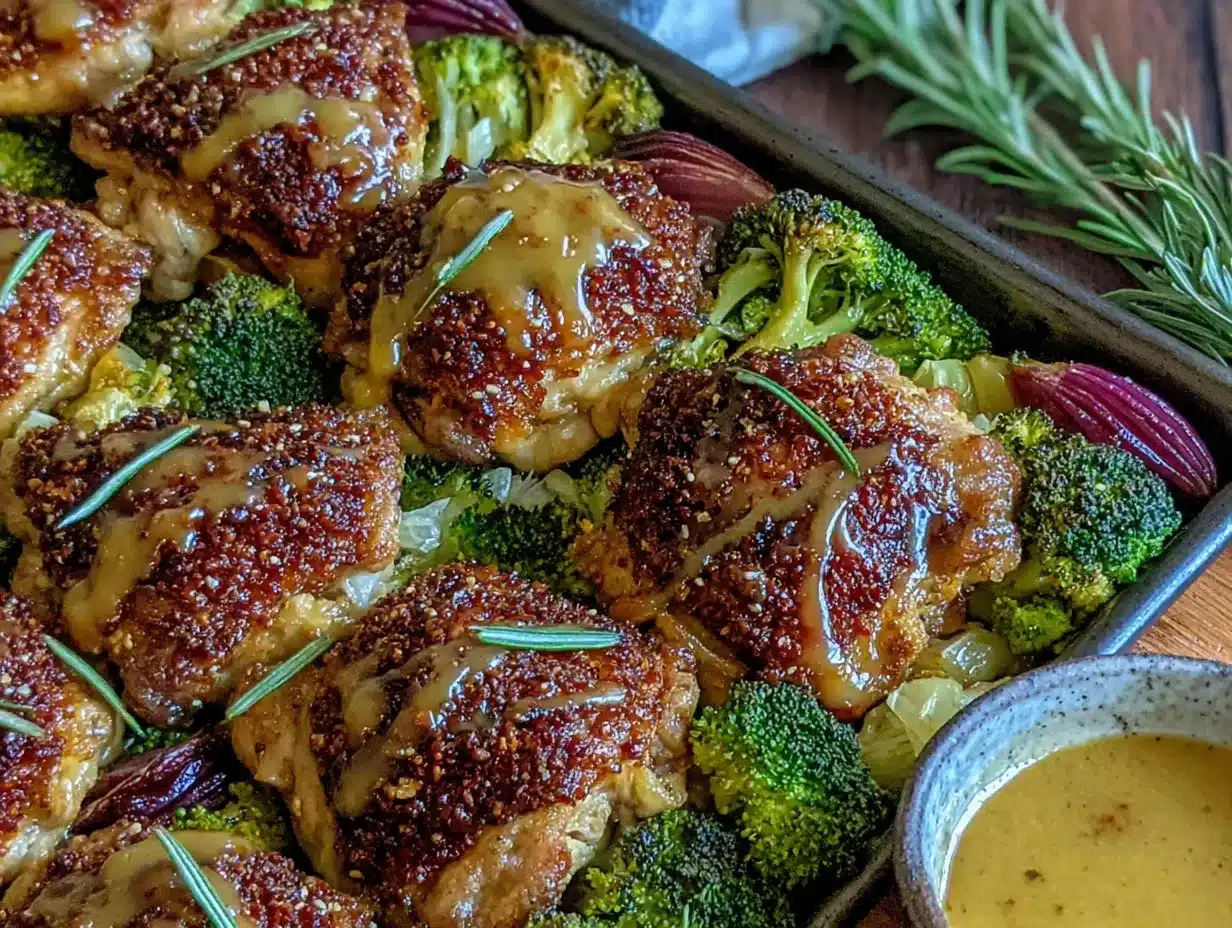
Let me walk you through this step by step. The whole thing takes about 30 minutes, and most of that is hands-off oven time.
- Preheat your oven to 425°F (220°C). Place the rack in the upper third of the oven. Getting the oven hot is crucial—that high heat is what caramelizes the glaze and crisps the chicken skin.
- Pat the chicken thighs dry with paper towels. This is not a step to skip. Excess moisture steams the skin instead of crisping it. I usually pat them down, then let them sit on a plate while I prep everything else. Season both sides generously with salt and pepper.
- Make the honey mustard glaze. In a medium bowl, whisk together the honey, Dijon mustard, whole grain mustard, olive oil, minced garlic, apple cider vinegar, dried thyme, and smoked paprika. Taste it. It should be sweet with a tangy kick. Adjust with more honey or mustard to your preference.
- Toss the vegetables with a little oil and salt. In a separate bowl, drizzle your chopped vegetables with about a tablespoon of olive oil and a pinch of salt. This keeps them from drying out and helps them brown. Do not add the glaze to the vegetables yet—they will cook in the pan juices instead.
- Arrange everything on the sheet pan. Spread the vegetables in a single layer around the edges of the pan. Place the chicken thighs skin-side up in the center, leaving a little space between each piece for air to circulate. Spoon about half of the glaze over the chicken, using the back of the spoon to spread it evenly. Reserve the remaining glaze for later.
- Roast for 15 minutes. The chicken should start to brown and the glaze will begin bubbling. The kitchen will smell incredible at this point—sweet and savory with that hint of garlic.
- Brush with remaining glaze and flip the vegetables. Pull the pan out, brush the remaining glaze over the chicken thighs, and give the vegetables a quick stir with a spatula so they cook evenly. Return the pan to the oven.
- Roast for another 10-15 minutes. The chicken is done when the internal temperature reaches 165°F (74°C) at the thickest part, and the skin is golden brown and crispy around the edges. The vegetables should be tender and caramelized, with some charred bits on the broccoli or Brussels sprouts.
- Let it rest for 5 minutes. This is important. The juices need time to redistribute through the meat. If you cut into the chicken right away, those juices run out onto the pan instead of staying in the meat. Use this time to set the table or pour yourself a glass of something.
- Serve directly from the pan or transfer to a platter. Spoon any pan juices over the chicken and vegetables. The glaze that pooled on the pan is liquid gold—do not waste it.
Cooking Tips & Techniques
After making this recipe more times than I can count, I have picked up a few tricks that make a real difference. Here is what I wish I had known from the start:
Do not crowd the pan. This is the number one mistake I see with sheet pan dinners. If everything is packed too tight, the vegetables steam instead of roasting, and the chicken skin never crisps up. Give each piece of chicken a couple of inches of breathing room. If you need to, use two pans or cook in batches.
Use a meat thermometer. I used to cut into chicken to check if it was done, which always released the juices and left me with dry meat. An instant-read thermometer changed everything. Chicken thighs are forgiving, but hitting exactly 165°F means perfectly juicy meat every time. I have a cheap one from the grocery store that works great.
Watch the glaze during the last 5 minutes. Honey can burn quickly under high heat. In my first few attempts, I walked away and came back to slightly charred edges. Now I keep an eye on it during those final minutes. If the glaze starts looking too dark, I tent a piece of foil loosely over the chicken.
Cut vegetables to the same size. This seems obvious, but I have definitely thrown in some giant carrot chunks next to tiny broccoli florets and ended up with unevenly cooked vegetables. Aim for bite-sized pieces, about an inch across. They will cook at the same rate as the chicken.
Line your pan with parchment or foil. The glaze gets sticky as it caramelizes, and scrubbing a sheet pan covered in burnt honey is not fun. A quick layer of parchment paper makes cleanup almost effortless. Just toss it when you are done.
Variations & Adaptations
One of the best things about this recipe is how flexible it is. Here are some ways I have adapted it depending on what I have on hand or who I am feeding:
Dietary Variations: For a dairy-free version, this recipe is already dairy-free, so no changes needed. To make it gluten-free, just check your mustard labels—most Dijon mustards are naturally gluten-free, but some brands add wheat-based thickeners. Serve with rice or quinoa instead of crusty bread.
Vegetable Swaps: The vegetables are completely flexible. In summer, I use zucchini, bell peppers, and cherry tomatoes. In fall, I go for butternut squash, Brussels sprouts, and red onion. Asparagus works great in spring, just add it halfway through cooking so it does not get mushy. Root vegetables like carrots and potatoes need to be cut smaller so they cook through.
Protein Options: Boneless, skinless chicken thighs work well but cook faster—check them at the 15-minute mark. Chicken breasts work too, but pound them to even thickness first and reduce the cooking time to about 20 minutes total. For a completely different spin, try this glaze on salmon fillets or pork chops. The honey mustard pairing works beautifully with both.
Spice It Up: If you like heat, add a pinch of cayenne pepper or red pepper flakes to the glaze. I did this once when I had a cold and wanted something with a kick, and it turned out amazing. A teaspoon of sriracha works too.
Make It a Meal Prep: This recipe reheats beautifully. I make a double batch on Sunday, portion it into containers with rice or quinoa, and have lunch ready for the week. The flavors actually deepen overnight as the glaze soaks into the chicken and vegetables.
Serving & Storage Suggestions
This sheet pan honey mustard chicken thighs recipe is versatile enough to serve in many ways. Here is how I handle serving and leftovers:
Serving Suggestions: I usually serve this straight from the sheet pan for maximum ease and minimal cleanup. The chicken and vegetables are perfect on their own, but a side of rice, quinoa, or crusty bread helps soak up the extra glaze. For a lighter meal, serve over a bed of arugula or mixed greens with a simple lemon vinaigrette. The warm chicken wilts the greens slightly, which is lovely.
Complementary Sides: A simple green salad with a tangy vinaigrette balances the sweetness of the glaze. Roasted potatoes or sweet potatoes are always welcome, though they add extra oven time. For something fresh, try a cucumber and tomato salad with red onion and dill. The acidity cuts through the richness of the chicken.
Storage Instructions: Store leftovers in an airtight container in the refrigerator for up to 4 days. The flavors actually meld and deepen overnight, so leftovers taste even better the next day. I do not recommend freezing this dish, as the honey glaze can become grainy and the vegetables get watery when thawed.
Reheating Tips: The best way to reheat is in a 350°F oven for about 10 minutes, which restores the crispy edges. The microwave works in a pinch but will make the skin soggy. I usually reheat leftovers in a skillet over medium heat with a splash of water or chicken broth to loosen the glaze, stirring until warmed through. This method keeps the chicken moist and the vegetables tender.
Nutritional Information & Benefits
This recipe hits that sweet spot between indulgent and wholesome. Here is the estimated nutritional breakdown per serving (based on 2 chicken thighs with vegetables):
- Calories: Approximately 480-520
- Protein: 35-40 grams
- Fat: 22-26 grams
- Carbohydrates: 28-32 grams
- Fiber: 4-6 grams
- Sugar: 18-22 grams (mostly from honey and natural sugars in vegetables)
Chicken thighs are higher in fat than breasts, but that fat keeps them juicy and adds flavor. The skin provides a good source of collagen, which is great for joint health and skin elasticity. Honey offers antioxidants and natural antibacterial properties, while mustard seeds contain selenium and magnesium.
The vegetables add fiber, vitamins, and minerals depending on what you choose. Broccoli provides vitamin C and K, Brussels sprouts are packed with folate, and red onions offer quercetin, a powerful antioxidant. This is a balanced meal that satisfies without being heavy.
For those watching their sugar intake, you can reduce the honey to 1/4 cup and add an extra tablespoon of mustard for more tang. The recipe is naturally gluten-free and dairy-free, making it accessible for many dietary needs.
Conclusion
This sheet pan honey mustard chicken thighs recipe started as a mistake, but it has become one of my most reliable weeknight dinners. It is proof that you do not need complicated techniques or fancy ingredients to make something genuinely delicious. Sometimes the best meals come from grabbing the wrong jar and making it work anyway.
I love that this recipe respects your time. There is no marinating, no multiple pans to wash, no fussing over complicated steps. You toss everything together, let the oven do the work, and end up with a dinner that tastes like you put in way more effort than you actually did. That is my favorite kind of cooking.
Try this recipe on a night when you are tired and hungry and need dinner to just work. Customize the vegetables, adjust the mustard-to-honey ratio to your taste, and make it your own. I would love to hear how it turns out for you. Drop a comment below and let me know what vegetables you used, or share your own happy accident that turned into a family favorite. Happy cooking!
Frequently Asked Questions
Can I use boneless, skinless chicken thighs for this recipe?
Absolutely. Boneless thighs cook faster, so check them at the 15-minute mark. The internal temperature should reach 165°F. You will miss the crispy skin, but the glaze still caramelizes beautifully on the meat.
What if I do not have Dijon mustard?
You can substitute with whole grain mustard, spicy brown mustard, or even yellow mustard in a pinch. The flavor will change slightly—yellow mustard is sharper and less creamy—but it will still be good. I have made this with whatever mustard was in the fridge and it always works.
Can I prep this ahead of time?
Yes, with one caveat. You can mix the glaze and chop the vegetables up to 24 hours in advance. Keep them refrigerated separately. Do not coat the chicken in the glaze until you are ready to cook, as the honey can make the skin soggy if it sits too long.
How do I prevent the honey from burning?
Keep an eye on the pan during the last 5 minutes of cooking. If the glaze looks too dark, tent a piece of foil loosely over the chicken. Also, make sure your oven temperature is accurate—an oven thermometer can help if yours runs hot.
Can I double this recipe for a crowd?
Definitely. Use two sheet pans and rotate them halfway through cooking. Do not overcrowd one pan, or the chicken will steam instead of roast. You may need to add 5-10 minutes to the cooking time if using two pans.
Pin This Recipe!
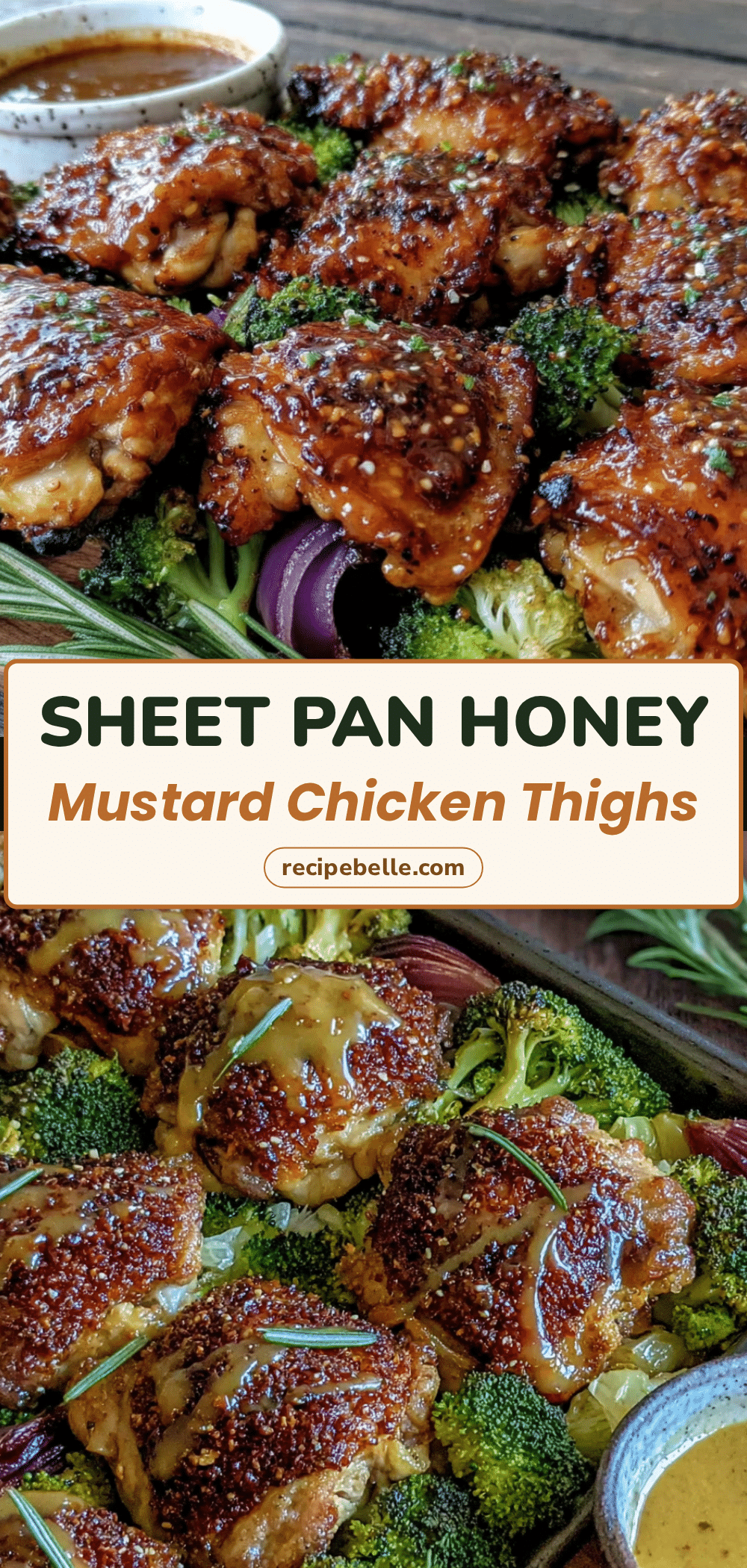
Sheet Pan Honey Mustard Chicken Thighs (Easy 30-Min Meal)

A quick and easy weeknight dinner featuring juicy bone-in chicken thighs and roasted vegetables coated in a sweet and tangy honey mustard glaze. This one-pan meal comes together in 30 minutes and is perfect for busy nights.
- Prep Time: 10 minutes
- Cook Time: 25 minutes
- Total Time: 35 minutes
- Yield: 4 servings 1x
- Category: Main Course
- Cuisine: American
Ingredients
- 6–8 bone-in, skin-on chicken thighs (about 2 pounds total)
- 1/3 cup honey
- 1/4 cup Dijon mustard
- 2 tablespoons whole grain mustard
- 2 tablespoons olive oil
- 4 cloves garlic, minced
- 1 tablespoon apple cider vinegar
- 1 teaspoon dried thyme
- 1/2 teaspoon smoked paprika
- Salt and black pepper to taste
- 3 cups mixed vegetables (broccoli florets, halved Brussels sprouts, red onion wedges, or other vegetables of choice)
- 1 tablespoon olive oil (for vegetables)
Instructions
- Preheat your oven to 425°F (220°C). Place the rack in the upper third of the oven.
- Pat the chicken thighs dry with paper towels. Season both sides generously with salt and pepper.
- In a medium bowl, whisk together the honey, Dijon mustard, whole grain mustard, olive oil, minced garlic, apple cider vinegar, dried thyme, and smoked paprika. Taste and adjust with more honey or mustard if desired.
- In a separate bowl, toss the chopped vegetables with about 1 tablespoon of olive oil and a pinch of salt.
- Spread the vegetables in a single layer around the edges of a rimmed sheet pan. Place the chicken thighs skin-side up in the center, leaving space between each piece. Spoon about half of the glaze over the chicken, spreading evenly. Reserve the remaining glaze.
- Roast for 15 minutes.
- Remove the pan from the oven. Brush the remaining glaze over the chicken thighs and stir the vegetables. Return to the oven.
- Roast for another 10-15 minutes, until the chicken reaches an internal temperature of 165°F (74°C) and the skin is golden brown and crispy. Vegetables should be tender and caramelized.
- Let the chicken rest for 5 minutes before serving.
- Serve directly from the pan or transfer to a platter, spooning pan juices over the chicken and vegetables.
Notes
Do not crowd the pan to ensure crispy skin and roasted vegetables. Use a meat thermometer for perfectly cooked chicken. Watch the glaze during the last 5 minutes to prevent burning. Line the pan with parchment paper for easy cleanup. Leftovers can be stored in an airtight container in the refrigerator for up to 4 days. Reheat in a 350°F oven for 10 minutes or in a skillet with a splash of water or broth.
Nutrition
- Serving Size: 2 chicken thighs wit
- Calories: 500
- Sugar: 20
- Sodium: 600
- Fat: 24
- Saturated Fat: 6
- Carbohydrates: 30
- Fiber: 5
- Protein: 38
Keywords: sheet pan dinner, honey mustard chicken, chicken thighs, easy weeknight meal, one pan meal, 30 minute meal