My roommate Jenna watched me dump my fourth packet of instant ramen into a pot of boiling water last semester and finally broke her silence. “You know,” she said, not looking up from her textbook, “you could actually make that taste like something.” She didn’t mean it as an insult—honestly, she was just tired of watching me eat sad, flavorless noodles every Tuesday night. That’s when she slid her phone across the table with a screenshot of her mom’s stir-fry recipe. It had grease stains on the digital image and everything. I laughed at first, because who makes stir-fry with ramen? But Jenna just shrugged and said her mom had been doing it since college, back when they had to share one kitchen on a dorm floor with seventeen other people.
The first time I tried it, I burned my tongue because I was too impatient to wait for it to cool down. Worth it, though. The noodles had this chewy, almost bouncy texture that regular ramen just doesn’t have when you boil it to death. And the sauce—oh man, the sauce was a game-changer. It was spicy but not in that fake, chemical way some packets do. It had layers, you know? A little sweet, a little garlicky, and just enough heat to make your nose run. I started making it every week, tweaking things here and there until it felt like mine. I added more vegetables because my mom would kill me if she knew I was living on straight carbs. I swapped the oil for sesame because I found a bottle on sale at the Asian market. Little changes that made a big difference.
Maybe you’ve been there—staring at a pantry full of ramen packets and wondering if there’s more to life than salty broth. Let me tell you, there is. This quick spicy ramen stir-fry is the kind of recipe that makes you feel like you actually know what you’re doing in the kitchen, even if you’re still learning. It’s forgiving, it’s fast, and it tastes like something you’d pay twelve bucks for at a noodle shop. I keep making it because it reminds me that good food doesn’t have to be complicated. Sometimes it just needs a friend who’s willing to call your ramen habit what it is.
Why You’ll Love This Recipe
Let’s be real for a second—college life is chaos. Between classes, part-time jobs, and trying to maintain some semblance of a social life, cooking often falls to the bottom of the priority list. That’s where this quick spicy ramen stir-fry comes in. It’s the meal I make when I have fifteen minutes and zero energy to think about what’s for dinner.
- 15 Minutes Flat: From start to finish, this dish comes together faster than delivery. No waiting, no tip required.
- Pantry-Friendly: You probably already have ramen, soy sauce, and some frozen veggies in your freezer. If not, these are cheap staples that last forever.
- Perfect for Late-Night Cravings: Whether it’s after a late study session or a night out, this stir-fry hits the spot without weighing you down.
- Budget-Friendly: We’re talking under five dollars for a meal that feeds two hungry people. Try finding that at a restaurant.
- Customizable Heat: You control the spice level. Mild, medium, or “why is my mouth on fire”—it’s your call.
What makes this recipe different from every other ramen hack out there? It’s the technique. Instead of boiling the noodles to mush, you cook them just until they’re tender, then finish them in the pan with the sauce. This gives them that perfect chewy texture that soaks up all the flavor without getting soggy. I’ve tested this method at least twenty times, and I can tell you—it works every single time.
Honestly, this isn’t just a recipe. It’s a survival skill. It’s the kind of meal that makes you feel like you’ve got your life together, even when your laundry is three weeks behind and you’re running on four hours of sleep. Close your eyes after that first bite, and for a moment, everything feels okay.
What Ingredients You Will Need
This recipe uses simple, affordable ingredients that you can find at any grocery store. No fancy trips to specialty markets required. Here’s what you’ll need to make this quick spicy ramen stir-fry sing.
For the Noodles
- 2 packages instant ramen (discard the seasoning packets or save them for another use—I like using the cheap square blocks for the best texture)
- 1 tablespoon vegetable oil (or any neutral oil you have on hand; avocado oil works great too)
- 1 tablespoon sesame oil (this is non-negotiable for that nutty, toasty flavor—trust me on this one)
For the Sauce
- 3 tablespoons soy sauce (low-sodium if you’re watching your salt intake, but regular works fine)
- 2 tablespoons gochujang (Korean chili paste—this is the secret weapon for that deep, complex heat; find it in the international aisle or any Asian market)
- 1 tablespoon brown sugar (packed; this balances the heat and adds a subtle caramelization when it hits the pan)
- 1 tablespoon rice vinegar (adds brightness and cuts through the richness)
- 2 cloves garlic (minced; fresh is best, but jarred minced garlic works in a pinch)
- 1 teaspoon grated ginger (fresh ginger makes a difference, but powdered ginger works if that’s all you have)
For the Stir-Fry
- 1 cup frozen mixed vegetables (I use a peas, carrots, and corn blend—no chopping required)
- 2 green onions (sliced; for garnish and a fresh, oniony bite)
- 1 teaspoon sesame seeds (optional but makes it look fancy)
- 1 soft-boiled egg (optional but highly recommended—it adds richness and protein)
I personally recommend using Shin Ramyun or any Korean-style ramen for this recipe. The noodles are thicker and hold up better to stir-frying compared to the thinner, more delicate varieties. If you can’t find gochujang, you can substitute with sriracha mixed with a little miso paste—it won’t be exactly the same, but it’ll still be delicious. For a gluten-free option, use tamari instead of soy sauce and look for gluten-free ramen noodles (they exist, I promise).
Equipment Needed
You don’t need a professional kitchen to make this quick spicy ramen stir-fry. Here’s what you’ll actually use:
- Large pot (for boiling the noodles—any pot you’ve got will work, even that beat-up one from the dorm kitchen)
- Large skillet or wok (non-stick is ideal, but a stainless steel pan works if you add a little extra oil)
- Small bowl (for mixing the sauce—I use the same bowl I eat cereal out of, no judgment)
- Chef’s knife (or any sharp knife for mincing garlic and slicing green onions)
- Cutting board (please use something—I once saw someone chop garlic on a paper plate, and it was a disaster)
- Wooden spoon or spatula (for stirring and tossing the noodles)
- Colander (for draining the noodles—or a lid if you’re brave and careful)
If you don’t have a wok, don’t stress. A regular skillet works just fine. The key is having enough surface area to spread the noodles out so they get a little charred in spots. My first attempt at this recipe was in a tiny dorm kitchen with one burner and a pan that had seen better days. It still turned out amazing. Also, if you’re using a non-stick pan, avoid using metal utensils—you’ll scratch the coating and end up with little black flecks in your food. Learned that one the hard way.
Preparation Method
Alright, let’s get cooking. This whole process takes about 15 minutes from start to finish, so put on some music and let’s go.
- Bring a large pot of water to a boil. While you’re waiting, mix your sauce. In a small bowl, combine the soy sauce, gochujang, brown sugar, rice vinegar, minced garlic, and grated ginger. Whisk it all together until the gochujang is fully incorporated. The sauce should be thick but pourable—if it looks too thick, add a teaspoon of water. Set it aside.
- Cook the ramen noodles. Drop both blocks of ramen into the boiling water. Cook them for exactly 2 minutes—no longer. You want them to be tender but still firm, because they’ll continue cooking in the pan. Drain the noodles immediately and rinse them with cold water to stop the cooking process. This also removes excess starch, which prevents them from getting gummy later. Shake off as much water as you can.
- Heat your skillet over medium-high heat. Add the vegetable oil and sesame oil. Swirl the pan to coat the bottom evenly. When the oil shimmers (about 30 seconds), add the frozen vegetables straight from the bag. Don’t thaw them first—the ice crystals actually help create steam that cooks the vegetables evenly. Stir-fry for 2-3 minutes until they’re heated through and starting to brown in spots.
- Add the noodles to the pan. Spread them out in an even layer and let them sit undisturbed for 30 seconds. This creates those crispy, golden-brown bits that make stir-fry so good. Then toss everything together with your spatula. Repeat this process once or twice—let the noodles sit, then toss. Total time for this step is about 2 minutes.
- Pour the sauce over the noodles. Toss everything together quickly so the sauce coats every strand. Keep the heat on medium-high and stir constantly for another 1-2 minutes. The sauce will reduce slightly and cling to the noodles. You’ll know it’s ready when the noodles look glossy and the kitchen smells like heaven.
- Remove from heat. Transfer the stir-fry to serving bowls. Top with sliced green onions and a sprinkle of sesame seeds. If you’re adding a soft-boiled egg, place it on top and cut it open so the yolk runs into the noodles. That golden yolk mixing with the spicy sauce? Pure magic.
One thing I learned the hard way—don’t overcook the noodles in the pot. I made that mistake my first few times, and the stir-fry turned into a mushy mess. The noodles should still have a little bite to them when you drain them. They’ll finish cooking in the pan. Also, if your pan starts smoking, turn the heat down a notch. High heat is great for stir-fry, but there’s a fine line between sizzling and burning.
Cooking Tips & Techniques
After making this quick spicy ramen stir-fry more times than I can count, I’ve picked up a few tricks that make a real difference. Here’s what I wish someone had told me from the start.
Don’t skip the oil combination. Vegetable oil has a high smoke point, which means it can handle the heat without burning. Sesame oil adds flavor but burns easily, so mixing them gives you the best of both worlds. If you only have one type of oil, go with vegetable or canola, and add a drizzle of sesame oil at the very end for flavor.
Prep everything before you start cooking. This is the number one thing that separates good stir-fry from great stir-fry. Chop your garlic, mix your sauce, slice your green onions—all before you turn on the stove. Once that pan gets hot, things move fast, and you don’t want to be scrambling to mince garlic while your noodles are burning.
Use the back of your spoon to break up the gochujang. That stuff is thick and stubborn. If you just dump it into the sauce bowl, it’ll clump up and you’ll end up with pockets of spicy paste in your stir-fry. Take an extra 30 seconds to mash it against the side of the bowl with the back of a spoon until it’s fully mixed in.
Let the noodles rest after rinsing. I know, I know—you’re hungry and you want to eat now. But giving the drained noodles 2-3 minutes to sit in the colander allows excess water to drip off. Wet noodles steam instead of fry, and you’ll end up with sad, soggy ramen instead of that beautiful chewy texture we’re going for.
My biggest failure with this recipe? I once tried to double it in a pan that was too small. The noodles piled up, the heat couldn’t distribute evenly, and I ended up with half-burnt, half-raw stir-fry. Learn from my mistake—if you’re cooking for more than two people, do it in batches or use the biggest pan you own.
Variations & Adaptations
One of the best things about this quick spicy ramen stir-fry is how adaptable it is. Here are some variations I’ve tried and loved.
Protein-Packed Version: Add 1 cup of cooked chicken, beef, or tofu along with the vegetables. Leftover rotisserie chicken works great—just shred it and toss it in when you add the sauce. For a vegetarian option, use extra-firm tofu, cubed and pan-fried until golden before adding the noodles.
Peanut Butter Twist: Stir 1 tablespoon of peanut butter into the sauce before adding it to the pan. It adds a creamy, nutty richness that pairs beautifully with the spicy gochujang. This is my go-to version when I’m craving something extra indulgent.
Low-Carb Option: Swap the ramen noodles for zucchini noodles or shirataki noodles. The cooking time will be shorter—about 2-3 minutes total in the pan—so adjust accordingly. The sauce works perfectly with any noodle base.
Milder Version: If you’re sensitive to spice, reduce the gochujang to 1 tablespoon and add an extra tablespoon of soy sauce. You can also add a splash of honey to mellow out the heat. For a completely mild version, use hoisin sauce instead of gochujang.
I once made this for my friend who’s allergic to sesame, and I swapped the sesame oil for avocado oil and skipped the sesame seeds. It wasn’t quite the same, but she still asked for the recipe. Sometimes the best adaptations come from working around limitations.
Serving & Storage Suggestions
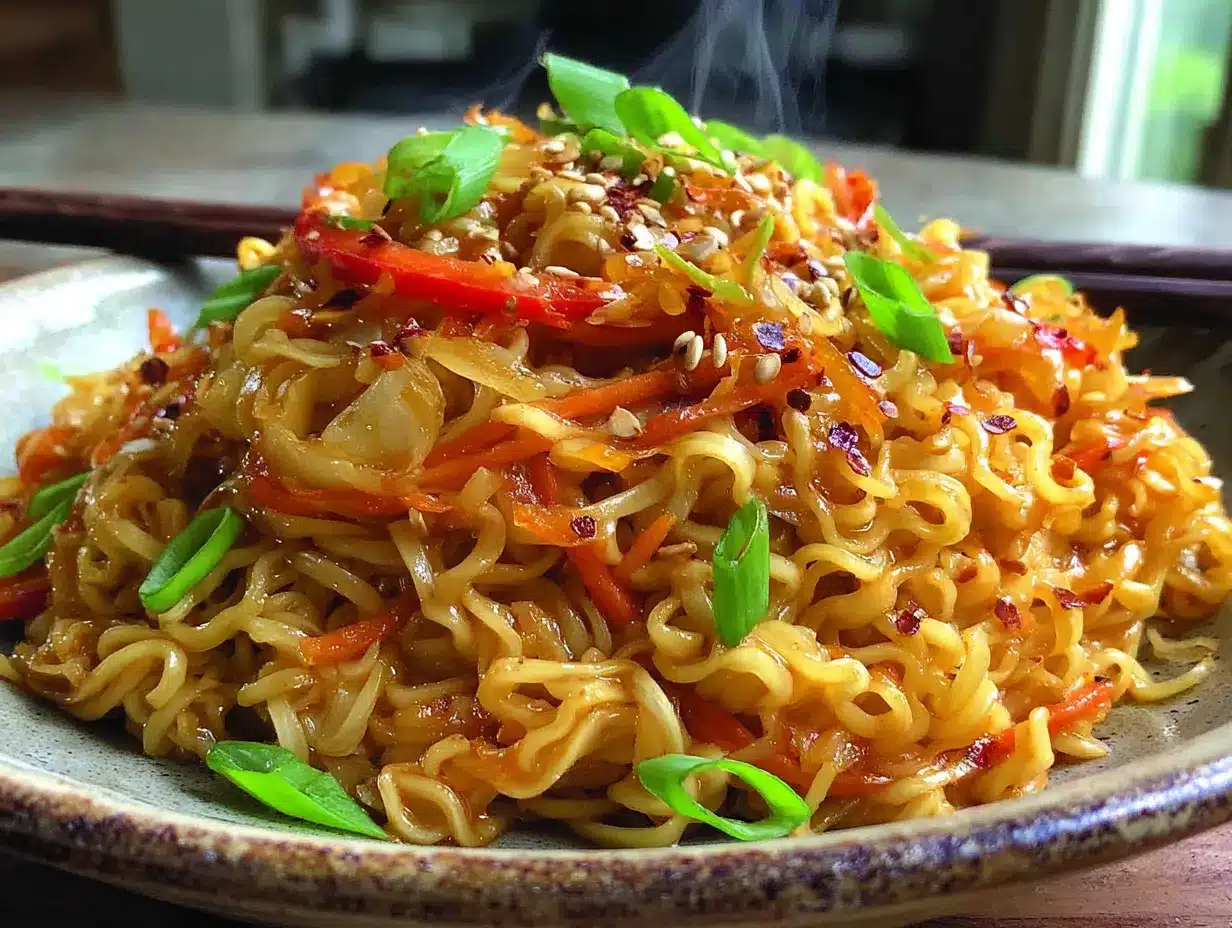
This quick spicy ramen stir-fry is best served immediately, straight from the pan to the bowl. The noodles have that perfect chewy texture right after cooking, and the sauce is at its glossy, flavor-packed peak. Serve it in deep bowls with chopsticks or a fork—whatever you have on hand.
For presentation, pile the noodles high and top with the garnishes. That pop of green from the scallions and the white-black contrast of sesame seeds makes it look restaurant-worthy. If you’re serving it to guests, put the soft-boiled egg right in the center and watch their faces light up when they cut into it.
This stir-fry pairs beautifully with a simple cucumber salad on the side—just sliced cucumbers with rice vinegar, salt, and a pinch of sugar. It’s a refreshing contrast to the spicy noodles. For drinks, I love it with iced green tea or a cold beer.
Storage: If you have leftovers (unlikely, but possible), store them in an airtight container in the refrigerator for up to 2 days. The noodles will absorb some of the sauce and soften, but they’re still delicious cold or reheated.
Reheating: The best way to reheat this is in a hot skillet with a splash of water or soy sauce. Toss it over medium heat for 2-3 minutes until heated through. The microwave works too, but the noodles will be softer. Add 30-second intervals and stir in between to heat evenly.
Honestly, the flavors actually meld together overnight, so leftovers taste different but still really good. I’ve been known to eat cold stir-fry straight from the container at 2 AM, and I have no regrets.
Nutritional Information & Benefits
While this quick spicy ramen stir-fry isn’t exactly health food, it’s a balanced meal that won’t derail your goals. Here’s the breakdown per serving (one bowl, without the optional egg):
- Calories: Approximately 420-480
- Protein: 10-12 grams
- Carbohydrates: 55-60 grams
- Fat: 18-22 grams
- Fiber: 4-6 grams
- Sodium: 1100-1300 mg (use low-sodium soy sauce to reduce this)
The gochujang in this recipe is actually good for you—it’s made from fermented chili peppers, which contain capsaicin (known for boosting metabolism) and probiotics that support gut health. The vegetables add fiber and vitamins, and the sesame oil provides healthy fats. If you add the egg, you get an extra 6 grams of protein and a dose of vitamin D.
This recipe is naturally dairy-free and can be made gluten-free with simple swaps. It’s not low-carb by any means, but it’s a satisfying meal that keeps you full for hours. I like to think of it as comfort food that doesn’t completely abandon nutrition.
Conclusion
This quick spicy ramen stir-fry is proof that you don’t need a fancy kitchen, expensive ingredients, or culinary training to make something genuinely delicious. It’s the recipe I turn to when I’m tired, broke, and hungry—which, let’s face it, is most of the time in college. It’s saved me from countless sad takeout orders and reminded me that cooking can be fun, fast, and forgiving.
I want you to make this your own. Add more vegetables if you’re feeling virtuous. Double the gochujang if you like it hot. Throw in whatever protein you have in the fridge. The beauty of this recipe is that it works with whatever you’ve got. Trust the process, don’t overcook the noodles, and for goodness’ sake, don’t skip the sesame oil.
I’d love to hear how yours turns out. Did you add something unexpected? Did you burn it and learn a lesson? Drop a comment below and let me know. Share this with a friend who’s living on instant ramen and needs an upgrade. Happy cooking, and remember—good food doesn’t have to be complicated. Sometimes it just needs a little heat and a lot of love.
Frequently Asked Questions
Can I use the ramen seasoning packet instead of making the sauce?
You can, but honestly, the homemade sauce is what makes this recipe special. The seasoning packet is mostly salt and MSG, while the gochujang-based sauce has actual depth and complexity. If you’re in a pinch, use half the packet mixed with a tablespoon of soy sauce and a teaspoon of sugar.
How do I make a soft-boiled egg for the topping?
Bring a small pot of water to a boil, gently lower in an egg (room temperature is best), and boil for exactly 6 minutes and 30 seconds. Transfer the egg to an ice bath immediately. Peel carefully—the yolk should be jammy and golden. I usually make a few at the beginning of the week and keep them in the fridge for quick meals.
Can I make this recipe vegan?
Absolutely. The base recipe is already vegan if you skip the egg. Just make sure your ramen noodles are vegan (some brands use egg in the noodles, so check the label). Most instant ramen is vegan-friendly, but it’s worth a quick look.
What if I can’t find gochujang?
No worries. You can substitute with sriracha mixed with a little miso paste or even just sriracha on its own. The flavor won’t be as complex, but it’ll still be spicy and delicious. Another option is to use chili garlic sauce (sambal oelek) mixed with a teaspoon of sugar.
How spicy is this recipe?
With 2 tablespoons of gochujang, it’s medium-spicy—enough to make your nose run slightly but not so much that you can’t taste the other flavors. If you’re sensitive to heat, start with 1 tablespoon and taste as you go. You can always add more, but you can’t take it out once it’s in the pan.
Pin This Recipe!
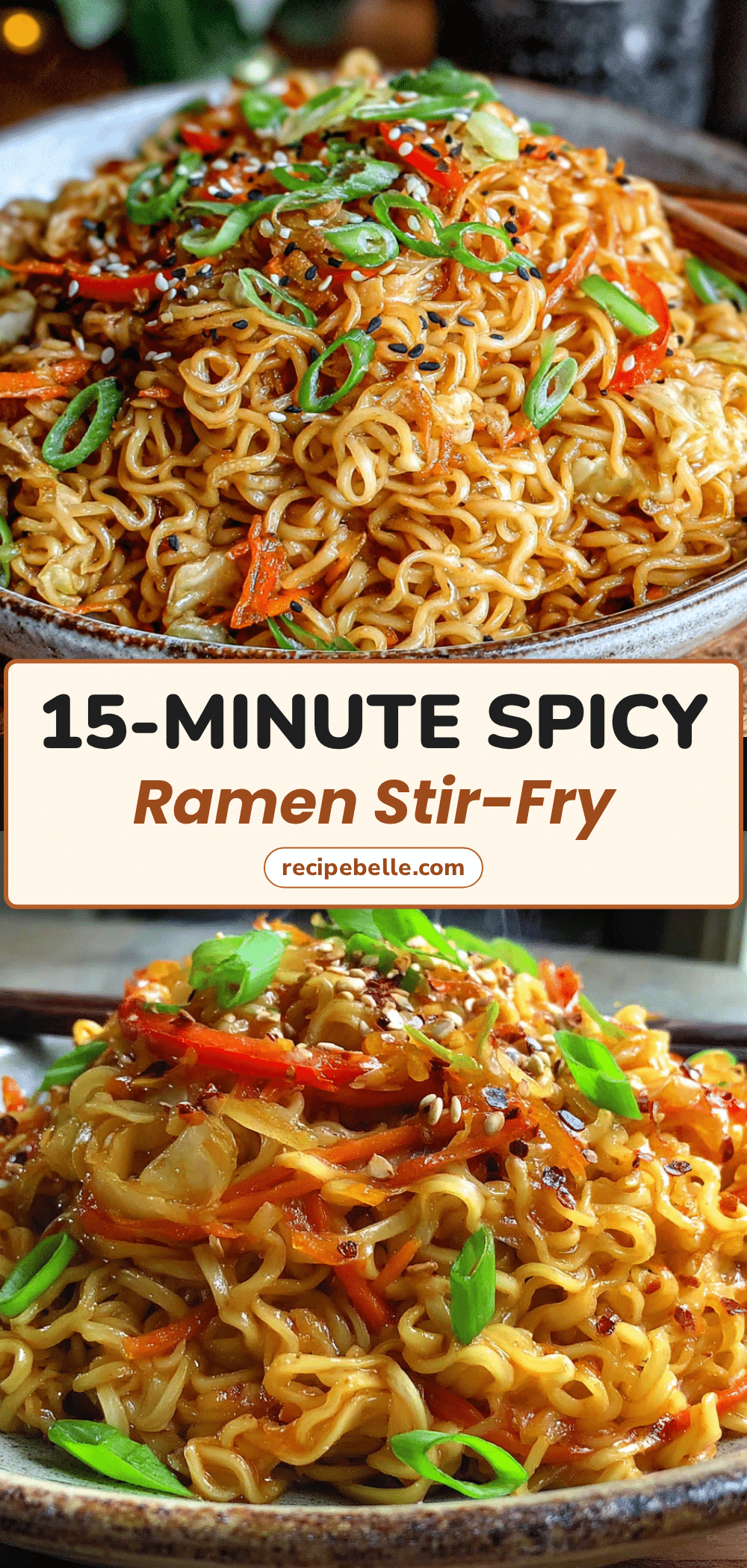
Quick Spicy Ramen Stir-Fry: Easy 15-Minute College Dinner
A quick and easy spicy ramen stir-fry that comes together in just 15 minutes. Perfect for college students or anyone craving a budget-friendly, flavorful meal with chewy noodles and a spicy-sweet sauce.
- Prep Time: 5 minutes
- Cook Time: 10 minutes
- Total Time: 15 minutes
- Yield: 2 servings 1x
- Category: Main Course
- Cuisine: Korean-Inspired
Ingredients
- 2 packages instant ramen (discard seasoning packets)
- 1 tablespoon vegetable oil
- 1 tablespoon sesame oil
- 3 tablespoons soy sauce (low-sodium if desired)
- 2 tablespoons gochujang (Korean chili paste)
- 1 tablespoon brown sugar (packed)
- 1 tablespoon rice vinegar
- 2 cloves garlic (minced)
- 1 teaspoon grated ginger (fresh or powdered)
- 1 cup frozen mixed vegetables (peas, carrots, corn blend)
- 2 green onions (sliced)
- 1 teaspoon sesame seeds (optional)
- 1 soft-boiled egg (optional)
Instructions
- Bring a large pot of water to a boil. In a small bowl, combine soy sauce, gochujang, brown sugar, rice vinegar, minced garlic, and grated ginger. Whisk until smooth. Set aside.
- Cook ramen noodles in boiling water for exactly 2 minutes. Drain and rinse with cold water to stop cooking. Shake off excess water.
- Heat a large skillet or wok over medium-high heat. Add vegetable oil and sesame oil. Swirl to coat. Add frozen vegetables and stir-fry for 2-3 minutes until heated through and starting to brown.
- Add noodles to the pan, spread in an even layer, and let sit undisturbed for 30 seconds to create crispy bits. Toss and repeat once or twice (about 2 minutes total).
- Pour sauce over noodles and toss quickly to coat. Stir constantly over medium-high heat for 1-2 minutes until sauce reduces and noodles are glossy.
- Remove from heat. Transfer to serving bowls. Top with sliced green onions, sesame seeds, and a soft-boiled egg if desired.
Notes
Don’t overcook the noodles in the pot; they should still have a bite. Prep all ingredients before cooking. For best texture, let drained noodles rest 2-3 minutes to remove excess water. If doubling, use a large pan or cook in batches.
Nutrition
- Serving Size: 1 bowl (without opti
- Calories: 420480
- Sugar: 810
- Sodium: 11001300
- Fat: 1822
- Saturated Fat: 34
- Carbohydrates: 5560
- Fiber: 46
- Protein: 1012
Keywords: ramen stir-fry, spicy ramen, quick dinner, college meal, budget-friendly, 15-minute meal, gochujang, easy stir-fry